How AI Assistants Are Revolutionizing Business Growth Through Sales Funnels and Customer Experience
The landscape of business operations is experiencing a seismic shift as AI assistants for business move from experimental tools to mission-critical infrastructure. Companies generating $500K to $10M in revenue are discovering that artificial intelligence isn’t just about automation anymore. It’s about creating intelligent systems that understand customer intent, predict behavior, and deliver personalized experiences at scale.
This transformation represents more than technological advancement. It’s a fundamental reimagining of how businesses interact with customers, optimize operations, and drive sustainable growth. Forward-thinking organizations are already leveraging AI assistants to double their revenue within 12 months by creating frictionless customer journeys and intelligent automation systems.
The Rise of Consumer-Owned AI Assistants
Traditional customer service models are rapidly becoming obsolete as consumer-owned AI assistants like ChatGPT, Gemini, and Claude reshape interaction patterns. Unlike company-controlled chatbots, these personal AI agents understand individual customer history, preferences, and context, creating unprecedented opportunities for hyper-personalized engagement.
The shift is profound. Customers increasingly delegate tasks to their AI assistants rather than navigating websites directly. They instruct their AI to “cancel my subscription,” “find the best deal,” or “schedule a consultation” without ever visiting a company’s website. This behavior change means businesses must prepare for a future where AI agents become the primary interface between brands and consumers.
For growth-focused businesses, this evolution presents both challenges and opportunities. Companies that adapt their digital infrastructure to communicate effectively with AI assistants will capture market share, while those clinging to traditional interaction models risk becoming invisible to AI-mediated customer journeys.
Preparing Your Business for Machine Customers
The concept of “machine customers” requires businesses to fundamentally rethink their digital architecture. Sales funnel automation must now accommodate both human users and AI agents seeking information, making purchases, or resolving issues on behalf of their human owners.
Successful adaptation requires three critical components:
Standardized APIs: Your business systems need machine-readable endpoints that AI assistants can access directly. This means creating structured data formats that allow AI agents to check order status, process returns, or gather product information without human intervention.
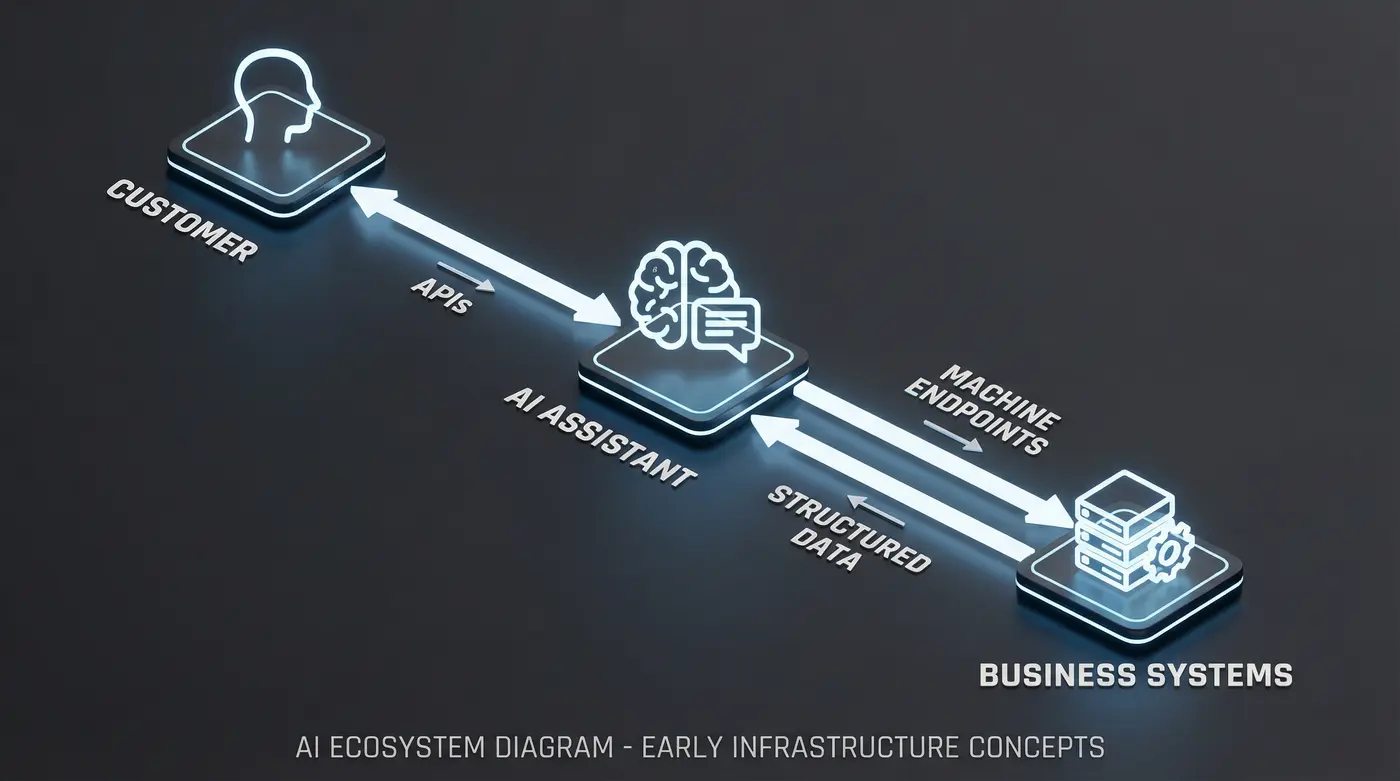
Structured Data Implementation: Every piece of customer-facing information should be organized in formats that AI can easily parse and understand. This includes product catalogs, service descriptions, pricing structures, and availability data.
Machine-Friendly Endpoints: Traditional web interfaces designed for human navigation must be supplemented with AI-optimized interaction points that facilitate seamless communication between AI assistants and your business systems.
Companies implementing these changes report significant improvements in customer satisfaction and operational efficiency. AI assistants can resolve routine inquiries instantly, freeing human agents to focus on complex, high-value interactions that require emotional intelligence and creative problem-solving.
AI-Powered Sales Funnel Transformation
Microsoft’s recent launch of Copilot Checkout and Brand Agents demonstrates the revenue potential of customer experience AI integration. Early adopters report 53% more purchases within 30 minutes of AI interaction and 194% higher conversion rates when shopping intent is detected.
These tools exemplify how AI assistants can eliminate friction in the customer journey while maintaining brand control over transactions and data. Customers can complete purchases within conversational flows without redirects or complex checkout processes, creating seamless experiences that drive immediate revenue.
Brand Agents function as knowledgeable virtual sales associates, answering questions, guiding product discovery, and facilitating personalized upselling. Alexander Del Rossa, a premium retailer, achieved over 3x higher conversion rates in sessions assisted by Brand Agents compared to traditional browsing experiences.
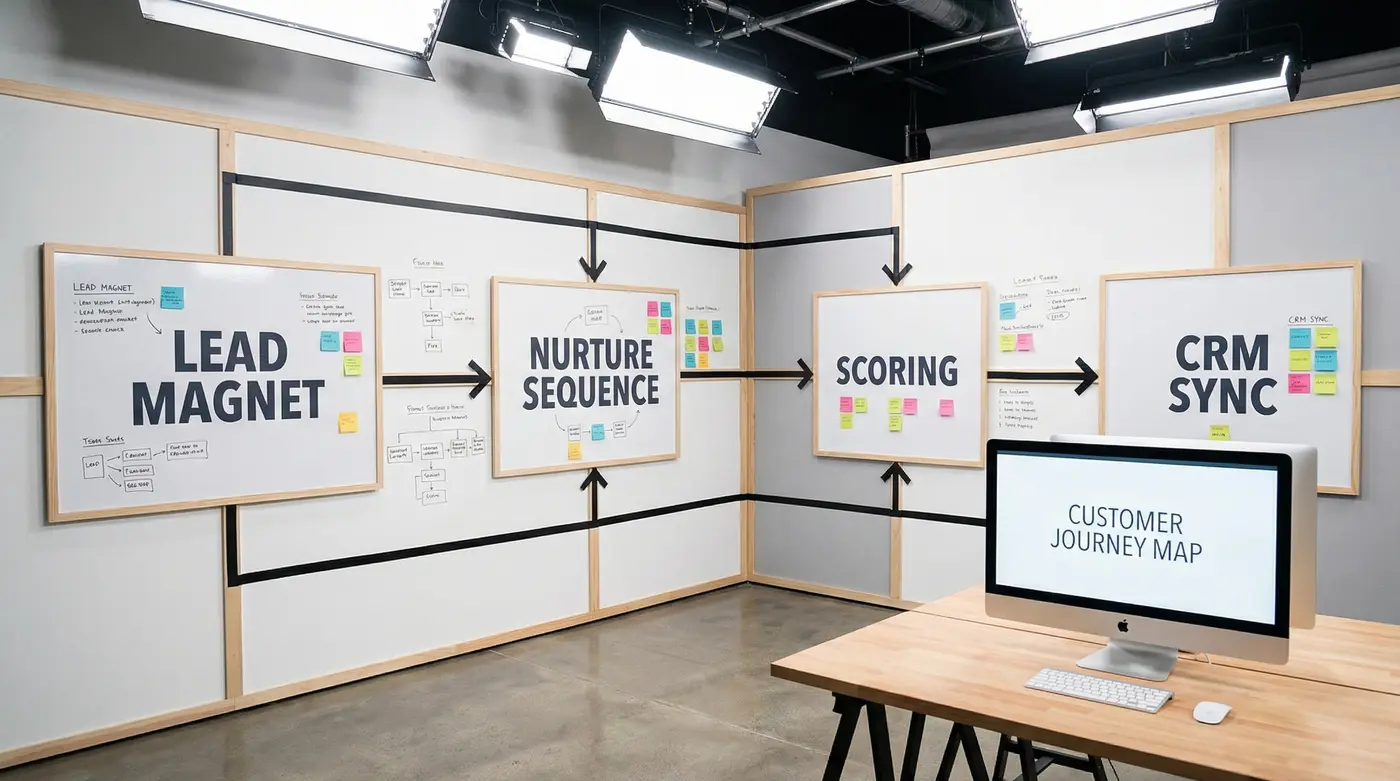
The implications for sales funnel design are significant. Traditional linear funnels must evolve into intelligent, conversational systems that adapt to individual customer needs in real-time. AI assistants can identify high-intent prospects, personalize messaging based on behavior patterns, and guide customers through complex decision-making processes with unprecedented sophistication. Many businesses are now turning to resources like the AI tools building funnels guide to accelerate implementation.
Unlocking Revenue Through AI-Powered Personalization
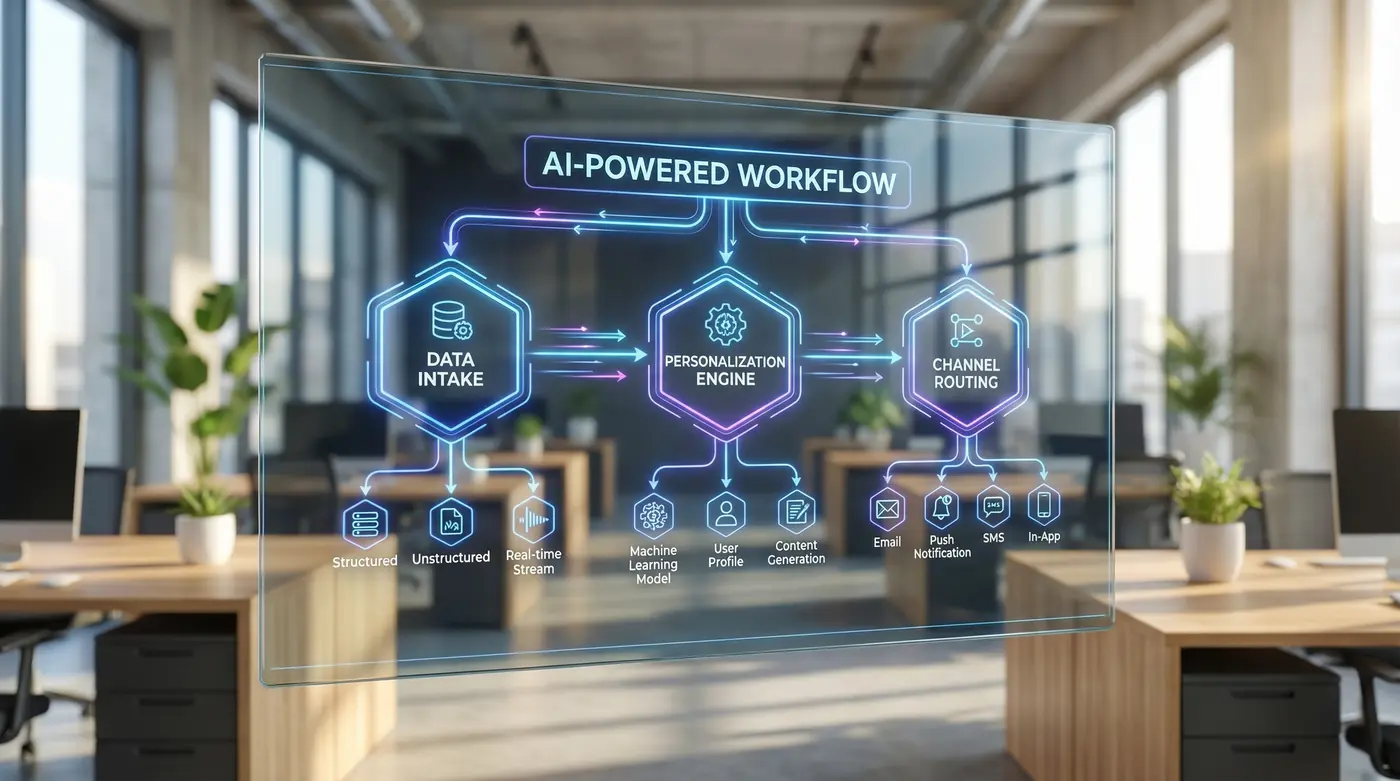
Modern business AI integration extends far beyond simple chatbots. Advanced AI assistants analyze customer data in real-time to deliver personalized upselling, cross-selling, and product recommendations that feel natural rather than intrusive.
For e-commerce businesses, this means AI can identify when a customer is ready for premium upgrades, complementary products, or seasonal offerings. The technology considers purchase history, browsing behavior, demographic data, and even external factors like weather or local events to optimize timing and messaging.
High-ticket service providers particularly benefit from AI-powered personalization. Real estate agencies use AI assistants to match clients with properties based on lifestyle preferences, financial capacity, and location requirements. Financial services firms leverage AI to recommend investment strategies, insurance products, and wealth management services tailored to individual risk profiles and goals.
The key to successful AI-powered upselling lies in value creation rather than sales pressure. When AI assistants genuinely understand customer needs and present relevant solutions at optimal moments, conversion rates increase while customer satisfaction remains high.
Balancing Automation and Human Touch
Despite AI’s capabilities, human interaction remains crucial for building trust and handling complex situations. The most successful businesses use AI assistants to handle routine tasks while positioning human agents as premium resources for high-value interactions.
In luxury sectors like real estate and financial services, this balance becomes particularly important. Clients investing significant sums expect empathetic guidance and nuanced understanding that only human professionals can provide. AI assistants excel at initial qualification, information gathering, and scheduling, but human experts close deals and build lasting relationships.
This hybrid approach creates competitive advantages. While competitors rely solely on automation or human-only service models, businesses that thoughtfully integrate both capture efficiency gains without sacrificing relationship quality. Premium human support becomes a differentiator rather than a cost center.
Smart routing systems ensure customers reach the right resource at the right time. AI handles straightforward inquiries instantly, while complex or emotionally charged situations automatically escalate to human agents equipped with complete interaction history and context.
Optimizing Operational Efficiency with AI
Lenovo’s implementation of AI assistants for retail operations demonstrates how artificial intelligence can transform business efficiency beyond customer-facing applications. Their Smart Store Services reduce system downtime by 50% and accelerate issue resolution by 60% through predictive maintenance and automated troubleshooting.
Similar principles apply across industries. AI assistants can monitor system performance, predict equipment failures, manage inventory levels, and optimize resource allocation in real-time. These capabilities translate directly to cost savings and improved service quality.
For service-based businesses, AI assistants can schedule appointments, manage technician dispatch, track project progress, and ensure quality standards. Construction companies use AI to optimize crew assignments based on skills, location, and project requirements. Professional services firms leverage AI for resource planning, client communication, and project management.
The operational benefits compound over time. As AI systems learn from historical data and outcomes, their recommendations become increasingly accurate and valuable. Businesses report 30-40% reductions in support costs while simultaneously improving service quality and customer satisfaction.
Data Integration and CRM Automation
Successful AI implementation requires unified data architecture that breaks down organizational silos. Customer information, transaction history, service records, and behavioral data must flow seamlessly between systems to enable intelligent automation and personalization.
Modern CRM integration goes beyond simple contact management. AI-powered systems analyze customer lifecycle stages, predict churn risk, identify expansion opportunities, and automate nurture sequences based on individual behavior patterns. This level of sophistication requires comprehensive data integration across all customer touchpoints. Many mid-market companies use frameworks such as the advanced CRM integrations guide to support these transitions.
Marketing automation becomes exponentially more effective when AI assistants can access complete customer profiles. Instead of generic email sequences, businesses can deliver hyper-personalized content that addresses specific needs, preferences, and timing. Response rates increase dramatically when messages feel individually crafted rather than mass-produced.
The technical infrastructure supporting this integration includes APIs connecting various business systems, data warehouses consolidating information from multiple sources, and analytics platforms providing actionable insights. Companies investing in robust data architecture position themselves for sustained competitive advantages as AI capabilities continue advancing.
Privacy, Compliance, and On-Device AI
Regulated industries and privacy-conscious clients increasingly demand AI solutions that maintain data control and compliance. On-device AI models like Apple’s local LLMs, Meta’s LLaMA, and open-source alternatives address these concerns by processing sensitive information locally rather than in cloud environments.
Financial services firms handling confidential client data can leverage on-device AI for document analysis, risk assessment, and compliance monitoring without exposing information to external systems. Healthcare organizations use local AI models for patient communication and administrative tasks while maintaining HIPAA compliance.
This trend toward privacy-preserving AI creates differentiation opportunities for businesses serving security-conscious markets. Offering AI-powered services with guaranteed data sovereignty appeals to clients who value both innovation and privacy protection.
Implementation strategies include hybrid architectures that process sensitive data locally while leveraging cloud resources for non-confidential tasks. This approach balances privacy requirements with the computational power needed for sophisticated AI capabilities.
Actionable Steps for Mid-Market Businesses
Implementing AI assistants for business requires systematic planning and execution. Start with a comprehensive audit of your current digital infrastructure, customer touchpoints, and data architecture. Identify gaps that prevent seamless AI integration and prioritize improvements based on potential impact and implementation complexity.
Phase One: Foundation Building
Establish standardized APIs for core business functions including customer service, sales processes, and operational systems. Implement structured data formats across all customer-facing information. Ensure your website and digital assets can communicate effectively with AI agents.
Phase Two: Pilot Implementation
Deploy AI assistants for specific use cases like appointment scheduling, basic customer inquiries, or lead qualification. Monitor performance metrics and gather customer feedback to refine the experience. Focus on high-volume, routine tasks that provide immediate efficiency gains.
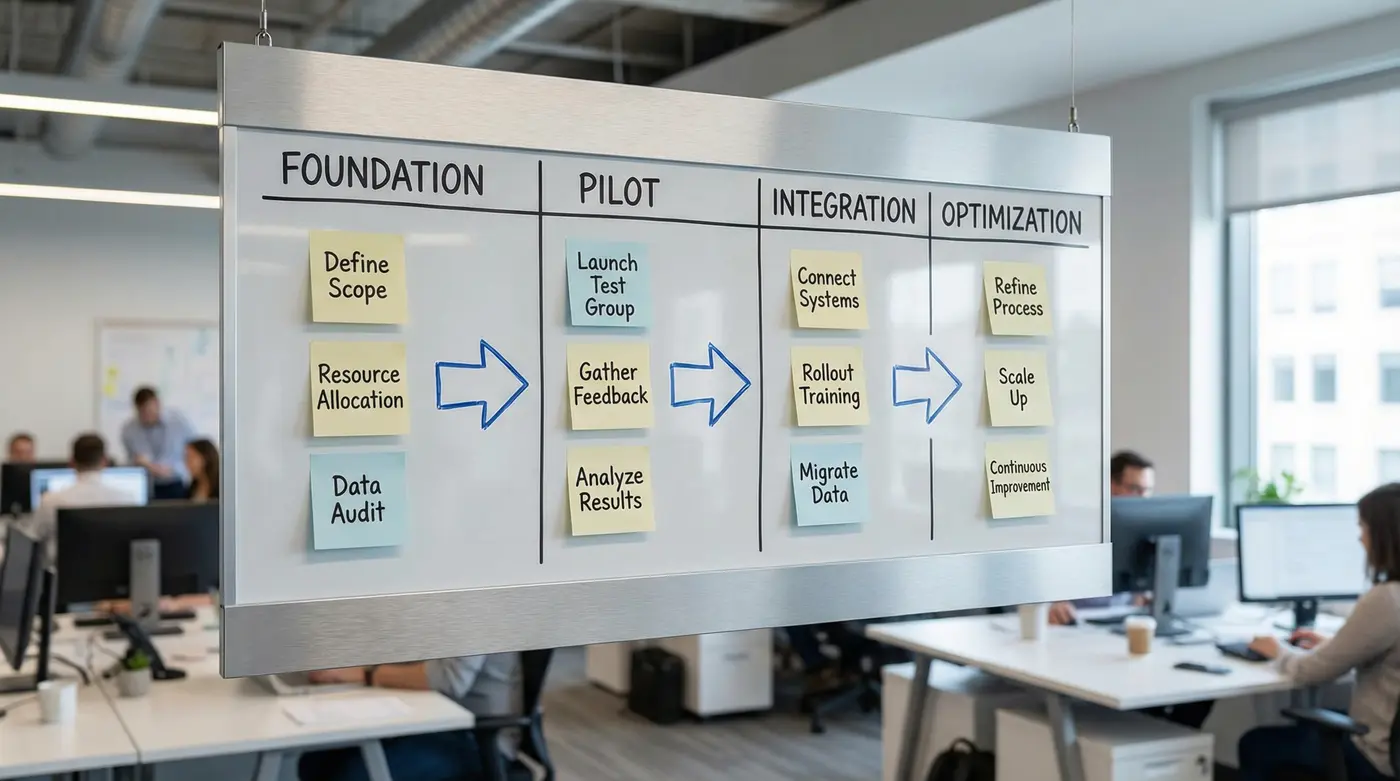
Phase Three: Advanced Integration
Expand AI capabilities to include personalized recommendations, automated upselling, and predictive customer service. Integrate AI insights with marketing automation and CRM systems for comprehensive customer journey orchestration.
Phase Four: Optimization and Scaling
Use performance data to continuously improve AI accuracy and effectiveness. Expand successful implementations across additional business functions and customer touchpoints. Develop proprietary AI capabilities that create lasting competitive advantages. Many organizations enhance this process using insights from the AI sales automation guide.
Future-Proofing Your Digital Assets
The era of agentic AI demands proactive preparation rather than reactive adaptation. Businesses that invest in AI-ready infrastructure today will capture disproportionate value as consumer adoption accelerates and AI capabilities expand.
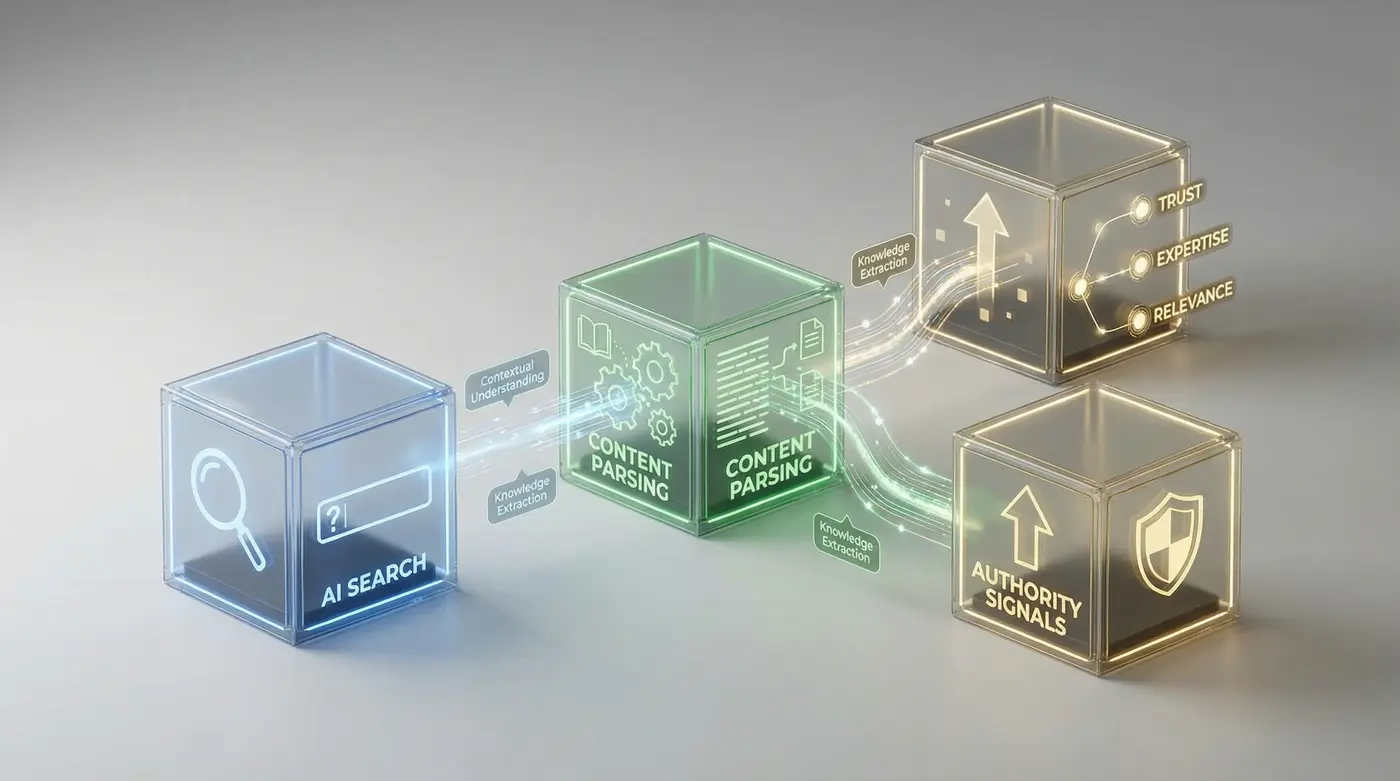
Content strategies must evolve beyond traditional SEO optimization to include AI agent optimization. This means creating structured, easily parseable information that AI assistants can understand and recommend to their users. Product descriptions, service explanations, and company information should be formatted for both human readers and AI consumption.
Multi-channel marketing approaches must account for AI-mediated interactions alongside traditional digital touchpoints. This includes optimizing for voice search, preparing content for AI summarization, and ensuring brand messaging remains consistent across AI-powered platforms.
Technical infrastructure should prioritize flexibility and scalability to accommodate rapid AI advancement. Cloud-native architectures, API-first design principles, and modular system components enable quick adaptation as new AI capabilities emerge.
Measuring Success and ROI
Successful AI implementation requires clear metrics and continuous optimization. Key performance indicators should include both operational efficiency measures and revenue impact metrics. Track customer satisfaction scores, resolution times, conversion rates, and cost per acquisition to understand AI’s comprehensive business impact.
Advanced analytics platforms provide insights into AI assistant performance, customer interaction patterns, and optimization opportunities. This data drives iterative improvements that compound over time, creating increasingly sophisticated and effective AI capabilities.
Revenue attribution becomes more complex but also more precise with AI integration. Businesses can track the complete customer journey from initial AI interaction through final purchase, identifying which AI capabilities drive the highest value outcomes.
Conclusion: Embracing the AI-Powered Future
The transformation toward AI-powered business operations represents the most significant shift in customer experience and operational efficiency since the internet’s mainstream adoption. Companies that embrace this change thoughtfully and strategically will capture unprecedented growth opportunities.
Success requires more than technology implementation. It demands a fundamental reimagining of customer relationships, operational processes, and competitive positioning. The businesses thriving in this new landscape will be those that use AI to enhance human capabilities rather than replace them, creating experiences that are both efficient and empathetic.
The window for competitive advantage through early AI adoption is narrowing rapidly. Organizations that begin their AI journey now, with proper planning and execution, will establish market positions that become increasingly difficult for competitors to challenge.
Ready to transform your business with AI assistants that drive real results? Our team specializes in implementing AI-powered sales funnels and customer experience systems for growth-focused businesses. We’ll help you audit your current infrastructure, design AI integration strategies, and execute implementations that double your growth within 12 months. Contact us today to discover how AI assistants can revolutionize your customer experience and operational efficiency.