AI-Driven Marketing Automation Trends: How Growth-Focused Businesses Can Scale Smarter and Faster
The marketing landscape has undergone a seismic shift. What once required teams of specialists manually crafting campaigns, analyzing data, and optimizing touchpoints can now be orchestrated by intelligent systems that learn, adapt, and execute with precision. AI-driven marketing automation has evolved from a luxury for enterprise-level companies to an essential competitive advantage for any business serious about sustainable growth.
For businesses generating $500K to $10M in revenue, this transformation represents both an unprecedented opportunity and a critical decision point. Those who embrace sophisticated automation strategies position themselves to double their growth while reducing operational complexity. Those who hesitate risk being outmaneuvered by more agile competitors who leverage AI to scale smarter, not just harder.
The Evolution from Isolated Tools to Autonomous Marketing Systems
Traditional marketing automation resembled a collection of disconnected tools, each requiring manual configuration and constant oversight. Marketers spent countless hours pulling reports, creating segments, and adjusting campaigns based on yesterday’s data. This fragmented approach created bottlenecks that limited scalability and responsiveness.
Today’s AI-driven marketing automation represents a fundamental paradigm shift. Instead of isolated tools that automate individual tasks, businesses now deploy integrated systems that autonomously plan, execute, and optimize entire customer journeys across multiple channels simultaneously.
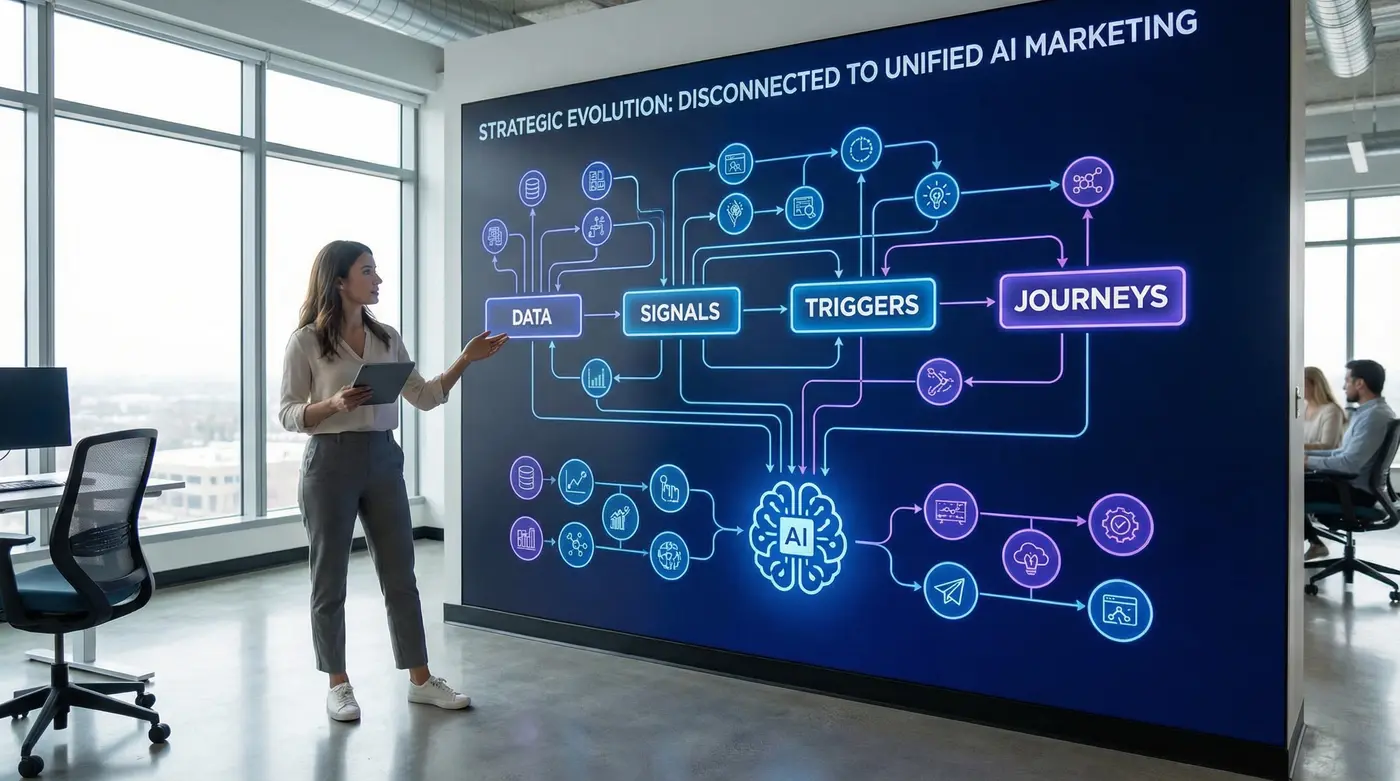
These advanced systems analyze real-time behavioral signals, predict customer intent, and automatically adjust messaging, timing, and channel selection to maximize engagement and conversions. The result is marketing that operates more like a responsive organism than a rigid machine, constantly evolving to meet changing customer needs and market conditions.
The transformation is particularly powerful for service-based businesses in luxury sectors like real estate, financial services, and high-ticket coaching, where personalized experiences directly impact revenue outcomes.
Hyper-Personalization at Scale Through Real-Time Behavioral Intelligence
Generic messaging has become marketing’s death knell. Today’s consumers expect experiences tailored specifically to their preferences, behaviors, and current position in the buying journey. AI makes this level of personalization achievable at scale through sophisticated behavioral analysis and dynamic content generation.
Modern automation platforms analyze hundreds of data points in real-time, including website interactions, email engagement patterns, social media behavior, and purchase history. This behavioral intelligence enables the creation of individualized messages that reference specific actions, preferences, and needs.
For example, a financial services firm can automatically send personalized investment recommendations based on a prospect’s portfolio browsing behavior, risk tolerance indicators gleaned from content consumption, and lifecycle stage. The messaging adapts not just to demographic data, but to real-time behavioral signals that indicate readiness to engage or purchase.
This level of personalization extends beyond email to encompass website experiences, social media interactions, and even direct mail campaigns. The key is creating a unified customer profile that informs every touchpoint, ensuring consistency while maintaining relevance across all channels.
Predictive Analytics and Behavioral Triggers That Anticipate Customer Needs
The most sophisticated automated lead generation systems don’t just respond to customer actions; they anticipate them. Predictive analytics powered by machine learning algorithms analyze patterns in customer behavior to forecast future actions, enabling proactive engagement strategies that capture opportunities before competitors even recognize them.
These predictive capabilities transform lead scoring from a static point system to a dynamic assessment that continuously updates based on new behavioral data. AI algorithms identify subtle patterns that human analysts might miss, such as specific combinations of content consumption and engagement timing that indicate high purchase intent.
Behavioral triggers automatically activate when predictive models identify optimization opportunities. For instance, when AI detects that a prospect’s engagement patterns suggest they’re researching competitors, it can automatically trigger a personalized retention sequence featuring case studies, testimonials, and competitive differentiators.
This predictive approach proves especially valuable for high-ticket services where sales cycles are longer and relationship building is crucial. By anticipating customer needs and proactively addressing concerns, businesses can significantly reduce sales cycle length while improving conversion rates.
Seamless Omnichannel Orchestration for Unified Customer Journeys
Modern customers interact with brands across multiple touchpoints, expecting seamless experiences regardless of channel. AI-powered orchestration systems ensure that every interaction builds upon previous engagements, creating cohesive journeys that guide prospects toward conversion while maintaining consistent brand messaging.
Advanced online business automation platforms integrate CRM data, email systems, SMS platforms, social media channels, and even in-person touchpoints into unified workflows. When a prospect downloads a whitepaper, the system automatically updates their profile across all channels, triggering appropriate follow-up sequences while suppressing irrelevant messaging.
This orchestration extends to timing optimization, where AI analyzes individual engagement patterns to determine the optimal channel and timing for each communication. Some prospects might respond best to early morning emails, while others engage more with evening text messages or weekend social media content.
For businesses serving luxury markets, this omnichannel approach ensures that high-value prospects receive appropriately sophisticated experiences that reinforce premium positioning while maintaining personal relevance.
AI-Generated Content and Creative Workflows
Content creation has traditionally been a significant bottleneck in scaling online business operations. AI-powered content generation tools now produce launch-ready copy, dynamic offers, and localized messaging in minutes rather than days or weeks.
These systems go beyond simple template filling to create genuinely personalized content that adapts to individual prospect profiles. AI can generate email subject lines optimized for specific personality types, create social media posts that reference local events or interests, and develop landing page copy that speaks directly to identified pain points.
The creative workflow integration extends to visual content as well. AI tools can automatically generate personalized images, customize video thumbnails, and even create dynamic presentations that adapt based on prospect data. This capability enables businesses to maintain high-quality creative standards while dramatically increasing content volume and personalization depth.
For agencies and consultants, AI-generated content workflows enable the delivery of more personalized client communications without proportionally increasing creative team size, improving margins while enhancing client satisfaction. This aligns with insights from ai-generated content workflows.
Send-Time and Channel Optimization Through Machine Learning
Timing and channel selection can dramatically impact engagement rates, but manually optimizing these variables across large audiences is practically impossible. AI systems continuously analyze individual engagement patterns to determine optimal send times and channel preferences for each contact.
Machine learning algorithms track when specific individuals are most likely to open emails, engage with social media content, or respond to text messages. This analysis considers factors like time zones, work schedules, device usage patterns, and historical engagement data to optimize delivery timing automatically.
Channel optimization goes beyond timing to include message format and content type preferences. Some prospects might respond better to video content, while others prefer detailed written analysis. AI systems automatically adjust content format and delivery channel based on individual preference indicators.
The cumulative impact of these optimizations can be substantial. Businesses frequently see 40% or higher improvements in engagement rates when implementing comprehensive AI-driven timing and channel optimization strategies.
Automated Compliance and Privacy Management
Privacy regulations and compliance requirements continue to evolve, creating complex challenges for businesses operating across multiple jurisdictions or serving regulated industries. AI-powered compliance systems automatically manage consent, track data usage, and ensure communications meet relevant regulatory standards.
These systems automatically segment audiences based on consent levels, geographic location, and regulatory requirements. They can suppress certain types of communications for specific segments while ensuring that all interactions maintain detailed audit trails for compliance reporting.
For businesses serving financial services, real estate, or other regulated sectors, automated compliance management reduces legal risk while ensuring that marketing efforts can continue operating at full capacity within appropriate boundaries.
Social proof automation represents another crucial compliance consideration. AI systems can automatically display relevant testimonials, case studies, and reviews while ensuring that all social proof elements meet industry-specific disclosure requirements.
Balancing Automation with Authentic Human Connection
While AI enables unprecedented automation capabilities, successful implementation requires careful balance between efficiency and authenticity. The most effective strategies combine AI insights and execution with genuine human storytelling and relationship building.
AI excels at analyzing data, optimizing timing, and personalizing content, but human creativity and emotional intelligence remain essential for crafting compelling narratives and building trust with high-value prospects. The optimal approach leverages AI to handle operational complexity while freeing human team members to focus on strategic thinking and authentic relationship building.
This balance proves especially important for luxury and high-ticket services where personal relationships significantly impact purchase decisions. AI can identify the most promising prospects and optimize initial engagement, but human experts typically need to guide the relationship through complex decision-making processes.
Micro-influencer partnerships and authentic brand experiences become even more valuable when contrasted with AI-generated content. Businesses that successfully combine AI efficiency with genuine human connections create competitive advantages that are difficult to replicate.
Outcome-Based Measurement and ROI-Driven Partnerships
AI-powered analytics enable more sophisticated measurement approaches that focus on actual business outcomes rather than vanity metrics. Advanced attribution modeling tracks the complete customer journey across multiple touchpoints, providing clear visibility into which activities drive real revenue growth.
This measurement sophistication enables outcome-based partnership models where agencies and service providers are compensated based on actual results rather than hours worked or campaigns delivered. Both parties benefit from this alignment, as it encourages optimization for genuine business impact rather than activity volume.
Real-time analytics dashboards provide continuous visibility into campaign performance, enabling rapid adjustments when strategies aren’t delivering expected results. AI systems can automatically pause underperforming campaigns, reallocate budget to high-performing channels, and optimize targeting parameters without human intervention. Insights from automated reporting workflows align directly with these capabilities.
For growing businesses, this outcome-focused approach ensures that marketing investments directly contribute to revenue growth and business scalability rather than simply generating activity.
Practical Implementation Strategies for Agencies and Growing Businesses
Successfully deploying AI-driven marketing automation requires strategic planning and phased implementation. The most effective approach begins with identifying high-impact use cases where automation can immediately improve results while building foundational capabilities for more advanced applications.
Start by implementing AI-powered lead scoring and basic behavioral triggers for your highest-value customer segments. This provides immediate ROI while generating the data and experience needed for more sophisticated automation strategies.
Integrate your CRM system with marketing automation platforms to ensure unified customer profiles and seamless data flow between sales and marketing activities. This integration is essential for effective omnichannel orchestration and personalization.
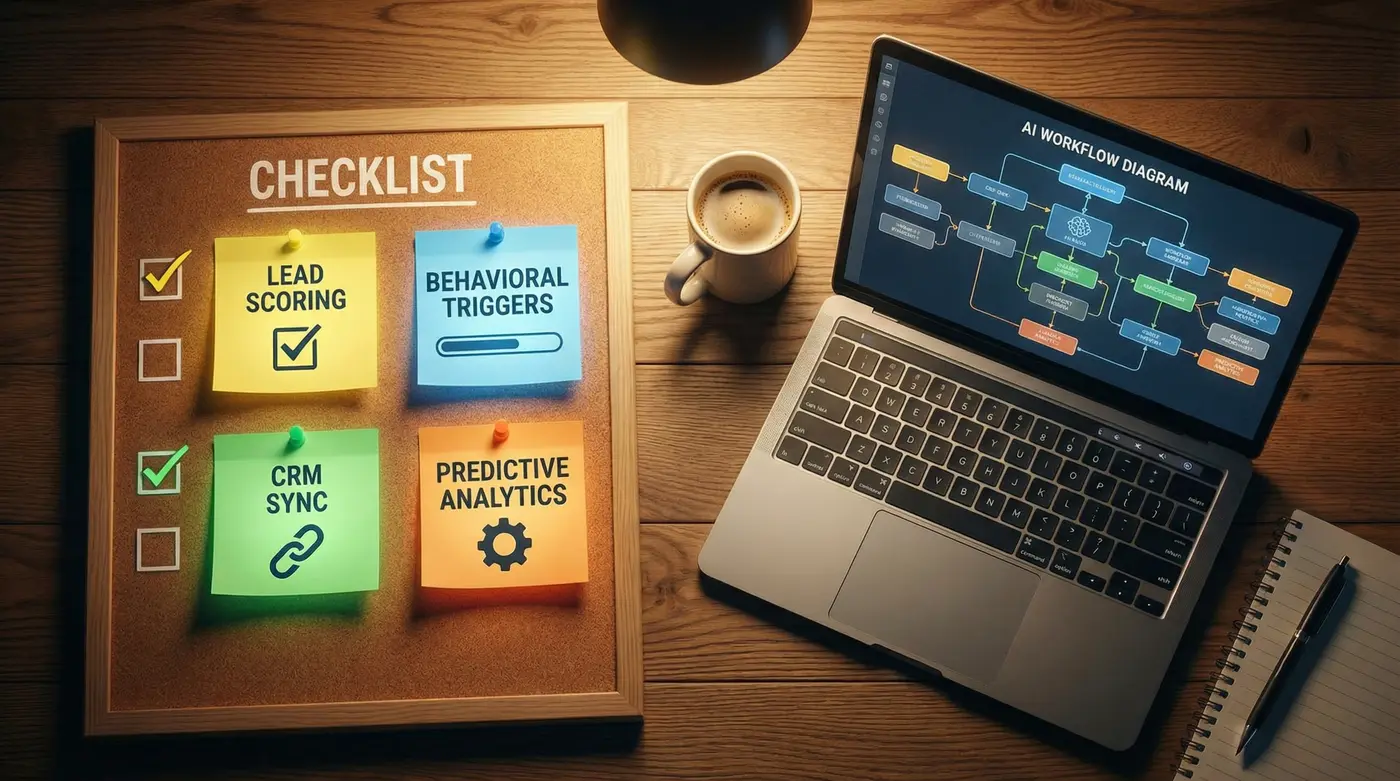
Gradually expand automation to include content generation, send-time optimization, and predictive analytics as your team becomes comfortable with the technology and your data quality improves. Each phase should build upon previous capabilities while delivering measurable improvements in key performance metrics. Referencing the granular segmentation automation guide can further enhance these phases.
For agencies, AI automation enables the delivery of more sophisticated services to clients while reducing execution overhead. This operational efficiency allows agencies to serve more clients effectively while maintaining high service quality and improving profit margins.
Future-Proofing Your Marketing Strategy
The AI marketing landscape continues evolving rapidly, with new capabilities and optimization opportunities emerging regularly. Businesses that build adaptable automation frameworks position themselves to capitalize on future innovations without requiring complete system overhauls.
Focus on platforms that offer robust integration capabilities and regular feature updates rather than standalone tools that might become obsolete. Invest in team training and development to ensure your organization can effectively leverage new AI capabilities as they become available.
Maintain a balance between automation and human oversight, ensuring that AI systems enhance rather than replace strategic thinking and creative problem-solving. The most successful implementations combine AI efficiency with human judgment and creativity.
As AI capabilities continue advancing, the competitive advantage will increasingly belong to businesses that can effectively combine technological sophistication with authentic human connections and strategic insight.
Taking Action: Your Next Steps Toward AI-Driven Growth
The opportunity to leverage AI-driven marketing automation for accelerated growth has never been more accessible or impactful. Businesses that act decisively to implement these strategies position themselves for sustainable competitive advantages and scalable growth.
Begin by auditing your current marketing processes to identify bottlenecks and manual tasks that could benefit from automation. Focus on high-impact areas where AI can immediately improve results while reducing operational complexity.
Partner with experienced agencies or consultants who understand both the technical implementation requirements and the strategic considerations for your specific industry and growth stage. The right partnership accelerates implementation while avoiding common pitfalls that can derail automation initiatives, similar to insights in the ai strategy implementation guide.
If you’re ready to explore how AI-driven marketing automation can transform your business growth trajectory, consider scheduling a strategic consultation to discuss your specific opportunities and implementation roadmap. The businesses that embrace these capabilities now will define the competitive landscape for years to come.