The Ultimate Guide to AI Tools for Digital Marketers: Streamline, Personalize, and Scale Your Campaigns
The digital marketing landscape has reached a tipping point. While 77% of marketing teams have already embraced artificial intelligence, the gap between early adopters and laggards continues to widen. For established digital marketers and agencies managing campaigns for businesses in the $500K to $10M revenue range, AI is no longer optional. It has become the operational backbone that determines whether you scale efficiently or get left behind.
This comprehensive guide explores the essential ai tools for digital marketers that are transforming how we create content, optimize campaigns, and drive measurable ROI across multiple channels. Whether you are looking to automate repetitive tasks, personalize at scale, or unify your marketing tech stack, this guide provides actionable insights for selecting, integrating, and scaling AI solutions that deliver results.
Why AI Adoption is Mission Critical for Digital Marketers
The statistics paint a clear picture of the current landscape. Over half of enterprise generative AI budgets are now allocated to sales and marketing technology, highlighting the sector’s central role in AI adoption. Yet, many marketing professionals still struggle with implementation, with 71.7% admitting they do not fully understand AI tools.
This knowledge gap creates both a challenge and an opportunity. Forward thinking agencies and marketers who master AI implementation can achieve remarkable results, including 20 to 40% time savings, 10 to 30% reduction in customer acquisition costs, and 5 to 15% revenue increases.
The competitive advantage extends beyond efficiency gains. AI enables true personalization at scale, something that was previously impossible for mid sized businesses to achieve without enterprise level resources. Modern marketing automation tools now allow smaller teams to rival larger enterprises in sophisticated campaign orchestration and customer engagement.
Core Challenges AI Tools Solve for Modern Marketers
Digital marketing agencies face five critical operational challenges that AI directly addresses:
Workflow Bottlenecks and Manual Tasks
Traditional marketing workflows are plagued by repetitive tasks such as content creation, asset tagging, approval processes, and campaign setup. AI powered platforms now automate these processes, freeing up strategic thinking time for high value activities.
Personalization at Scale
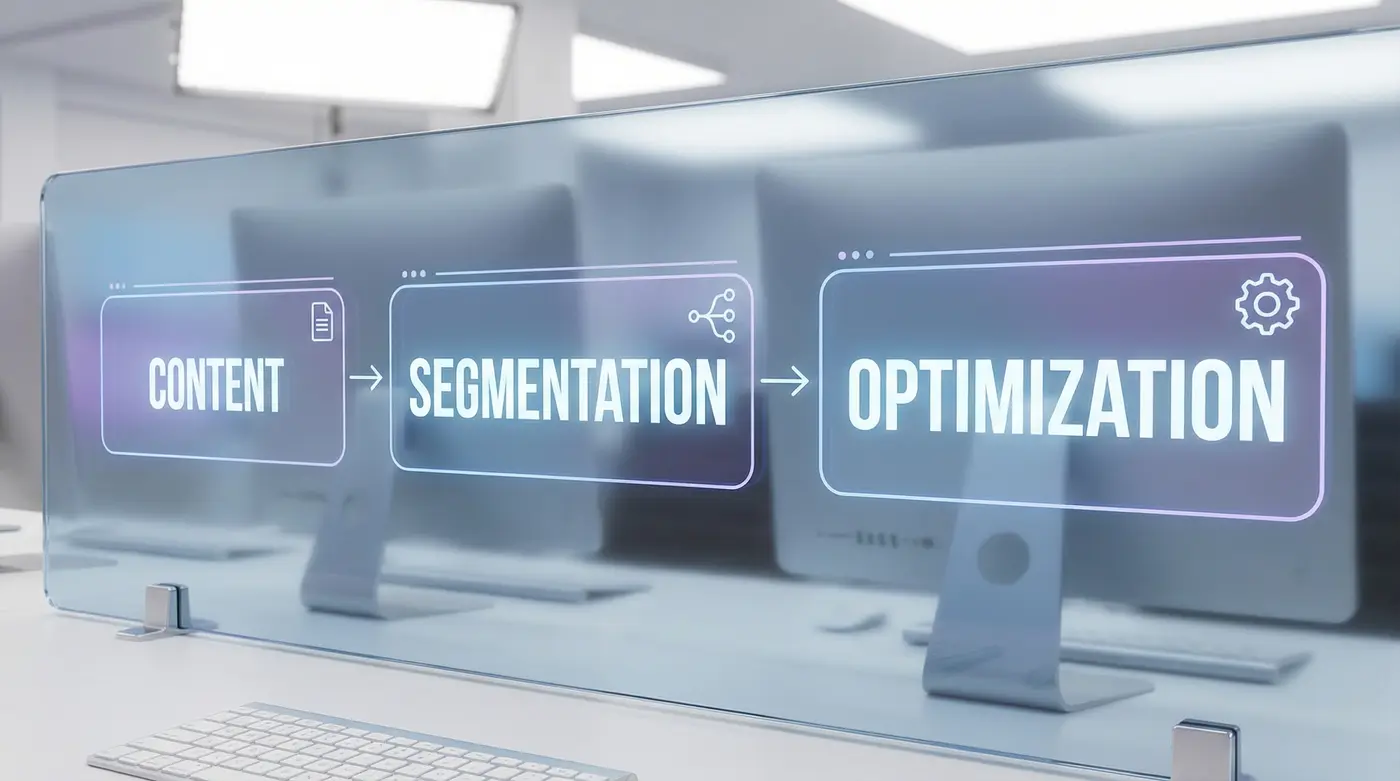
Creating personalized experiences for hundreds or thousands of prospects across multiple touchpoints requires sophisticated segmentation and content variation. AI enables dynamic content creation and automated personalization that adapts in real time to user behavior and preferences.
Creative Production Bottlenecks
The demand for visual content across social media, paid advertising, and email campaigns often exceeds creative team capacity. AI powered design and video tools now enable rapid prototyping and variation testing without traditional resource constraints.
Campaign Optimization and Performance
Managing bid strategies, budget allocation, and creative testing across multiple platforms requires constant attention and expertise. Machine learning algorithms now handle these optimizations continuously, improving performance while reducing manual oversight.
ROI Measurement and Attribution
Understanding the true impact of multi channel campaigns remains complex. AI powered analytics platforms provide clearer attribution models and predictive insights that guide strategic decisions.
Essential AI Tool Categories and Top Solutions
The ai tools for digital marketers ecosystem can be organized into six core categories, each addressing specific operational needs:
Content and Copy Generation Tools
Modern content creation demands speed without sacrificing quality. Leading solutions include:
Jasper excels at brand consistent content creation with its Brand IQ feature, which learns and maintains your unique voice across all content types. The platform adapts to specific brand guidelines and enables teams to move past creative blocks while maintaining high standards.
Copy.ai offers comprehensive go to market automation beyond simple content generation, integrating sales operations and data enrichment for revenue teams. Its workflow templates accelerate campaign development while ensuring consistency.
ChatGPT and Claude provide versatile content creation capabilities with strong document handling and creative problem solving features. Claude particularly excels at maintaining context across long form content projects.
Writesonic combines content generation with SEO optimization features, making it ideal for agencies managing organic growth strategies alongside paid campaigns.
SEO and Content Optimization Platforms
Search visibility requires sophisticated keyword analysis and content optimization:
Surfer delivers real time content optimization with advanced keyword clustering and competitor analysis, essential for maintaining search visibility in competitive markets.
SEMrush provides comprehensive site audits, backlink analysis, and competitor intelligence with new AI specific features for tracking brand mentions across AI powered search platforms.
Ahrefs offers deep backlink insights and keyword research capabilities, with robust API integration for automated reporting and monitoring.
MarketMuse uses AI to identify content gaps and optimization opportunities, providing strategic guidance for content planning and competitive positioning.
Social Media Automation and Analytics
Managing multiple social platforms requires intelligent automation and insight generation:
Hootsuite leverages OwlyGPT for content creation and hashtag suggestions, while its analytics AI recommends optimal posting times and surfaces trending content opportunities.
Sprout Social combines scheduling automation with advanced sentiment analysis and social listening capabilities, enabling proactive brand management and engagement optimization.
Buffer focuses on streamlined publishing workflows with AI powered content suggestions and performance insights that guide strategy refinement.
Advertising Management and Automation
Paid advertising requires constant optimization across multiple platforms and objectives:
Google Ads utilizes machine learning for automated bid management, ad placement, and campaign optimization. Performance Max campaigns automatically allocate budgets and refine targeting based on real time user behavior.
Madgicx specializes in Meta advertising with AI driven creative analysis, budget scaling recommendations, and automated campaign management that reduces manual oversight requirements.
Optmyzr provides cross channel optimization for Google, Microsoft, and Amazon advertising platforms, automating tedious PPC tasks while maintaining strategic control.
Email Marketing Automation
Email remains a cornerstone of digital marketing, enhanced significantly by AI capabilities:
Mailchimp uses Intuit backed AI for content generation, audience segmentation, and predictive send time optimization. Its AI Assistant curates subject lines and newsletter copy while predictive algorithms boost engagement rates.
ActiveCampaign excels at behavioral trigger automation and customer journey mapping, with AI powered segmentation that improves targeting precision and campaign relevance.
Analytics, Segmentation, and Personalization
Understanding customer behavior and optimizing experiences requires sophisticated data analysis:
HubSpot AI integrates Breeze agents across CRM and marketing functions, automating lead research, content creation, and predictive analytics for pipeline prioritization.
Salesforce Einstein provides real time AI co piloting for sales and marketing teams, with lead scoring, forecasting, and personalized outreach capabilities that improve conversion rates.
Mixpanel delivers behavioral analytics with AI powered insights that identify optimization opportunities and predict customer lifetime value.
The Critical Role of Digital Asset Management
While individual AI tools provide specific capabilities, digital asset management platforms serve as the operational backbone that unifies your entire marketing ecosystem. Modern DAM solutions like Canto transform from simple storage systems into intelligent growth engines.
AI powered DAM platforms enable metadata driven auto organization, intelligent approval processes, version control, and content discovery through facial recognition and smart tagging. These capabilities ensure brand consistency while enabling rapid content deployment across multiple channels.
For agencies managing multiple client brands, DAM integration becomes essential for maintaining quality control while scaling operations. Features like automated brand compliance checks and self serve content libraries allow teams to move quickly without sacrificing standards.
Integration Strategies for Unified AI Workflows
The real value of AI tools emerges when they work together seamlessly. Successful integration requires strategic planning and technical execution:
API First Approach
Choose tools with robust API capabilities that enable data sharing and workflow automation. Platforms like Zapier, Make, and Activepieces facilitate complex integrations without custom development work.
Centralized Data Management
Ensure customer data, content assets, and campaign performance metrics flow between platforms consistently. This enables AI algorithms to make better decisions based on complete information.
Standardized Workflows
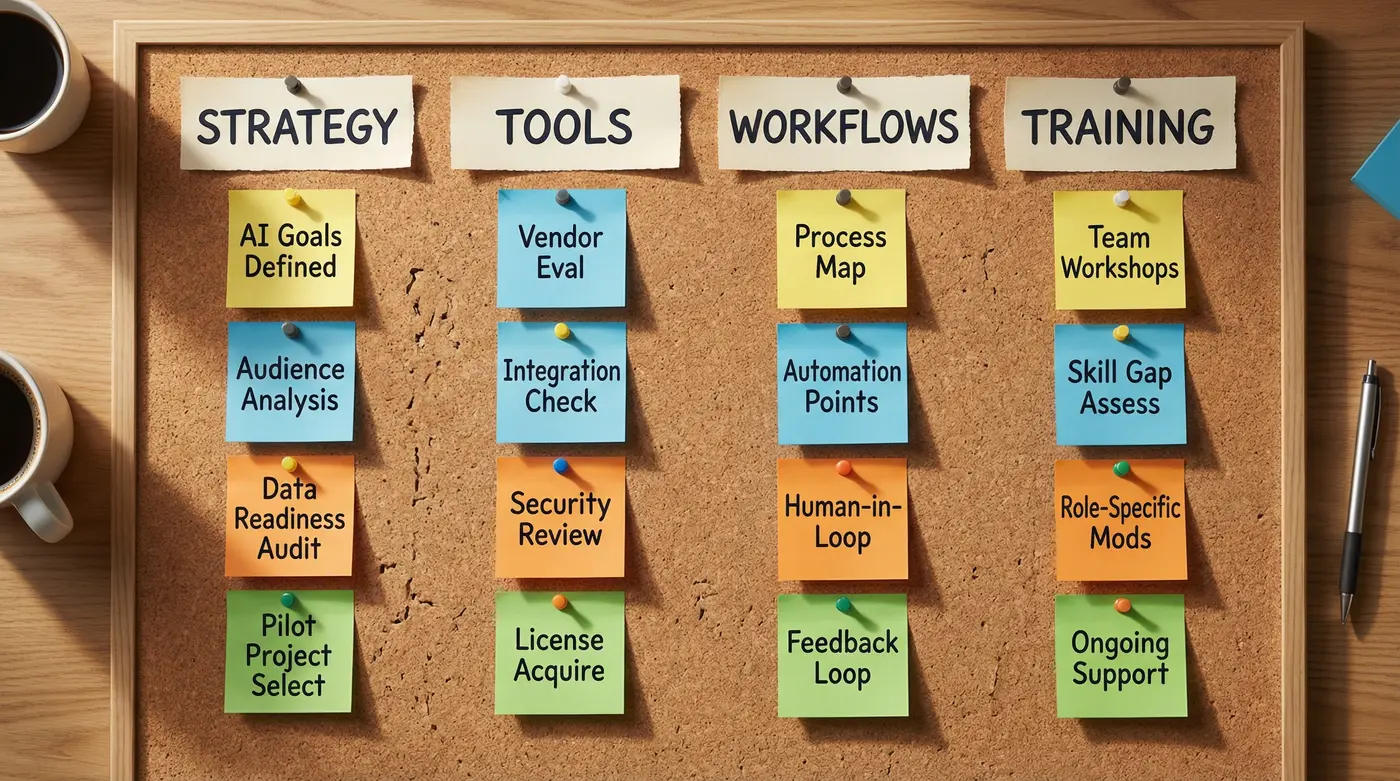
Develop repeatable processes that leverage AI automation while maintaining human oversight for strategic decisions. Document these workflows to ensure team consistency and training efficiency.
Compliance and Governance
Implement approval processes and brand guidelines that work across your AI tool stack. Automated compliance checks prevent errors while enabling rapid execution.
Automation Best Practices for Scalable Results
Successful AI implementation follows a structured approach that minimizes risk while maximizing impact:
Start Small and Test
Begin with one or two tools that address your biggest pain points. Test thoroughly with pilot campaigns before scaling across all client accounts or marketing channels.
Measure Everything
Establish baseline metrics before implementing AI tools, then track improvements in efficiency, performance, and ROI. This data guides expansion decisions and demonstrates value to stakeholders.
Maintain Human Oversight
AI excels at automation and optimization, but human judgment remains essential for strategy, creativity, and quality control. Design workflows that leverage both effectively.
Invest in Training
Team members need proper training to maximize AI tool capabilities. This investment pays dividends in improved efficiency and better results.
Real World Success Stories
Leading agencies and brands demonstrate the transformative potential of integrated AI marketing stacks:
Klarna achieved $10 million in annual savings by implementing AI powered customer service and content creation tools, while maintaining high quality standards through automated quality checks.
L’Oréal uses AI for personalized product recommendations and dynamic content creation across multiple markets, achieving significant improvements in engagement and conversion rates.
Mastercard leverages AI for real time campaign optimization and fraud detection, enabling more sophisticated targeting while maintaining security and compliance standards.
These examples highlight how AI enables organizations to scale sophisticated marketing operations without proportional increases in headcount or complexity.
Building Your Future Ready Marketing Operation
Creating an AI powered marketing operation requires strategic planning and careful execution:
Assess Current Capabilities
Audit your existing tech stack and identify integration opportunities. Look for redundancies and gaps that AI tools can address efficiently.
Prioritize High Impact Areas
Focus initial AI implementation on activities that consume significant time or require frequent optimization. Content creation, campaign management, and lead scoring often provide quick wins.
Plan for Scalability
Choose tools and platforms that can grow with your business. Consider factors like pricing models, feature roadmaps, and integration capabilities when making selections.
Develop Change Management Processes
AI implementation requires organizational change. Establish training programs, update job descriptions, and create new workflows that leverage AI capabilities effectively.
The Future of AI Powered Marketing
The next horizon in AI marketing extends beyond content generation and campaign optimization. Emerging trends include agent based buying and selling, advanced multimodal content creation, and end to end automation that connects customer acquisition through retention.
Early adopters who build integrated AI capabilities now will be positioned to leverage these advanced features as they become available. The key is establishing a foundation of connected tools, clean data, and trained teams that can adapt to evolving technology.
Ready to Transform Your Marketing Operations?
The opportunity to leverage ai tools for digital marketers has never been greater. Whether you are looking to streamline content creation, optimize multi channel campaigns, or scale personalized customer experiences, the right AI tools can accelerate your growth while improving efficiency.
At DoneWithYou, we specialize in implementing integrated AI marketing solutions that drive measurable results for businesses ready to scale. Our collaborative approach combines expert AI tool selection and integration with hands on training, ensuring your team can maximize these powerful capabilities.
Contact us today to discuss how AI powered marketing automation can help double your growth in the next 12 months while reducing operational complexity and improving ROI across all channels.
For more insights on digital transformation and scaling, explore our guide on digital transformation with AI.