Complete Guide to Building High-Converting Sales Funnels: AI, Automation, and Multi-Channel Strategies for Exponential Growth
Why Building Sales Funnels Has Become Mission-Critical for B2B and High-Ticket Industries
The landscape of customer acquisition has fundamentally shifted. With 70% of B2B purchasing decisions happening before prospects ever speak to a salesperson, building sales funnels has evolved from a nice-to-have to an absolute necessity for growth-focused businesses.
For companies generating $500K to $10M in revenue, traditional marketing approaches simply cannot deliver the precision, scalability, and measurable ROI required to double growth within 12 months. The modern buyer expects personalized, relevant touchpoints across multiple channels, delivered at exactly the right moment in their decision-making process.
High-ticket industries like luxury real estate, financial services, and premium consulting face unique challenges. These sectors require sophisticated nurturing sequences that build trust, demonstrate expertise, and justify significant investments. A well-designed funnel system addresses these challenges by creating systematic, repeatable processes that guide prospects from initial awareness through to purchase and beyond.
The Evolution of Sales Funnel Architecture: Full-Funnel, Multi-Touch, and Data-Driven Systems
The traditional AIDA model has given way to more sophisticated frameworks that account for the complex, non-linear nature of modern buyer journeys. Today’s effective sales funnel strategies encompass:
Top of Funnel (TOFU): Awareness and Discovery
At this stage, prospects are identifying problems and seeking educational content. Effective TOFU tactics include:
• SEO-optimized pillar content that establishes thought leadership
• Social media advertising across LinkedIn, Facebook, and industry-specific platforms
• Content syndication through trusted third-party networks
• Ungated resources that provide immediate value without barriers
• Webinars and virtual events that showcase expertise
The key is casting a wide net while maintaining relevance to your ideal customer profile. This requires sophisticated audience segmentation and content mapping aligned to specific buyer personas.
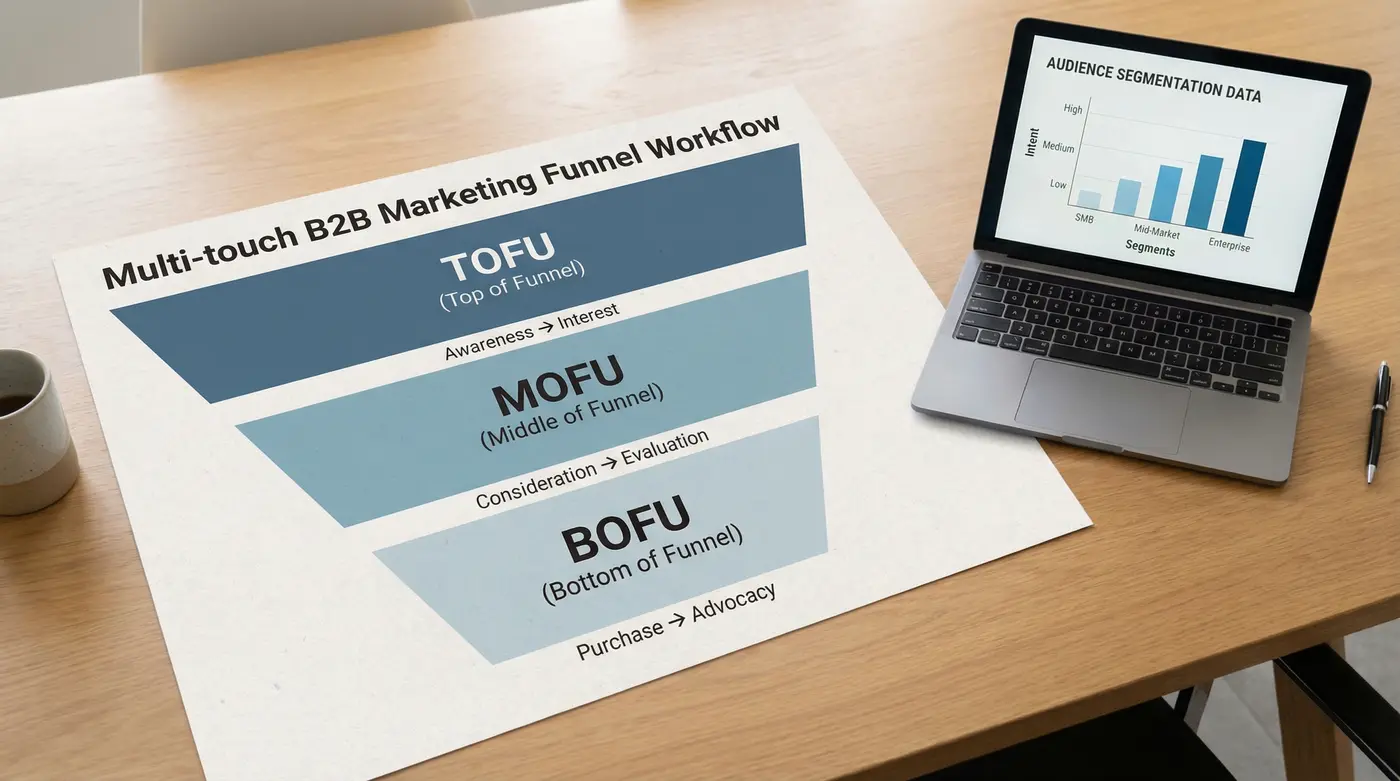
Middle of Funnel (MOFU): Consideration and Evaluation
MOFU represents the critical nurturing phase where prospects evaluate solutions and providers. Successful strategies include:
• Automated email nurture sequences triggered by specific behaviors
• Gated premium content like industry reports and case studies
• Retargeting campaigns with educational messaging
• Personalized video outreach for high-value prospects
• Interactive tools like calculators, assessments, or configurators
This stage requires careful balance between providing value and gathering intelligence about prospect needs, timeline, and decision-making authority.
Bottom of Funnel (BOFU): Decision and Purchase
BOFU focuses on removing final objections and accelerating purchase decisions:
• Sales-qualified lead handoff with complete prospect intelligence
• Personalized proposals and custom demonstrations
• Customer testimonials and detailed case studies
• Risk-reversal offers like guarantees or trial periods
• Urgency and scarcity elements when appropriate
Post-Funnel: Retention and Expansion
The most profitable part of any funnel extends beyond the initial purchase:
• Comprehensive onboarding sequences
• Customer success programs and regular check-ins
• Upsell and cross-sell campaigns
• Referral programs that leverage satisfied customers
• User-generated content campaigns that build social proof
Integrating AI and Predictive Analytics for Smarter Funnel Performance
Artificial intelligence has transformed how businesses approach building sales funnels, enabling unprecedented levels of personalization and optimization.
Advanced Segmentation and Lead Scoring
Modern AI systems analyze hundreds of data points to create dynamic segments based on:
• Behavioral patterns across all touchpoints
• Demographic and firmographic characteristics
• Intent signals from content consumption
• Engagement timing and frequency
• Social media activity and connections
Machine learning algorithms continuously refine these segments, ensuring that messaging remains relevant as prospects progress through the funnel.
Hyper-Personalization at Scale
AI enables personalization that goes far beyond inserting first names into email subject lines:
• Dynamic website content that changes based on visitor profiles
• Personalized product recommendations based on browsing behavior
• Customized email content and send-time optimization
• Adaptive landing pages that match ad messaging and visitor intent
• Predictive content recommendations for next-best actions

Predictive Analytics for Funnel Optimization
Predictive models help identify:
• Which prospects are most likely to convert and when
• Optimal timing for sales outreach
• Content preferences by segment and funnel stage
• Risk factors that indicate potential churn
• Expansion opportunities within existing accounts
These insights enable proactive funnel management rather than reactive responses to prospect behavior.
Aligning Marketing, Sales, and Automation Platforms for Seamless Operations
The foundation of effective AI-driven marketing automation lies in clean, integrated data systems. Without proper alignment between CRM, marketing automation, and analytics platforms, even the most sophisticated funnel strategies will fail.
CRM Integration and Data Synchronization
Successful funnel implementation requires:
• Real-time data sync between marketing and sales systems
• Unified customer profiles that include all touchpoint interactions
• Automated lead routing based on predefined criteria
• Consistent lead scoring across all platforms
• Closed-loop reporting that tracks ROI from first touch to closed deal
MarTech Stack Optimization
Many organizations suffer from “MarTech bloat” with overlapping tools that create data silos. A clean, integrated stack includes:
• Core CRM platform (Salesforce, HubSpot, or similar)
• Marketing automation system with robust segmentation capabilities
• Analytics and attribution tools for performance measurement
• Social media management and advertising platforms
• Content management and personalization engines
The key is ensuring seamless data flow between all systems while maintaining data quality and compliance standards.
Account-Based Marketing Evolution: Targeting High-Value Accounts with Precision
For businesses targeting high-ticket clients, Account-Based Marketing (ABM) has evolved into a sophisticated, multi-channel approach that treats individual accounts as markets of one.
Intent Data and Behavioral Signals
Modern ABM leverages multiple data sources to identify in-market accounts:
• First-party intent data from website and content engagement
• Third-party intent signals from industry publications and research
• Social media monitoring for relevant conversations
• Technographic data indicating technology stack changes
• News and event monitoring for business trigger events
Dynamic Multi-Channel Orchestration
Once target accounts are identified, coordinated campaigns deploy across:
• LinkedIn advertising with account-specific messaging
• Personalized direct mail and gifting campaigns
• Custom landing pages and microsites
• Coordinated sales outreach with marketing intelligence
• Event-based marketing at industry conferences
The goal is creating a consistent, coordinated experience across all touchpoints while respecting the prospect’s preferred communication channels.
Content Strategies for Every Funnel Stage
Content remains the fuel that powers modern sales funnels, but the approach has evolved significantly beyond traditional blog posts and whitepapers.
Pillar-and-Cluster Content Models
This approach creates comprehensive topic coverage that serves both human readers and AI algorithms:
• Pillar pages provide comprehensive coverage of broad topics
• Cluster content explores specific subtopics in detail
• Internal linking creates topical authority and improves SEO
• Content upgrades capture leads at multiple touchpoints
• Repurposing strategies maximize content ROI across channels
Zero-Click Content and Interactive Touchpoints
With the rise of AI-powered search, content strategy must account for zero-click scenarios:
• Structured data markup for featured snippets
• Comprehensive FAQ sections that answer common queries
• Interactive tools that provide immediate value
• Video content optimized for social media consumption
• Podcast content for audio-first audiences
Reducing Friction and Accelerating Conversions
Modern funnel optimization focuses on removing barriers that prevent prospects from moving to the next stage.
Automated Nurture Sequences
Effective nurture campaigns include:
• Welcome sequences that set expectations and provide value
• Educational series that build expertise and trust
• Behavioral triggers based on specific actions
• Re-engagement campaigns for inactive subscribers
• Win-back sequences for lost prospects
Conversational Marketing and Self-Service Options
Modern prospects expect immediate responses and self-service capabilities:
• AI-powered chatbots for initial qualification
• Self-serve demo environments
• Interactive pricing calculators
• Scheduling tools for sales meetings
• Resource libraries with searchable content
Optimized Conversion Points
Every funnel stage should include optimized conversion opportunities:
• Mobile-responsive landing pages with clear value propositions
• Streamlined forms that request only essential information
• Social proof elements like testimonials and reviews
• Multiple contact options to accommodate different preferences
• Clear next steps and expectations
Measuring What Matters: Pipeline Impact and Attribution
Building sales funnels without proper measurement is like flying blind. Modern attribution models provide insights into true funnel performance.
Key Performance Indicators
Critical metrics include:
• Marketing Qualified Lead (MQL) to Sales Qualified Lead (SQL) conversion rates
• Pipeline velocity and deal progression rates
• Customer acquisition cost by channel and campaign
• Lifetime value and expansion revenue
• Attribution across multiple touchpoints
Closed-Loop Attribution
Understanding the complete customer journey requires:
• First-touch and last-touch attribution models
• Multi-touch attribution that credits all influencing factors
• Time-decay models that weight recent interactions more heavily
• Custom attribution models based on business-specific factors
• Regular model validation and refinement
Compliance, Trust, and Ethical Marketing
In an era of increasing privacy concerns and regulations, building trust is essential for funnel success.
Privacy-First Funnel Design
Compliant funnels include:
• Clear privacy policies and data usage explanations
• Opt-in mechanisms for all communications
• Easy unsubscribe and data deletion processes
• Secure data handling and storage practices
• Transparent value exchange for information requests
Building Trust Through Transparency
Trust-building elements include:
• Detailed About Us pages with team information
• Client testimonials with verifiable details
• Case studies with specific results and methodologies
• Industry certifications and partnerships
• Thought leadership content that demonstrates expertise
Common Pitfalls and Optimization Strategies
Even well-designed funnels can underperform due to common mistakes:
Technical Issues
• Poor mobile optimization reducing mobile conversions
• Slow page load times increasing bounce rates
• Broken tracking that prevents accurate measurement
• Form errors that frustrate potential leads
• Email deliverability issues affecting nurture sequences
Strategic Misalignment
• Mismatched messaging between ads and landing pages
• Inadequate lead scoring causing premature sales handoffs
• Insufficient nurturing for long sales cycles
• Lack of personalization in high-touch industries
• Poor sales and marketing alignment
Ready to Transform Your Sales Funnel Performance?
Building sales funnels that drive exponential growth requires expertise, technology, and ongoing optimization. The integration of AI, automation, and multi-channel strategies creates opportunities for unprecedented performance, but only when implemented correctly.
For businesses serious about doubling their growth in 12 months, partnering with experienced professionals can accelerate results while avoiding costly mistakes. The right team brings together strategy, technology, and execution to create funnels that not only generate leads but convert them into high-value, long-term customers.
The future belongs to businesses that can create personalized, efficient, and measurable customer acquisition systems. The question is not whether to invest in advanced funnel strategies, but how quickly you can implement them to gain competitive advantage in your market.
automation system strategies and email marketing models continue to support scalable funnel growth.