Business Automation for Small Business: Complete Guide to Double Your Efficiency
The landscape of business automation for small business has fundamentally shifted from a luxury reserved for enterprise companies to an essential competitive advantage. Today’s small business owners face unprecedented pressure to streamline operations, reduce costs, and scale efficiently while maintaining the personal touch that sets them apart from larger competitors.
This comprehensive guide will walk you through everything you need to know about implementing effective business automation strategies that can genuinely double your operational efficiency. Whether you’re just starting your automation journey or looking to optimize existing systems, the insights and practical steps outlined here will help you make informed decisions that drive real results.
Why Business Automation Has Become Essential for Small Business Success
The evolution of automation for small businesses represents one of the most significant shifts in how companies operate. What once required substantial technical expertise and hefty budgets is now accessible through user-friendly platforms that can be implemented without coding knowledge.
Modern small businesses face several critical challenges that automation directly addresses. Manual processes consume valuable time that could be spent on strategic activities like business development and customer relationship building. Human error in repetitive tasks can lead to costly mistakes, particularly in areas like invoicing, inventory management, and customer communications. Additionally, inconsistent processes make it difficult to scale operations effectively as businesses grow.
The competitive advantages of implementing business automation are substantial. Companies that automate core processes typically see a 20-30% reduction in operational costs within the first year. More importantly, automation enables small teams to handle significantly larger workloads without proportional increases in staffing costs, creating a path to sustainable growth.
The Current State of Small Business Workflow Automation
Today’s automation landscape offers unprecedented opportunities for small businesses to compete with enterprise-level efficiency. The democratization of technology has made sophisticated tools accessible to companies of all sizes, with many solutions specifically designed for the unique needs of smaller operations.
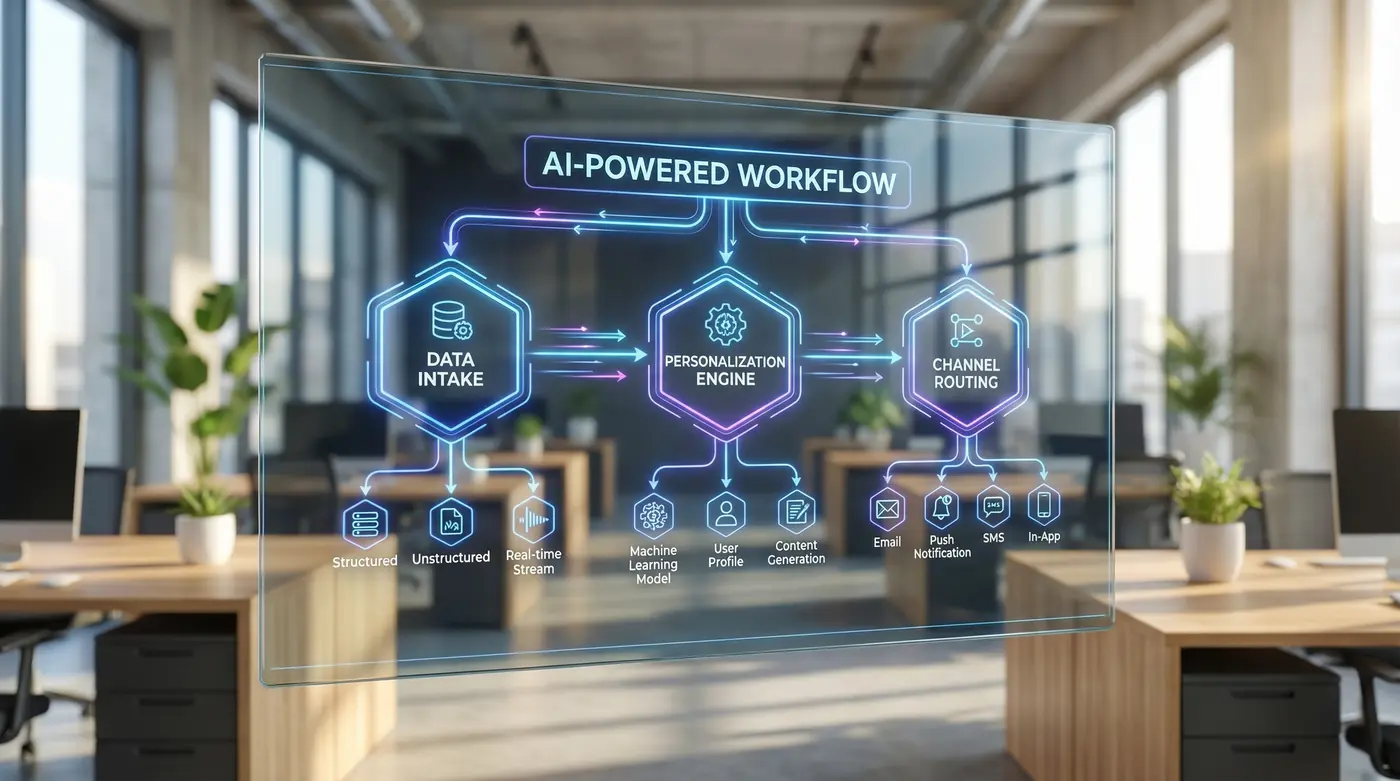
AI automation tools have particularly transformed what’s possible for small businesses. These platforms can now handle complex decision-making processes, learn from patterns in business data, and adapt to changing conditions without constant manual intervention. From chatbots that provide 24/7 customer support to predictive analytics that optimize inventory levels, AI-powered automation is no longer science fiction.
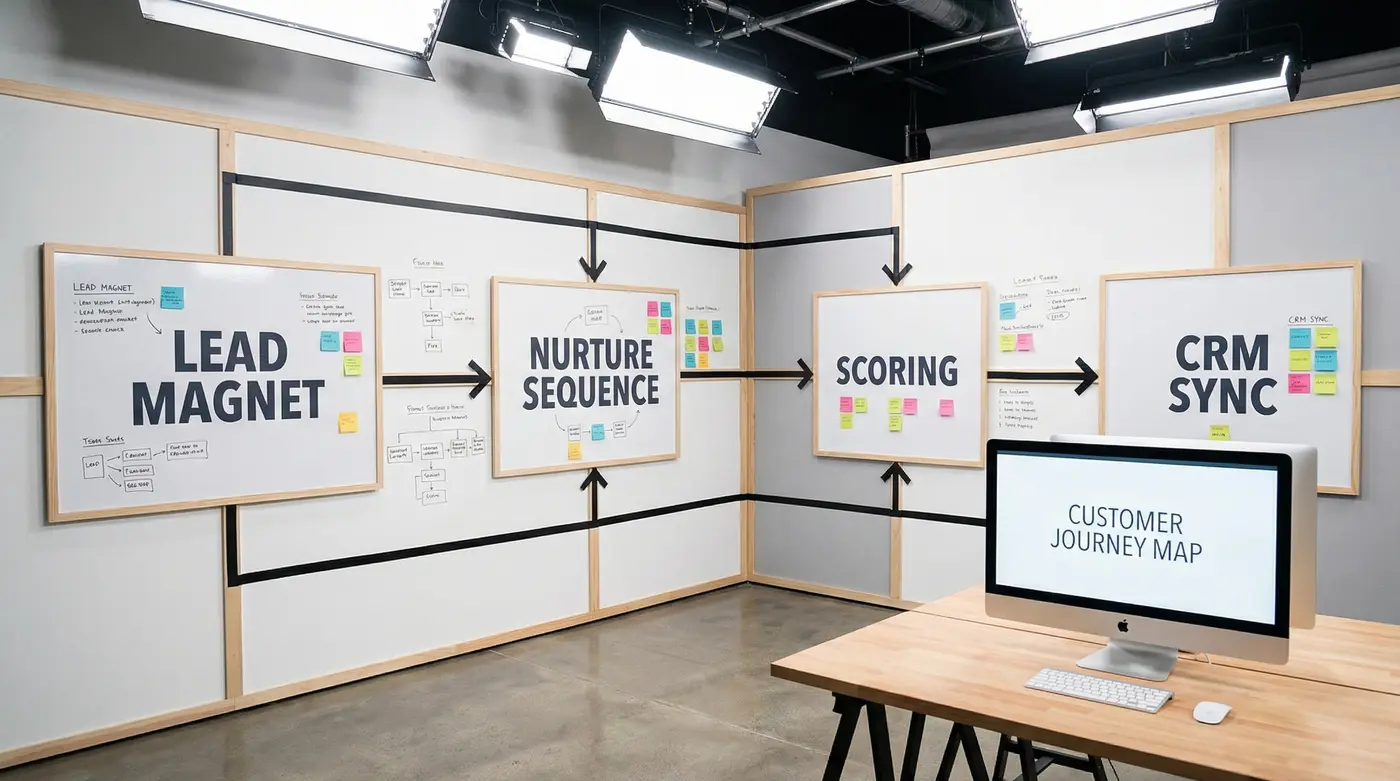
The integration capabilities of modern platforms have also evolved dramatically. Tools like Zapier and Make allow businesses to connect virtually any software applications, creating seamless workflows that span multiple systems. This means a lead captured through a website form can automatically trigger a series of actions: adding the contact to a CRM, sending a personalized welcome email, scheduling a follow-up task for the sales team, and updating reporting dashboards.
Identifying High-Impact Automation Opportunities in Your Business
The key to successful business automation lies in identifying the right processes to automate first. Not all tasks are suitable for automation, and attempting to automate everything at once often leads to complexity and confusion rather than efficiency gains.
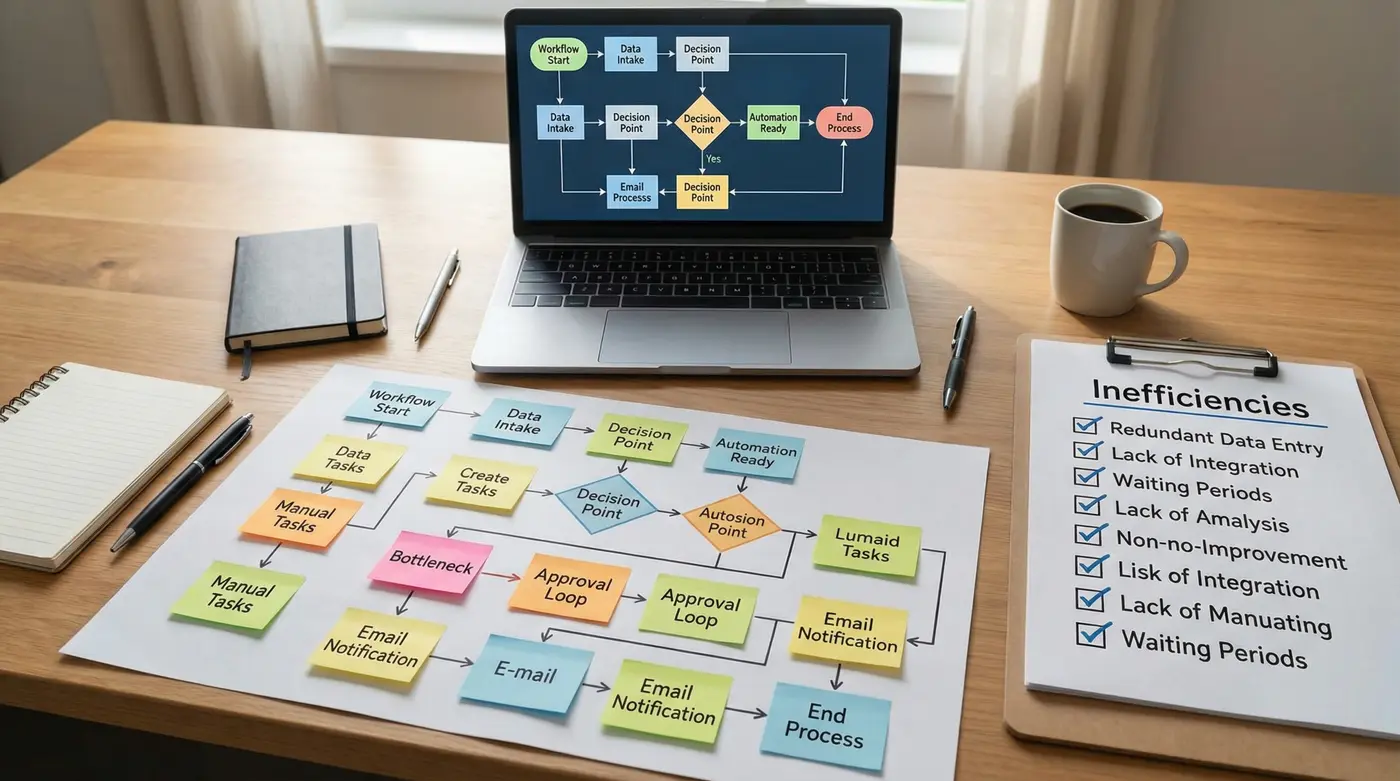
Start by conducting a workflow audit of your current operations. Document how work currently flows through your organization, identifying bottlenecks, repetitive tasks, and areas where errors commonly occur. Pay particular attention to processes that involve multiple team members or systems, as these often benefit most from automation.
High-impact automation opportunities typically share several characteristics. They involve repetitive, rule-based tasks that don’t require complex decision-making or creativity. They consume significant time from valuable team members who could be focusing on higher-value activities. They’re prone to human error or inconsistency, and they involve data transfer between different systems or platforms.
Common areas where small businesses see immediate returns from automation include lead capture and initial follow-up sequences, appointment scheduling and calendar management, invoice generation and payment processing, inventory tracking and reordering, customer support for frequently asked questions, social media posting and engagement monitoring, and data entry and reporting tasks.
Essential Automation Tools for Small Business Success
The modern automation toolkit for small businesses centers around several categories of essential tools, each addressing specific operational needs while integrating seamlessly with others to create comprehensive automated workflows.
Customer Relationship Management (CRM) platforms serve as the central hub for most business automation strategies. Tools like Pulse CRM offer comprehensive automation capabilities that extend far beyond simple contact management. These systems can automatically score leads based on behavior and demographics, trigger personalized email sequences based on customer actions, schedule and track follow-up activities, generate proposals and contracts, and provide real-time reporting on sales pipeline performance.
Integration platforms like Zapier and Make act as the nervous system of your automation infrastructure, connecting different tools and enabling complex, multi-step workflows. These platforms allow you to create sophisticated automation sequences without coding knowledge, using simple trigger-and-action logic to connect hundreds of popular business applications.
Communication automation tools ensure consistent, timely interactions with customers and prospects. Email marketing platforms like Mailchimp or ConvertKit can automatically nurture leads with personalized content based on their interests and behavior. Scheduling tools like Calendly eliminate the back-and-forth of appointment setting while automatically preparing meeting rooms and sending reminders.
Financial automation solutions like Xero or QuickBooks streamline accounting processes, automatically categorizing expenses, generating invoices, processing payments, and maintaining accurate financial records. These tools often integrate with banking systems to provide real-time cash flow visibility and automated reconciliation.
Implementing Your First Automation Project
Successfully implementing business automation requires a strategic, phased approach that minimizes disruption while maximizing learning and adoption. The most effective automation projects start small, focusing on a single, well-defined process that can serve as a proof of concept for broader automation initiatives.
Begin by selecting a process that meets three criteria: it’s currently causing pain or inefficiency, it’s relatively simple to automate, and success can be easily measured. Common first automation projects include automated lead follow-up sequences, appointment scheduling workflows, or basic customer support chatbots.
Before implementing any automation, thoroughly document your current process. Map out each step, identify the people involved, note where information is stored or transferred, and establish baseline metrics for time, cost, and error rates. This documentation will be crucial for designing effective automation and measuring success.
When designing your automated workflow, focus on simplicity and reliability over complexity and features. A simple automation that works consistently is far more valuable than a complex system that frequently requires manual intervention. Build in appropriate checks and balances to ensure quality and provide fallback options when automation encounters unexpected situations.
Testing is critical to successful automation implementation. Start with a small subset of your typical volume, monitor results closely, and be prepared to make adjustments based on what you learn. Involve your team in the testing process, gathering feedback on how the automation affects their daily work and customer interactions.
Advanced Automation Strategies for Scaling Operations
Once you’ve successfully implemented basic automation, more sophisticated strategies can unlock even greater efficiency gains and enable truly scalable operations. Advanced automation focuses on creating intelligent, adaptive systems that can handle complex decision-making and multi-channel coordination.
Behavioral automation represents the next level of sophistication, using customer actions and preferences to trigger highly personalized responses. For example, an e-commerce business might automatically adjust email frequency and content based on individual customer engagement patterns, or a service business might automatically escalate support tickets based on customer value and issue complexity.
Multi-channel automation ensures consistent customer experiences across all touchpoints. When a customer interacts with your business through your website, social media, email, or phone, automated systems can coordinate responses and maintain context across all channels. This creates a seamless experience while reducing the workload on your team.
Predictive automation uses historical data and AI algorithms to anticipate needs and take proactive action. Inventory management systems can automatically reorder products based on seasonal patterns and current trends. Marketing automation can identify customers at risk of churning and automatically launch retention campaigns.
Data-Driven Decision Making Through Automation
One of the most powerful benefits of business automation is the wealth of data it generates about your operations and customers. Modern automation platforms don’t just execute tasks, they capture detailed information about every interaction, conversion, and outcome.
Effective data utilization requires establishing clear key performance indicators (KPIs) that align with your business objectives. For sales automation, you might track metrics like lead response time, conversion rates at each stage of the pipeline, and average deal size. For marketing automation, focus on metrics like email open rates, click-through rates, cost per acquisition, and customer lifetime value.
Real-time dashboards provide immediate visibility into business performance, enabling quick responses to emerging trends or issues. Tools like Google Looker Studio can aggregate data from multiple sources, creating comprehensive views of business health that update automatically as new information becomes available.
The key to actionable insights lies in connecting data points across different systems and processes. When your CRM talks to your email marketing platform, which connects to your accounting system, you can track the complete customer journey from first contact to final purchase and beyond. This comprehensive view enables more accurate forecasting, better resource allocation, and more effective strategic planning.
Cybersecurity Considerations for Automated Businesses
As businesses become more automated and digitally connected, cybersecurity transforms from a technical concern to a fundamental business risk. Automated systems often have access to sensitive customer data, financial information, and proprietary business processes, making them attractive targets for cybercriminals.
Essential security measures for automated businesses include multi-factor authentication for all systems and accounts, regular software updates and security patches, encrypted data transmission and storage, automated backup systems with tested recovery procedures, employee training on security best practices, and regular security audits and vulnerability assessments.
Access controls become particularly important in automated environments. Implement the principle of least privilege, ensuring that automated systems and human users only have access to the minimum information and capabilities necessary for their functions. Regularly review and update access permissions as roles and responsibilities change.
Incident response planning is crucial for businesses relying heavily on automation. Develop clear procedures for identifying, containing, and recovering from security incidents. Include communication plans for notifying customers and partners if their data may have been compromised. Regular testing of these procedures ensures your team can respond effectively under pressure.
Maintaining the Human Touch in an Automated World
While automation can significantly improve efficiency and consistency, the most successful small businesses use technology to enhance rather than replace human relationships. The goal is to automate routine tasks so your team can focus on high-value interactions that require empathy, creativity, and complex problem-solving.
Design your automated systems to escalate appropriately to human team members when situations require personal attention. Customer service chatbots should seamlessly transfer complex issues to human agents. Sales automation should identify high-value prospects for personal outreach by your sales team. Marketing automation should segment audiences so you can provide targeted, relevant content that feels personal rather than generic.
Personalization at scale represents the sweet spot of modern business automation. Use the data collected by your automated systems to create more relevant, timely interactions with customers. Automated email sequences can reference specific customer interests, purchase history, or engagement patterns. CRM systems can provide sales teams with detailed customer insights before important calls or meetings.
Regular feedback collection ensures your automation enhances rather than detracts from customer experience. Survey customers about their interactions with your automated systems. Monitor social media and review sites for mentions of your automated processes. Use this feedback to continuously refine and improve your automation strategies.
Building Financial Resilience Through Smart Automation
Strategic automation can significantly improve financial stability and cash flow management, particularly important for small businesses operating with limited resources. Automated systems can provide early warning of financial issues while reducing the costs associated with manual processes.
Cash flow automation includes automated invoicing systems that send bills immediately upon completion of work or delivery of products, payment processing that reduces the time between invoice and payment, automated follow-up for overdue accounts, expense tracking and categorization, and real-time financial reporting and forecasting.
Cost control through automation extends beyond simply reducing labor costs. Automated inventory management prevents overstocking and stockouts, both of which tie up valuable capital. Energy management systems can automatically adjust heating, cooling, and lighting based on occupancy and usage patterns. Automated procurement can negotiate better rates with suppliers and ensure you never run out of critical supplies.
Financial forecasting becomes more accurate when based on real-time data from automated systems. Instead of relying on monthly or quarterly reports, businesses can track key financial metrics daily or even hourly. This visibility enables proactive decision-making and helps identify potential problems before they become critical.
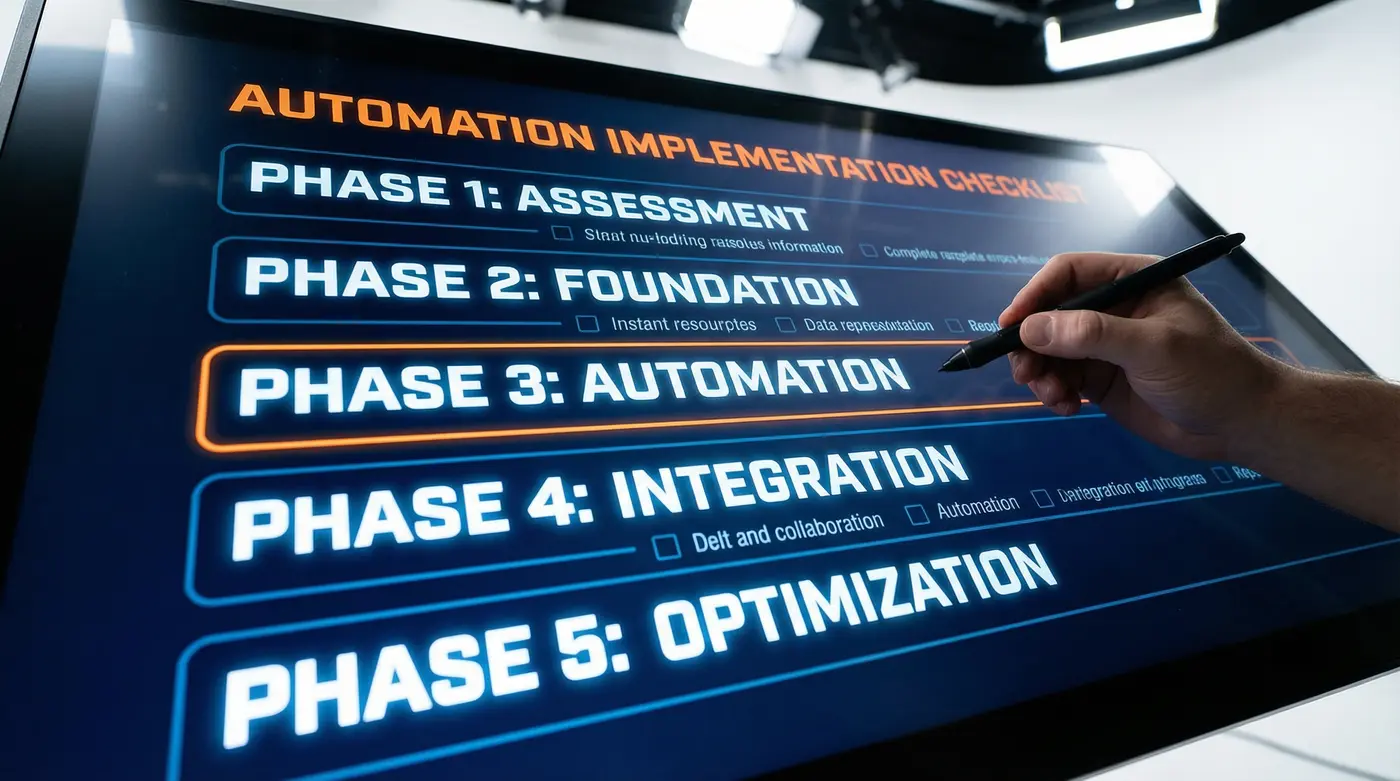
Actionable Automation Implementation Checklist
Ready to transform your business through strategic automation? Use this comprehensive checklist to ensure your implementation is thorough, strategic, and successful.
Phase 1: Assessment and Planning
Document your current workflows and identify pain points. Prioritize automation opportunities based on impact and complexity. Set clear, measurable goals for your automation initiatives. Research and select appropriate tools and platforms. Develop a realistic timeline and budget for implementation.
Phase 2: Foundation Building
Implement basic security measures including multi-factor authentication. Set up central data storage and backup systems. Establish your CRM as the hub of your automation strategy. Connect key systems through integration platforms. Train your team on new tools and processes.
Phase 3: Initial Automation
Start with one simple, high-impact process. Test thoroughly with a small subset of your typical volume. Monitor results and gather team feedback. Make necessary adjustments based on testing. Roll out to full volume once testing is successful.
Phase 4: Expansion and Optimization
Implement additional automation based on lessons learned. Connect systems for more sophisticated workflows. Set up comprehensive reporting and analytics. Regularly review and optimize existing automation. Plan for scaling and advanced features.
Phase 5: Ongoing Management
Establish regular review cycles for all automated processes. Monitor key performance indicators and adjust as needed. Stay updated on new features and capabilities of your platforms. Continuously gather feedback from team and customers. Plan for future automation opportunities as your business grows.
Your Next Steps Toward Automated Success
The journey toward comprehensive business automation for small business doesn’t happen overnight, but the benefits compound quickly as you build momentum. The key is to start with a clear strategy, focus on high-impact opportunities, and maintain a commitment to continuous improvement.
Remember that successful automation is about enhancing your team’s capabilities rather than replacing them. The most effective automated businesses use technology to handle routine tasks while empowering their people to focus on strategy, creativity, and building meaningful customer relationships.
The competitive advantages of business automation will only grow stronger over time. Companies that embrace these technologies now will be better positioned to adapt to future changes, scale efficiently, and deliver exceptional customer experiences consistently.
Are you ready to unlock the full potential of your business through strategic automation? The time to start is now. Begin with a thorough assessment of your current processes, identify your highest-impact automation opportunity, and take the first step toward doubling your operational efficiency. Your future self and your customers will thank you for the investment in smarter, more efficient operations.
Ready to implement business automation that actually drives results? Our team specializes in helping businesses like yours design and implement comprehensive automation strategies that integrate seamlessly with your existing operations. Contact us today to discover how the right automation approach can transform your business efficiency and accelerate your growth.