The Complete Guide to Converting Leads into Customers: Advanced Funnel Strategies and AI Automation for Scalable Growth
The landscape of converting leads into customers has fundamentally transformed. While generating leads remains crucial, the real challenge lies in systematically nurturing those prospects through a sophisticated journey that builds trust, demonstrates value, and ultimately drives conversions. For businesses with substantial revenue streams, the stakes are higher than ever, with conversion optimization becoming the difference between modest growth and explosive scaling.
Modern buyers navigate complex decision-making processes, often engaging with 13+ pieces of content before making contact with sales teams. This shift demands a strategic approach that combines human insight with technological precision. The most successful companies are those that master the art of converting leads into customers through well-orchestrated sales funnel strategies, intelligent automation, and data-driven optimization.
Understanding the Modern Lead Conversion Landscape
The fundamentals of converting leads into customers have evolved dramatically. Today’s prospects expect personalized experiences, immediate responses, and value-driven interactions at every touchpoint. Quality now trumps quantity in lead generation, with businesses finding that focusing on fewer, highly-qualified prospects yields superior conversion rates and lower customer acquisition costs.
Speed-to-lead has become a critical success factor. Research consistently shows that companies responding to leads within 10 minutes experience dramatically higher close rates compared to those with slower response times. This emphasis on rapid engagement has made CRM automation and real-time notification systems essential components of any serious conversion strategy.
The buyer journey itself has become more complex, involving multiple stakeholders and extended evaluation periods. B2B purchases typically involve 6-10 decision-makers, each requiring different types of information and reassurance throughout the process. This complexity demands sophisticated nurturing strategies that address various concerns simultaneously while maintaining message consistency.

Mapping the Customer Journey for Maximum Conversion
Successful lead conversion begins with comprehensive customer journey mapping. This process involves identifying every touchpoint where prospects interact with your brand and optimizing each interaction to guide them toward purchase decisions. The modern buyer journey typically includes five distinct phases: problem recognition, solution exploration, vendor evaluation, consensus building, and purchase decision.
During the problem recognition phase, prospects are becoming aware of challenges that require solutions. Content at this stage should be educational and diagnostic, helping prospects understand the full scope of their problems. Interactive tools like assessments or calculators can be particularly effective for capturing contact information while providing immediate value.
The solution exploration phase sees prospects researching potential approaches to address their challenges. Here, case studies, whitepapers, and educational webinars prove most effective. The key is positioning your solution as the natural choice without appearing overly promotional.
Vendor evaluation involves direct comparison between competing solutions. This stage requires detailed product demonstrations, ROI calculators, and social proof elements like testimonials and reviews. Prospects need confidence that your solution will deliver promised results.
Consensus building often extends the sales cycle as multiple stakeholders align on decisions. Providing stakeholder-specific content and facilitating group presentations or workshops can accelerate this process significantly.
The purchase decision phase requires removing final obstacles and providing clear next steps. Limited-time incentives, flexible payment terms, or risk-reduction guarantees can be effective conversion catalysts.
Leveraging AI-Driven Marketing Automation for Lead Nurturing
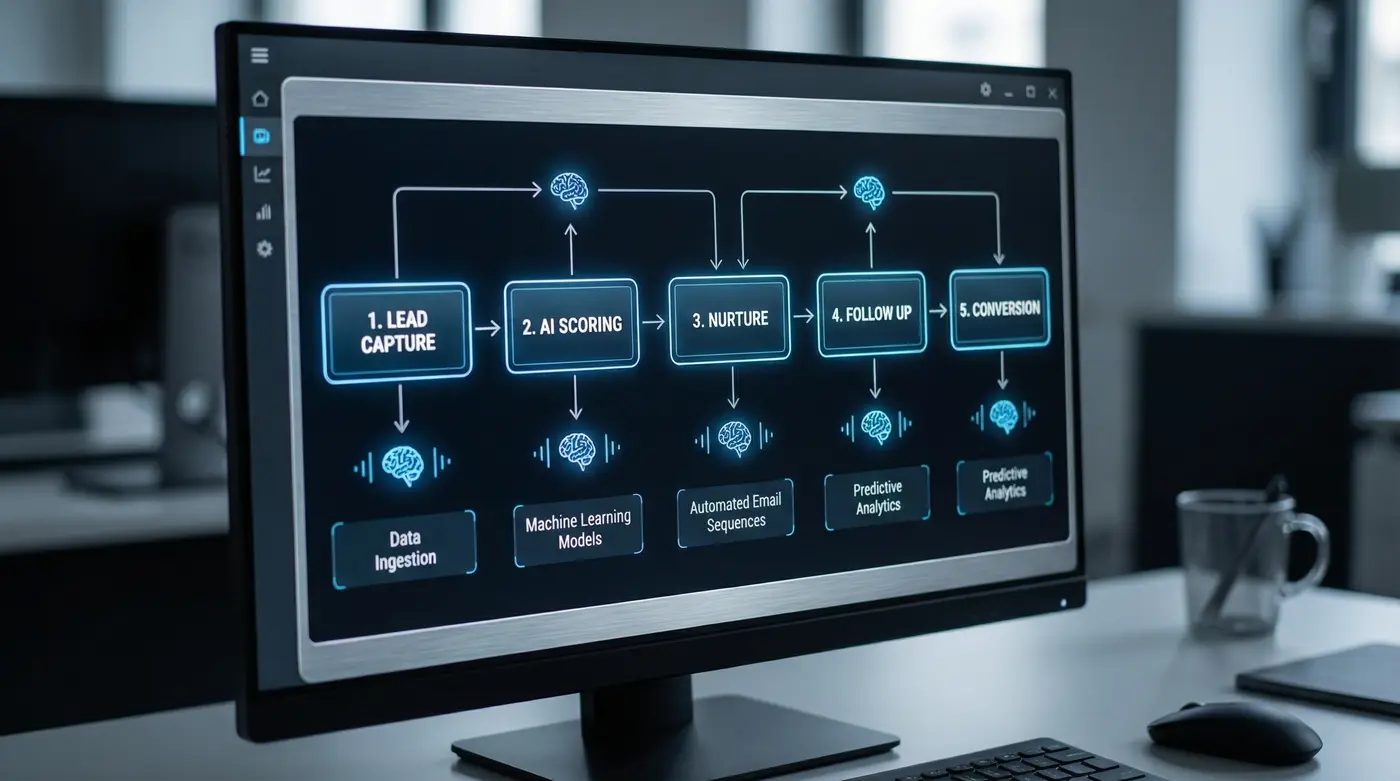
AI-driven marketing automation has revolutionized how businesses approach lead nurturing and conversion. Modern platforms can analyze prospect behavior, predict conversion likelihood, and automatically trigger personalized communications based on specific actions or timeframes.
Lead scoring algorithms now incorporate multiple data points including website behavior, email engagement, social media interactions, and demographic information. This comprehensive scoring enables sales teams to prioritize their efforts on prospects most likely to convert, improving efficiency and results.
Predictive analytics help identify prospects showing buying signals before they explicitly express interest. By analyzing patterns from previous customers, AI systems can flag prospects entering decision phases, enabling proactive outreach at optimal moments.
Personalization at scale becomes possible through AI-powered content recommendations. Systems can automatically select the most relevant case studies, product information, or educational resources for each prospect based on their industry, company size, and demonstrated interests.
Automated nurturing sequences ensure consistent follow-up without overwhelming sales teams. These sequences can branch based on prospect responses, creating truly dynamic experiences that adapt to individual prospect needs and preferences.
Implementing CRM Automation for Seamless Lead Management
CRM automation serves as the backbone of effective lead conversion systems. Modern CRM platforms integrate with marketing tools, communication systems, and analytics platforms to create comprehensive prospect management ecosystems.
Automated lead routing ensures prospects reach appropriate sales representatives immediately based on territory, industry expertise, or deal size. This immediate routing prevents leads from falling through cracks while ensuring optimal sales resource allocation.
Pipeline management automation tracks prospect progression through defined stages, automatically updating records and triggering follow-up tasks. This systematic approach ensures no prospect is neglected while providing clear visibility into conversion progress.
Communication automation can schedule follow-up emails, calendar invitations, and reminder tasks based on prospect interactions. This consistency ensures professional follow-up while freeing sales teams to focus on high-value activities.
Integration capabilities allow CRM systems to pull data from multiple sources, creating comprehensive prospect profiles that inform conversion strategies. Marketing automation platforms, social media tools, and website analytics all contribute to these unified views.
Multi-Channel Funnel Design for Predictable Conversions
Effective sales funnel strategies incorporate multiple channels to reach prospects where they are most receptive. This multi-channel approach increases touchpoint frequency while accommodating different communication preferences.
Paid advertising channels like Google Ads and LinkedIn provide immediate visibility for high-intent keywords and targeted demographics. These channels work best when integrated with sophisticated landing pages and immediate follow-up sequences.
Organic search remains crucial for long-term lead generation and credibility building. Content marketing strategies that address prospect pain points while demonstrating expertise create sustainable traffic sources that compound over time.
Social media platforms enable relationship building and thought leadership positioning. Regular valuable content sharing builds trust and keeps your brand visible during extended evaluation periods.
Email marketing provides direct communication channels for nurturing prospects through extended sales cycles. Segmented email campaigns based on prospect behavior and interests significantly improve engagement and conversion rates.
Direct outreach through LinkedIn, phone calls, or targeted mail can be highly effective for high-value prospects. The key is timing these outreach efforts based on demonstrated interest signals rather than arbitrary schedules.
Creating Stage-Specific Content That Converts
Content plays a pivotal role in converting leads into customers by addressing specific concerns and objections at each funnel stage. The most effective content strategies align content types with prospect mindsets and information needs.
Awareness stage content focuses on education and problem identification. Blog posts, industry reports, and diagnostic tools help prospects understand their challenges while positioning your brand as a knowledgeable resource.
Consideration stage content demonstrates solution capabilities and approaches. Case studies, comparison guides, and educational webinars show how your solutions address similar challenges for comparable organizations.
Decision stage content removes final purchase barriers and builds confidence. Product demonstrations, ROI calculators, implementation timelines, and risk-mitigation strategies address common decision-making concerns.
Video content has become increasingly important across all stages due to its ability to convey complex information quickly while building personal connections. Short-form videos work well for social media engagement, while longer presentations suit webinars and product demonstrations.
Interactive content like quizzes, assessments, and calculators provides immediate value while capturing detailed prospect information. This information enables more targeted follow-up and demonstrates your solution’s relevance to specific situations.
Implementing Conversational Marketing for Real-Time Engagement
Conversational marketing represents a significant shift toward real-time prospect engagement. AI-powered chatbots and messaging systems can qualify prospects, answer questions, and schedule meetings without human intervention.
Website chatbots should be deployed strategically on high-intent pages like pricing, product demonstrations, and case studies. These bots can qualify visitors, collect contact information, and route qualified prospects to appropriate sales representatives.
Messaging apps like WhatsApp and LinkedIn provide direct communication channels that prospects increasingly prefer over traditional contact forms. These platforms enable more natural conversations that build relationships while gathering qualification information.
Live chat systems allow real-time assistance during critical decision moments. Having knowledgeable representatives available during business hours can address concerns immediately, preventing prospects from seeking alternatives.
Voice assistants and phone systems can automate initial qualification while providing personalized experiences. Advanced systems can schedule callbacks, send information, and update CRM records automatically.
Building Trust Through Values-Based Branding and Social Proof
Trust has become the ultimate conversion factor in an increasingly crowded marketplace. Values-based branding that consistently demonstrates reliability, expertise, and results creates competitive advantages that pure feature comparisons cannot match.
Social proof elements like customer testimonials, case studies, and industry certifications provide third-party validation that prospects trust more than marketing claims. These elements should be prominently featured throughout the conversion funnel.
Transparency in pricing, processes, and results builds confidence among prospects who have been burned by overpromising vendors. Clear communication about what prospects can expect creates realistic expectations and reduces post-purchase dissatisfaction.
Industry recognition through awards, certifications, and media coverage provides external validation that supports conversion decisions. These credentials should be prominently displayed and regularly updated.
Customer success stories that detail specific results and outcomes provide concrete evidence of value delivery. These stories work particularly well when they feature prospects’ industry peers facing similar challenges.
Measuring and Optimizing Funnel Performance
Systematic measurement and optimization separate high-performing conversion funnels from mediocre ones. Key performance indicators must be tracked at every stage to identify improvement opportunities and validate strategy changes.
Conversion rate by source reveals which lead generation channels produce the highest-quality prospects. This information enables budget reallocation toward the most effective channels while identifying underperforming areas for improvement.
Stage progression rates show where prospects typically stall or drop out of the funnel. These insights highlight content gaps, process friction, or training needs that impact conversion performance.
Sales cycle length indicates funnel efficiency and helps predict revenue timing. Shorter cycles generally indicate better qualification and nurturing processes, while extended cycles may suggest inadequate content or poor lead quality.
Customer lifetime value compared to acquisition costs determines overall funnel profitability. This metric guides investment decisions and helps prioritize conversion optimization efforts.
Lead response times directly correlate with conversion rates and should be monitored continuously. Automation can help maintain optimal response times even during high-volume periods.
Avoiding Common Lead Conversion Pitfalls
Several common mistakes can undermine even well-designed conversion strategies. Recognizing and avoiding these pitfalls significantly improves conversion performance and resource efficiency.
Siloed teams create inconsistent messaging and poor prospect experiences. Sales and marketing alignment requires regular communication, shared goals, and integrated systems that provide unified prospect views.
Poor lead qualification wastes resources on prospects unlikely to convert while potentially neglecting high-value opportunities. Clear qualification criteria and systematic scoring processes ensure appropriate resource allocation.
Misaligned CRM processes create data gaps and missed follow-up opportunities. Regular process audits and team training ensure systems support rather than hinder conversion efforts.
Inadequate nurturing allows qualified prospects to lose interest or choose competitors. Systematic nurturing sequences with valuable content keep prospects engaged throughout extended evaluation periods.
Lack of personalization reduces message relevance and engagement. Modern prospects expect communications tailored to their specific situations and interests.
Practical Implementation Steps for Scalable Growth
Converting leads into customers at scale requires systematic implementation of proven strategies supported by appropriate technology and processes. The following steps provide a framework for building high-performing conversion systems.
Begin by auditing current conversion performance to identify the biggest improvement opportunities. This audit should examine lead quality, response times, nurturing effectiveness, and overall conversion rates by source.
Implement robust CRM systems that integrate with marketing platforms, communication tools, and analytics systems. These integrations provide comprehensive prospect visibility while automating routine tasks.
Develop stage-specific content that addresses prospect concerns and demonstrates value at each decision point. This content should be easily accessible to sales teams and automatically delivered through nurturing sequences.
Train sales and marketing teams on new processes, tools, and messaging to ensure consistent implementation. Regular training updates keep teams current with evolving best practices and system capabilities.
Establish measurement systems that track key metrics and provide actionable insights for continuous improvement. Regular reviews of these metrics enable proactive optimization rather than reactive problem-solving.
Are you ready to transform your lead conversion performance and achieve scalable growth? Our team specializes in designing and implementing comprehensive conversion systems that combine proven strategies with cutting-edge automation. Contact us today to discover how our collaborative approach can help you double your growth through systematic lead conversion optimization.
The future belongs to businesses that master the art and science of converting leads into customers. By implementing these proven strategies and maintaining a commitment to continuous optimization, your organization can build predictable, scalable conversion systems that drive consistent growth and competitive advantage.