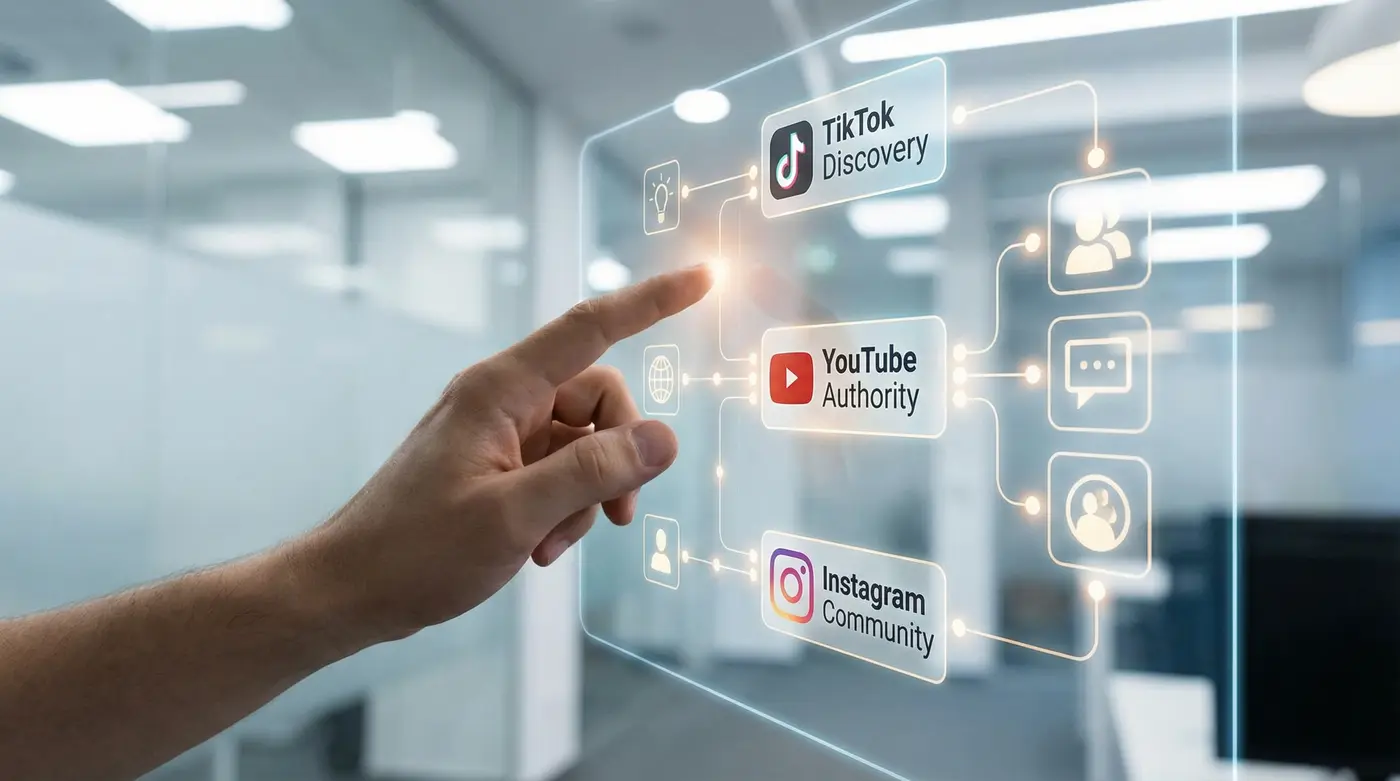
The Complete Guide to Optimizing Your Sales Funnel: AI, Automation, and Omnichannel Strategies for Doubling B2B Growth
The B2B sales landscape has undergone a dramatic transformation. Traditional linear funnels that once guided prospects through predictable stages are no longer sufficient in today’s complex, multi-channel environment. Modern buyers conduct extensive research independently, involve multiple decision-makers, and expect personalized experiences at every touchpoint. For businesses generating $500K to $10M in revenue, optimizing your sales funnel with AI, automation, and omnichannel strategies isn’t just an advantage—it’s essential for doubling growth.
This comprehensive guide reveals how to transform your sales funnel into a dynamic, intelligence-driven system that adapts to buyer behavior in real-time, maximizes conversions at every stage, and creates scalable growth for your business.
Why Static Sales Funnels No Longer Work
The traditional sales funnel was built for a different era. Today’s B2B buyers are fundamentally different from those of even five years ago. Research shows that 65% of buyers make purchasing decisions before ever speaking with a sales representative. They navigate complex buying journeys across multiple channels, with attention fragmented between social media, search engines, webinars, and peer networks.
The modern buying committee has expanded significantly, with an average of 6.8 stakeholders involved in B2B purchasing decisions. These decision-makers don’t move through your funnel in a predictable sequence. Instead, they jump between stages, revisit earlier phases, and require different types of content and engagement at various points in their journey.
Static funnels fail because they assume a linear progression that simply doesn’t exist anymore. When optimizing your sales funnel for today’s reality, you need systems that can:
• Adapt to non-linear buyer journeys
• Provide personalized experiences across multiple channels
• Leverage real-time data and buyer signals
• Coordinate seamlessly between marketing and sales teams
• Scale personalization without losing efficiency
The Four Critical Stages of Modern Sales Funnel Optimization
Top of Funnel (TOFU): Awareness and Curiosity
The awareness stage has evolved far beyond basic lead generation. Modern TOFU strategies focus on precise targeting using intent data, firmographic information, and behavioral signals. Buyers at this stage seek education, not sales pitches. They’re researching problems, exploring solutions, and building their understanding of the marketplace.
Successful TOFU optimization leverages:
• Intent Data Intelligence: Tools like 6sense and Demandbase identify accounts actively researching your solution category
• Content That Educates: Industry reports, thought leadership articles, and educational webinars that provide genuine value
• Signal-Based Outreach: Personalized engagement triggered by specific buyer behaviors and interests
• Multi-Channel Presence: Strategic content distribution across LinkedIn, Google, industry publications, and peer networks
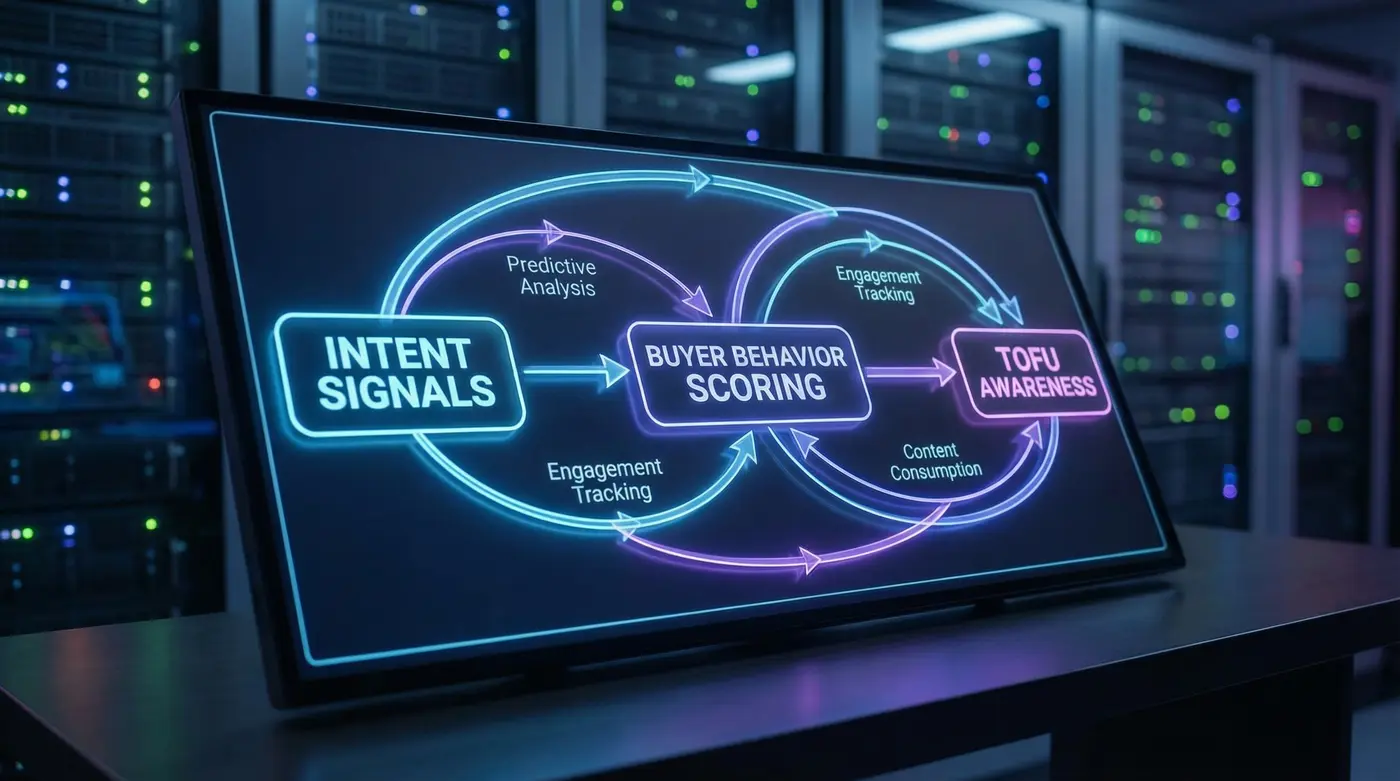
Companies that excel at TOFU optimization see 37% higher lead quality and 43% more accurate lead scoring compared to traditional methods.
Middle of Funnel (MOFU): Engagement and Qualification
MOFU is where intent surfaces and buyer engagement deepens. This stage requires sophisticated nurturing that moves beyond basic email sequences to include interactive demos, ROI calculators, and assessment tools. Many businesses at this stage benefit from strategies such as those found in automated lead generation.
Critical MOFU optimization tactics include:
• Interactive Content: Self-service demos, ROI calculators, and assessment tools that engage buyers while collecting valuable qualification data
• Persona-Driven Nurturing: Tailored content tracks that speak to specific roles within the buying committee
• Sales and Marketing Alignment: Seamless handoffs that preserve context and momentum
• Account Enrichment: Continuous data collection that builds comprehensive buyer profiles
Research indicates that well-nurtured leads produce 20% more sales opportunities than non-nurtured prospects, making MOFU optimization crucial for funnel performance.
Bottom of Funnel (BOFU): Decision and Validation
BOFU is where consensus-driven decisions happen. Multiple stakeholders evaluate options, validate business cases, and seek proof that your solution delivers promised results. This stage requires a shift from feature-focused presentations to value-centric validation.
Effective BOFU strategies include:
• Customized Demonstrations: Tailored product tours that address specific use cases and stakeholder concerns
• ROI Modeling: Detailed financial projections that quantify expected returns
• Social Proof: Case studies, customer references, and peer testimonials that build confidence
• Stakeholder Mapping: Understanding each decision-maker’s priorities and concerns
Organizations with optimized BOFU processes achieve 67% higher close rates and 28% shorter sales cycles.
Post-Sale: Retention and Expansion
The funnel doesn’t end at the sale. Post-purchase optimization focuses on customer success, expansion opportunities, and advocacy development. This stage often represents the highest ROI potential, as existing customers are significantly more likely to purchase additional solutions.
Post-sale optimization encompasses:
• Usage Monitoring: Tracking product adoption and identifying expansion opportunities
• Health Scoring: Predictive analytics that identify at-risk accounts before churn occurs
• Expansion Campaigns: Systematic approaches to upselling and cross-selling
• Advocacy Development: Programs that turn satisfied customers into active references
Harnessing AI and Automation for Funnel Excellence
Artificial intelligence and automation have become essential components of effective sales funnel optimization. AI enables personalization at scale, predictive analytics, and real-time decision-making that would be impossible with manual processes.
AI-Powered Lead Scoring and Prioritization
Modern lead scoring goes far beyond basic demographic and firmographic data. AI-powered systems analyze hundreds of behavioral signals, engagement patterns, and external data points to predict conversion likelihood with unprecedented accuracy.
Advanced lead scoring considers:
• Website behavior and content engagement
• Email interaction patterns
• Social media activity and connections
• Technographic and firmographic data
• Intent signals and research behaviors
• Competitive intelligence and market timing
Companies using AI-enhanced lead scoring report 43% greater accuracy in identifying high-value prospects and 37% improvement in overall lead quality.
Predictive Analytics for Pipeline Management
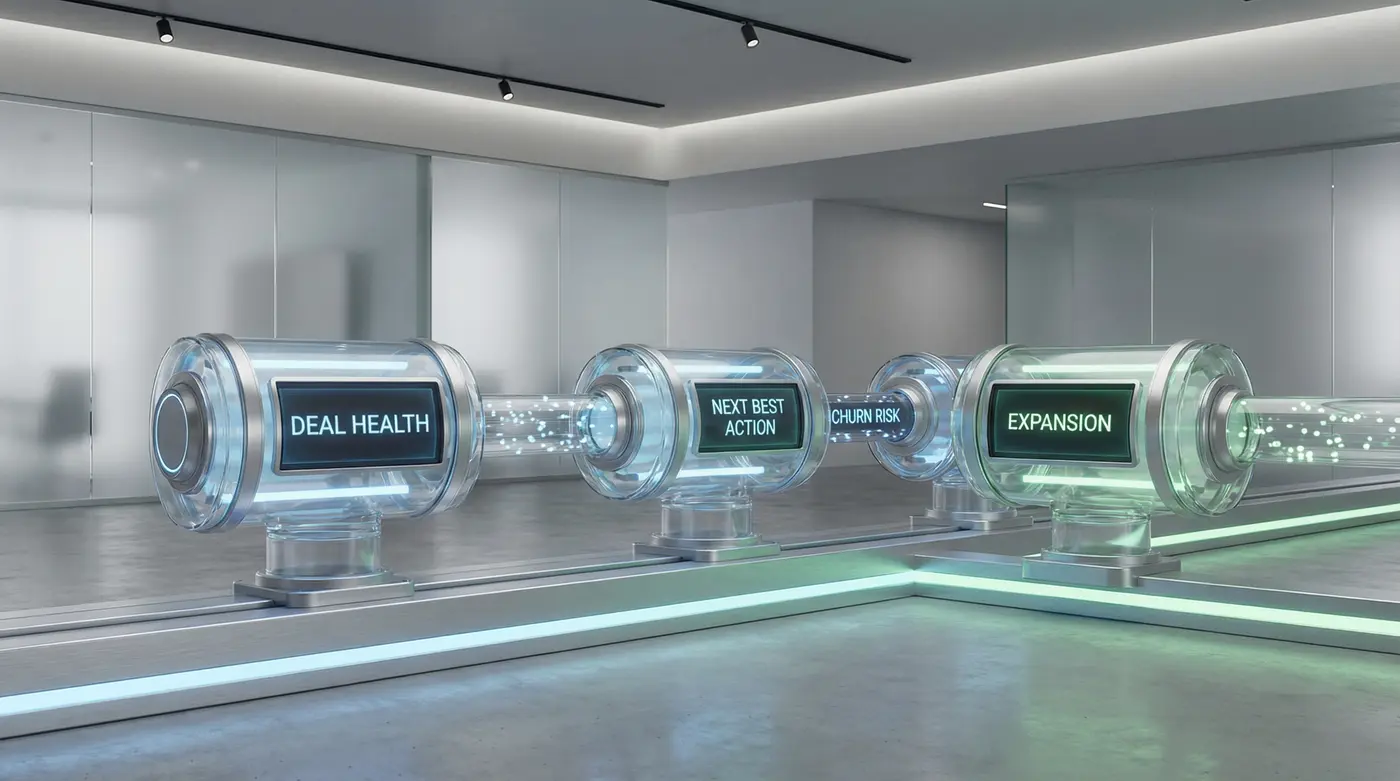
Predictive analytics transforms how sales teams manage their pipelines by providing data-driven insights into deal progression, win probability, and optimal next actions. These systems analyze historical patterns, current engagement levels, and external factors to forecast outcomes with remarkable precision.
Key applications include:
• Deal Scoring: Real-time assessment of opportunity health and conversion probability
• Next Best Action: AI recommendations for optimal engagement strategies
• Churn Prediction: Early warning systems for at-risk accounts
• Expansion Identification: Automated detection of upsell and cross-sell opportunities
Intelligent Content Personalization
AI enables dynamic content personalization that adapts to individual buyer preferences, behaviors, and journey stages. This goes beyond simple name insertion to include contextually relevant messaging, product recommendations, and timing optimization. Strong personalization benefits from systems like AI CRM integrations.
Personalization strategies include:
• Dynamic website experiences that adapt based on visitor profiles
• Personalized email marketing strategies that optimize send times, content, and calls-to-action
• Customized sales collateral that addresses specific buyer concerns
• Adaptive nurture sequences that respond to engagement patterns
Organizations implementing AI-driven personalization see engagement rates increase by 300% and conversion rates improve by 19%.
Mastering Omnichannel Funnel Experiences
Modern buyers interact with brands across an average of 10+ channels before making purchasing decisions. Successful funnel optimization requires orchestrating consistent, valuable experiences across all these touchpoints while maintaining message coherence and momentum.
Channel Integration and Orchestration
Effective omnichannel strategies don’t simply broadcast the same message across multiple platforms. Instead, they create coordinated experiences where each channel plays a specific role in advancing the buyer journey.
Key channels for B2B funnel optimization include:
• LinkedIn: Professional networking, thought leadership, and targeted advertising
• Google: Search marketing, display advertising, and YouTube content
• Email: Nurture sequences, event invitations, and personalized outreach
• Webinars: Educational content, product demonstrations, and expert panels
• Content Hubs: Resource centers, case study libraries, and interactive tools
• Sales Outreach: Phone calls, video messages, and in-person meetings
Self-Service and Interactive Experiences
Today’s buyers prefer self-service options that allow them to research, evaluate, and even trial solutions on their own timeline. Providing these experiences reduces friction while generating valuable behavioral data for sales teams. Many of these strategies align closely with insights found in the automation playbook for consultants.
Effective self-service elements include:
• Interactive product demos and tours
• ROI calculators and assessment tools
• Comprehensive resource libraries
• Community forums and user groups
• On-demand webinar libraries
• Free trial and freemium offerings
Research shows that 75% of B2B buyers prefer to self-educate rather than learn about products from sales representatives, making self-service capabilities essential for modern funnel optimization.
The Critical Role of Sales and Marketing Alignment
Revenue Operations (RevOps) has emerged as a critical discipline for optimizing sales funnels. RevOps focuses on aligning sales, marketing, and customer success teams around shared goals, processes, and metrics.
Unified Data and KPIs
Successful funnel optimization requires breaking down data silos and creating unified visibility across the entire revenue process. This includes shared definitions for lead stages, consistent measurement methodologies, and integrated reporting systems.
Key alignment areas include:
• Shared lead definitions and qualification criteria
• Unified customer data platforms
• Consistent attribution models
• Integrated forecasting processes
• Joint performance dashboards
Organizations with strong sales and marketing alignment grow revenue 19% faster and achieve 15% higher profitability than misaligned teams.
Collaborative Campaign Development
The most effective campaigns emerge from close collaboration between sales and marketing teams. Sales provides frontline insights about buyer concerns and objections, while marketing contributes strategic perspective and creative execution capabilities.
Collaborative elements include:
• Joint campaign planning sessions
• Shared content libraries and sales enablement materials
• Coordinated account-based marketing strategies
• Integrated feedback loops and optimization processes
Account-Based Everything: Maximizing High-Value Opportunities
Account-Based Marketing (ABM) has evolved into Account-Based Everything (ABE), encompassing marketing, sales, and customer success in coordinated efforts to win and expand high-value accounts.
Strategic Account Selection
Successful ABE starts with rigorous account selection based on fit, opportunity size, and win probability. This involves analyzing firmographic data, technographic insights, and intent signals to identify accounts most likely to generate significant revenue.
Selection criteria include:
• Revenue potential and budget capacity
• Technology stack compatibility
• Organizational structure and decision-making processes
• Competitive landscape and market timing
• Intent signals and research behaviors
Orchestrated Engagement Strategies
ABE requires coordinated outreach across multiple touchpoints and stakeholders within target accounts. This includes personalized content, targeted advertising, direct outreach, and strategic partnerships.
Orchestration elements include:
• Multi-stakeholder engagement maps
• Personalized content for each buying committee member
• Coordinated sales and marketing touchpoints
• Strategic timing and sequencing of interactions
Companies implementing comprehensive ABE strategies report 70% higher win rates and 25% larger deal sizes compared to traditional approaches.
Actionable Optimization Tactics for Immediate Impact
Lead Scoring and Automated Nurturing
Implement dynamic lead scoring that considers both explicit data (company size, industry, role) and implicit behaviors (content downloads, email engagement, website activity). Use this scoring to trigger automated nurturing sequences that deliver relevant content based on buyer interests and journey stage.
Best practices include:
• Multi-dimensional scoring algorithms
• Behavioral trigger-based automation
• Personalized content recommendations
• Progressive profiling strategies
Rapid Response Systems
Speed is crucial in modern sales funnel optimization. Research shows that companies responding to leads within five minutes are 100 times more likely to connect than those waiting 30 minutes. Implement systems that enable immediate response to high-intent behaviors.
Response optimization includes:
• Real-time lead alerts and notifications
• Automated initial response messages
• Calendar scheduling integration
• Mobile-optimized response systems
Continuous Testing and Refinement
Successful funnel optimization requires ongoing experimentation and refinement. Implement systematic A/B testing across all funnel stages, from initial awareness content to closing strategies.
Testing areas include:
• Email subject lines and send times
• Landing page designs and calls-to-action
• Content formats and distribution channels
• Sales scripts and presentation approaches
Measuring What Matters: Essential Funnel KPIs
Effective measurement requires tracking both leading indicators (activities) and lagging indicators (results) across all funnel stages. Focus on metrics that drive action and provide insights for optimization.
Stage-Specific Metrics
Each funnel stage requires specific metrics that indicate health and performance:
• TOFU: Traffic quality, content engagement, lead volume
• MOFU: Lead qualification rates, nurture engagement, sales acceptance
• BOFU: Conversion rates, sales cycle length, deal size
• Post-Sale: Customer satisfaction, expansion revenue, referral generation
Holistic Performance Indicators
Track overall funnel health with comprehensive metrics that indicate long-term success:
• Customer Acquisition Cost (CAC) and Lifetime Value (LTV) ratios
• Pipeline velocity and conversion rates
• Revenue attribution across channels
• Customer retention and expansion rates
Implementation Best Practices for Sustainable Growth
Building Cross-Functional Teams
Successful funnel optimization requires dedicated cross-functional teams that include marketing, sales, customer success, and operations representatives. These teams should meet regularly to review performance, identify bottlenecks, and coordinate optimization efforts.
Technology Stack Consolidation
Avoid technology sprawl by selecting integrated platforms that support your entire funnel optimization strategy. Focus on solutions that provide unified data, seamless integrations, and comprehensive reporting capabilities.
Essential technology categories include:
• Customer Relationship Management (CRM) systems
• Marketing automation platforms
• Sales enablement tools
• Analytics and reporting solutions
• Customer success platforms
Content Strategy and Shared Libraries
Develop comprehensive content strategies that address every stage of the buyer journey and support both marketing and sales efforts. Create shared content libraries that enable easy access and consistent messaging across all customer touchpoints.
Real-World Results: The Impact of Funnel Optimization
Companies that implement comprehensive funnel optimization strategies consistently achieve remarkable results. Research from leading organizations shows:
• 32% higher revenue growth rates
• 36% better customer retention
• 67% higher deal close rates
• 28% shorter sales cycles
• 300% better lead conversion rates
These improvements compound over time, creating sustainable competitive advantages that drive long-term business growth.
Your Next Steps to Funnel Excellence
Optimizing your sales funnel for today’s complex B2B environment requires strategic thinking, systematic implementation, and ongoing refinement. Start by auditing your current funnel performance, identifying your biggest bottlenecks, and implementing the strategies outlined in this guide.
Remember that successful funnel optimization is an ongoing process, not a one-time project. The most successful organizations treat their funnels as living systems that evolve with changing buyer behaviors, market conditions, and business objectives.
Ready to transform your sales funnel and double your business growth? The strategies in this guide provide the foundation for building a modern, high-converting funnel that delivers consistent results. Begin with your biggest opportunities, implement systematically, and measure relentlessly to ensure sustainable success.
Want expert guidance on implementing these funnel optimization strategies for your business? Our team specializes in helping companies like yours build high-converting sales funnels that drive measurable growth. Contact us today to learn how we can help you double your revenue in the next 12 months.