How to Turn Your Expertise into a High Converting Online Product: The Complete DTC Playbook for Coaches and Consultants
The digital transformation has created unprecedented opportunities for experts, coaches, and consultants to scale their knowledge beyond one-on-one services. Turning your expertise into an online product isn’t just about creating a course or ebook anymore. It’s about building a complete direct-to-consumer (DTC) ecosystem that positions you as the authority in your field while generating scalable revenue streams.
The modern marketplace demands more than expertise alone. Successful professionals are those who can package their knowledge into compelling, accessible products that solve specific problems for their target audience. Whether you’re a business coach, marketing consultant, or industry specialist, the principles of DTC marketing can transform how you deliver and monetize your expertise.
Why Now Is the Perfect Time to Productize Your Expertise
Market conditions have never been more favorable for knowledge-based entrepreneurs. Consumer expectations have fundamentally shifted toward digital-first experiences, with 89% of marketers considering AI essential for customer engagement. This shift creates massive opportunities for experts who can adapt their delivery methods to meet modern buyer preferences.
The DTC model has proven its effectiveness across industries, with successful brands like Warby Parker and Glossier demonstrating how direct customer relationships drive sustainable growth. For knowledge professionals, this same approach allows you to bypass traditional gatekeepers, maintain complete control over your customer experience, and capture 100% of your product’s value.
Economic pressures have also made businesses more selective about their investments. They’re seeking proven expertise delivered in accessible, implementable formats rather than expensive consulting engagements. This creates a perfect storm for experts who can monetize their expertise online through well-designed digital products.
Understanding the DTC Model for Expert-Based Businesses
Direct-to-consumer marketing for expertise-based businesses means eliminating intermediaries between you and your customers. Instead of relying on speaking bureaus, course platforms, or other third-party channels, you build direct relationships with your audience through owned digital channels.
This approach offers several critical advantages. First, you maintain complete control over your brand narrative and customer experience. Second, you capture valuable first-party data that enables personalized marketing and product development. Third, you keep 100% of your revenue instead of sharing it with platform providers.
The DTC model works particularly well for high-value expertise because it allows you to demonstrate your knowledge through content marketing, build trust through direct communication, and deliver premium experiences that justify higher price points. Your expertise becomes the product, but more importantly, it becomes the entire brand experience.
Identifying Your Niche and Developing Your Spiky Point of View
Success in the crowded online education market requires more than general expertise. You need what brand strategists call a “spiky point of view” – a unique, sometimes contrarian perspective that sets you apart from other experts in your field.
Start by analyzing your most successful client outcomes. What specific problems do you solve better than anyone else? What unconventional approaches do you use? What industry assumptions do you challenge? Your spiky point of view should be memorable, defensible, and aligned with your target audience’s deepest frustrations.
For example, instead of being “a marketing consultant,” you might position yourself as “the consultant who helps B2B companies double revenue without increasing ad spend.” This specific positioning immediately communicates value and differentiates you from generic marketing advice.
Your niche should be narrow enough to dominate but large enough to sustain a business. Research your target audience’s online behavior, preferred platforms, and willingness to pay for solutions. Use tools like social media listening and keyword research to validate demand for your specific expertise area.

Building Your Brand Experience for Digital Products
Your brand experience encompasses every touchpoint a customer has with your business. For expertise-based DTC brands, this includes your content, website, product packaging, communication style, and delivery methods.
Develop a consistent visual identity that reflects your expertise level and target market. If you serve luxury sectors like high-end real estate or financial services, your branding should convey sophistication and exclusivity. For startup entrepreneurs, you might choose more dynamic, innovative visual elements.
Your brand story should position your ideal customer as the hero, with you as their trusted guide. Share your journey of developing expertise, the failures that led to breakthroughs, and the specific moments when you realized your approach was different. Authentic storytelling builds emotional connections that justify premium pricing.
Consider the “unboxing experience” for digital products. How do customers first interact with your content? What welcome sequence introduces them to your methodology? How do you make the experience feel premium and personalized? These details differentiate professional expertise products from generic online courses.
Creating Your Digital Flagship: Website and Conversion Essentials
Your website serves as your digital flagship – the primary space where prospects evaluate your expertise and make purchasing decisions. Unlike generic course platforms, a custom website allows you to control every aspect of the customer journey.
Focus on mobile-first design, as many professionals research solutions during commutes or between meetings. Ensure fast loading times, intuitive navigation, and clear value propositions above the fold. Your homepage should immediately communicate who you help, what specific results you deliver, and why your approach is different.
Product pages require careful balance between education and persuasion. Include detailed curriculum or methodology overviews, client success stories, your credentials, and clear pricing. Use social proof strategically – testimonials from recognizable companies or impressive ROI statistics carry more weight than generic positive feedback.
Implement conversion optimization basics: clear calls to action, minimal form fields, multiple payment options, and trust signals like security badges and money-back guarantees. Consider offering multiple engagement levels – free resources, mid-tier products, and premium coaching – to accommodate different buyer readiness levels.
Leveraging Omnichannel Marketing for Authority Building
Direct to consumer marketing for expertise requires a sophisticated content strategy across multiple channels. Your content should demonstrate your knowledge while addressing your audience’s specific challenges and aspirations.
LinkedIn often serves as the primary platform for B2B experts, allowing you to share insights, engage with prospects, and build professional credibility. Create a content calendar that balances educational posts, industry commentary, and personal insights that showcase your unique perspective.
Email marketing remains crucial for nurturing prospects over extended sales cycles. Develop automated sequences that deliver value while gradually introducing your methodology and products. Segment your list based on interests, industry, or engagement level to deliver personalized content.
Consider strategic partnerships with complementary experts or industry publications. Guest posting, podcast appearances, and co-created content can expand your reach while building authority through association with established brands.
Paid advertising can accelerate growth when used strategically. LinkedIn ads work well for B2B expertise, while Facebook and Google ads can drive traffic to lead magnets or webinar registrations. Focus on precise targeting rather than broad reach to maximize return on ad spend.
Automation and Personalization for Scale
Marketing automation for entrepreneurs becomes essential as your expertise business grows. Automation allows you to deliver personalized experiences at scale while focusing your time on high-value activities like product development and strategic partnerships.
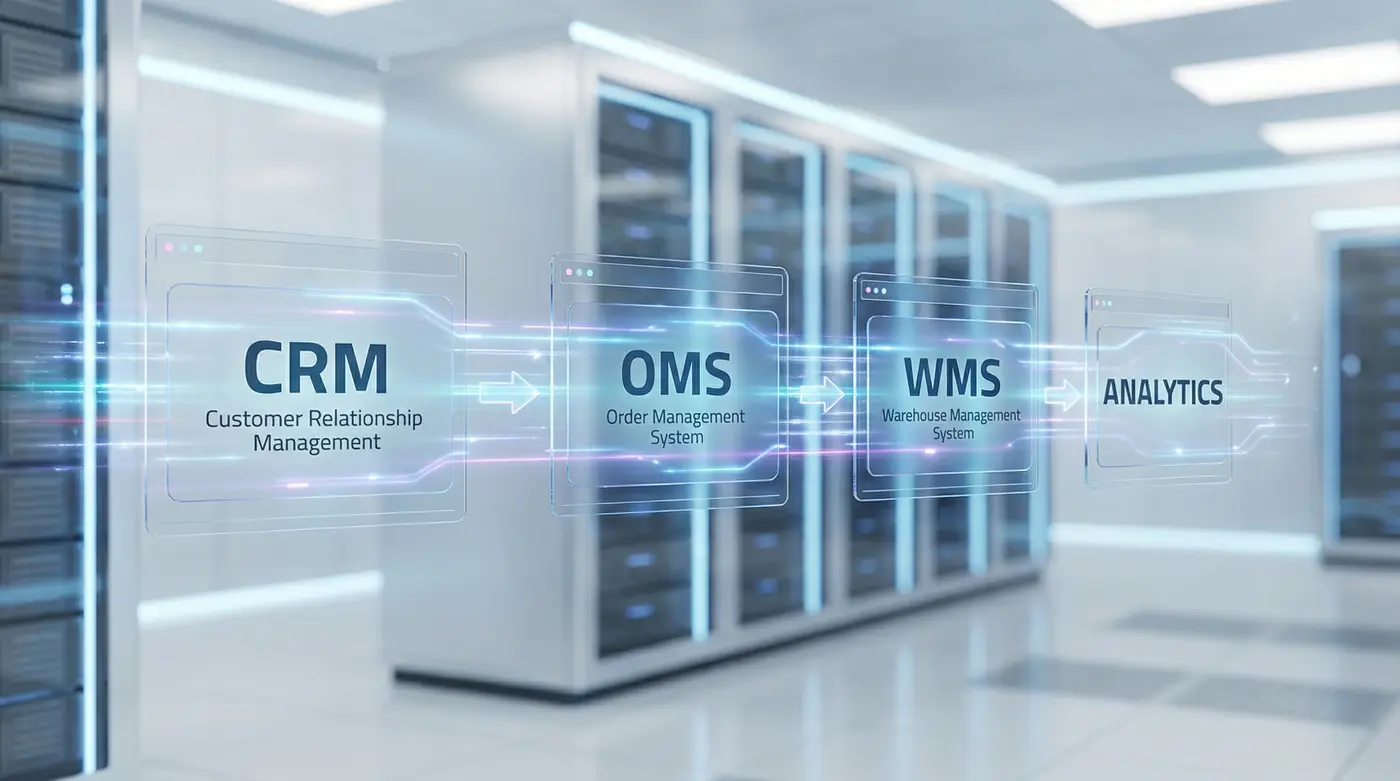
Implement CRM integration to track prospect interactions across all touchpoints. This data enables sophisticated lead scoring, personalized follow-up sequences, and targeted product recommendations based on engagement patterns. See how advanced CRM systems operate in the integrations guide.
Use behavioral triggers to deliver relevant content automatically. When someone downloads a specific lead magnet, they should receive a tailored email sequence related to that topic. When they visit pricing pages multiple times, trigger a limited-time offer or consultation booking link.
AI-powered personalization can enhance the customer experience significantly. Dynamic website content, personalized product recommendations, and automated chatbots can provide immediate value while capturing lead information for future nurturing.
Consider implementing progressive profiling to gradually collect more information about prospects without overwhelming them with lengthy forms. Each interaction should gather additional data points that enable more personalized future communications.
Data-Driven Growth and Sales Funnel Optimization
First-party data collection provides the foundation for sustainable growth in expertise-based businesses. Unlike product companies that rely on purchase history, you can gather rich behavioral and preference data through content engagement, assessment tools, and direct feedback.
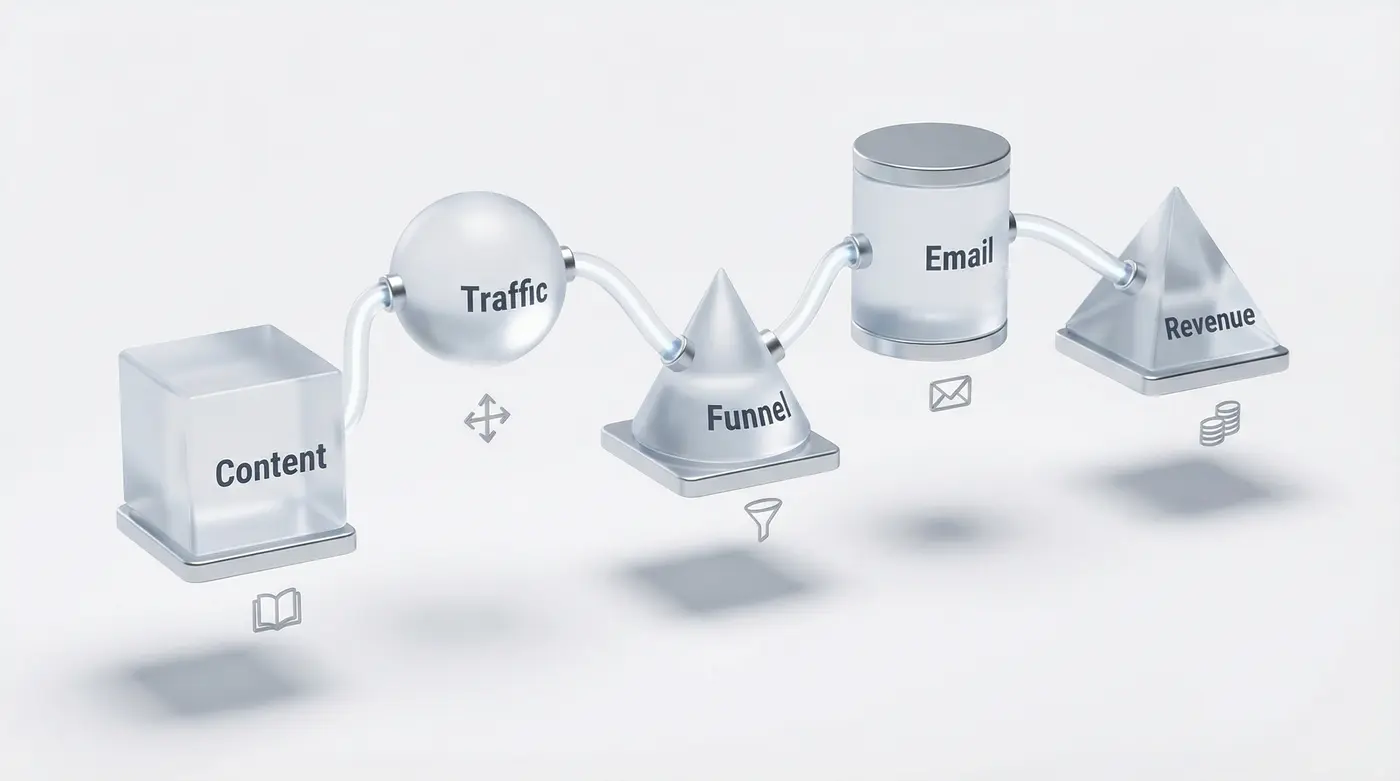
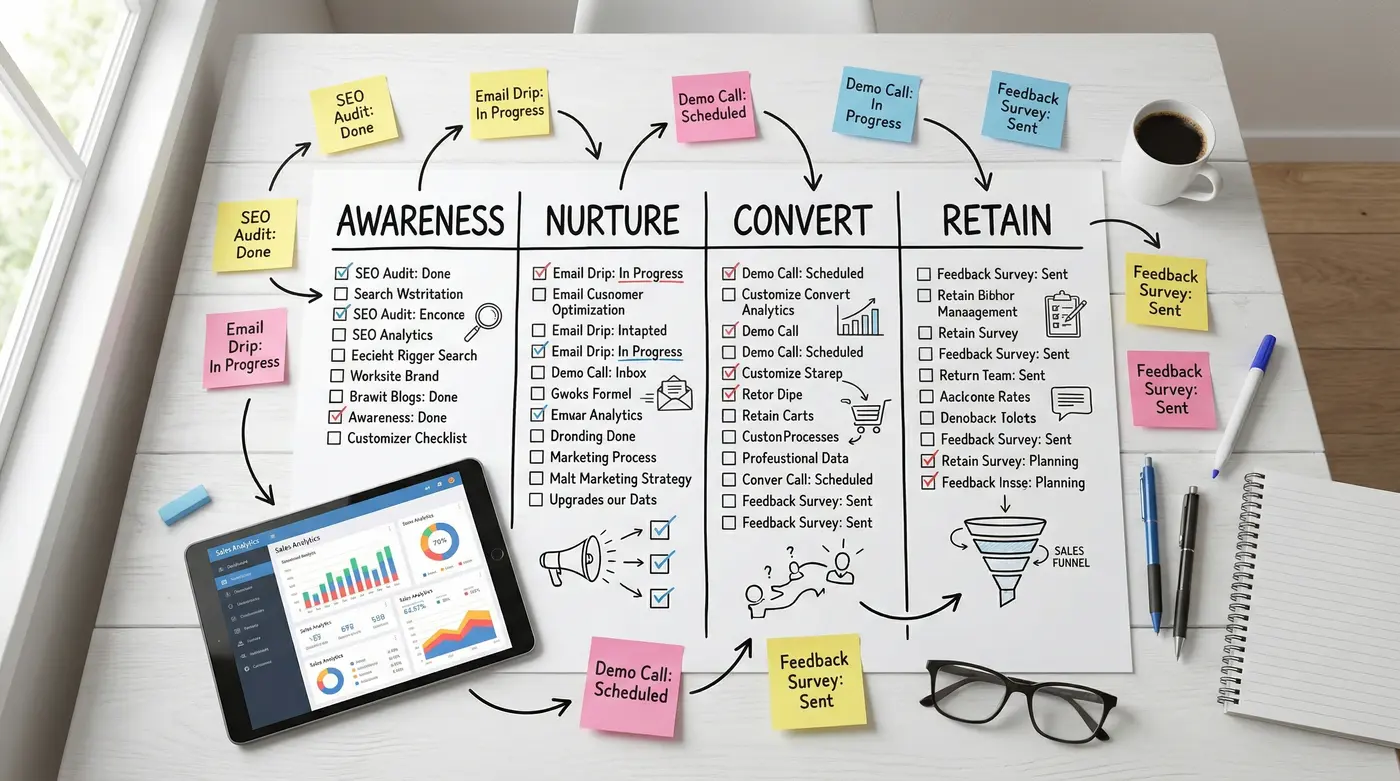
Implement comprehensive tracking across your sales funnel. Monitor metrics like content engagement rates, email open and click-through rates, webinar attendance, and conversion rates at each stage. This data reveals bottlenecks and optimization opportunities. For deeper funnel building frameworks, explore this lead generation funnel guide.
Create detailed buyer personas based on actual customer data rather than assumptions. Survey existing customers about their decision-making process, preferred communication styles, and ongoing challenges. Use this insight to refine your messaging and product development.
Test different approaches systematically. A/B test email subject lines, landing page headlines, pricing presentations, and product packaging. Small improvements in conversion rates compound significantly over time in expertise-based businesses with high customer lifetime values.
Implement cohort analysis to understand customer behavior patterns over time. Which acquisition channels produce the most valuable long-term customers? What content topics drive the highest engagement? How do different customer segments respond to various product offerings?
Building Retention and Community for Recurring Revenue
Customer retention becomes increasingly important as acquisition costs rise across digital channels. For expertise-based businesses, retention often involves ongoing education, community access, and implementation support rather than repeat purchases of identical products.
Develop a customer success framework that ensures buyers achieve meaningful results from your products. Create implementation guides, progress tracking tools, and regular check-in communications. Your reputation depends on customer outcomes, not just initial sales.
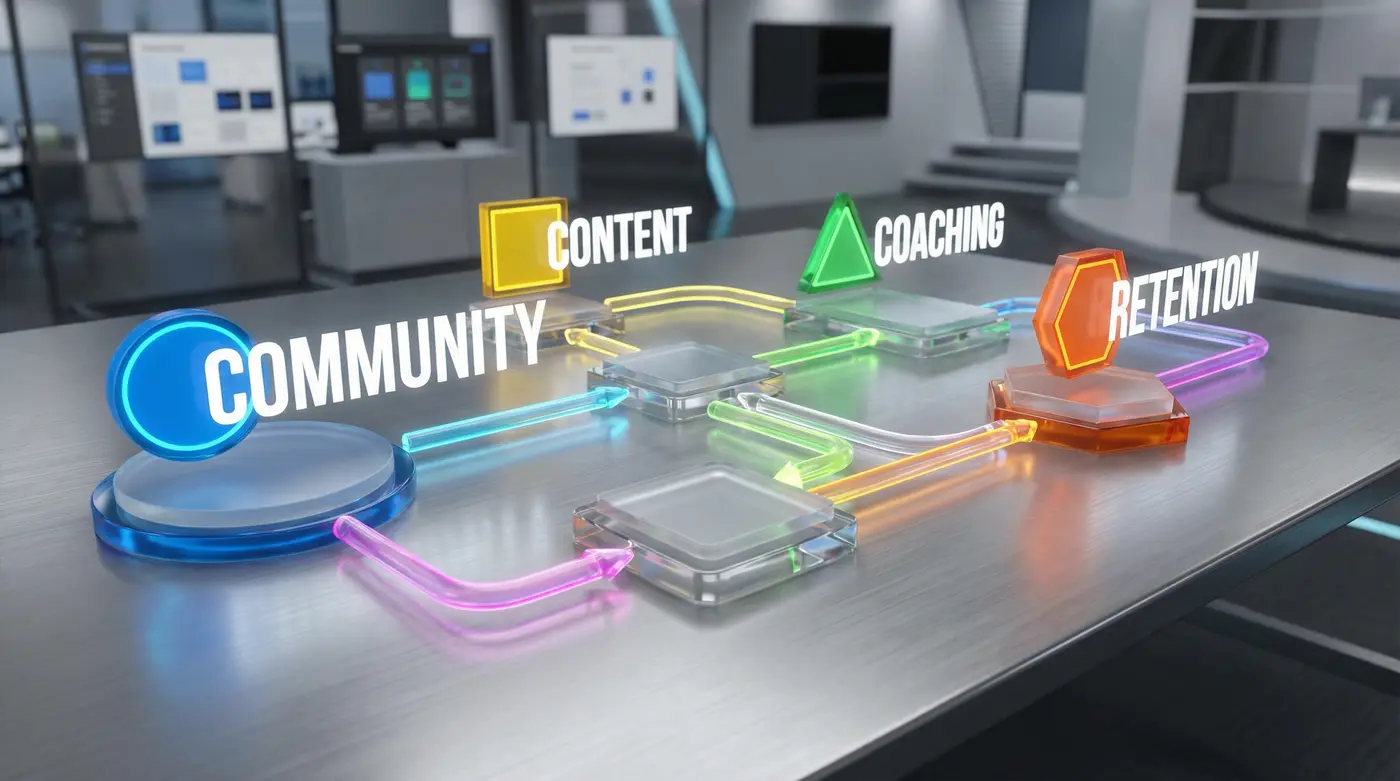
Consider building a private community for your customers. This provides ongoing value, creates peer-to-peer learning opportunities, and generates valuable feedback for product development. Active communities also increase customer lifetime value and reduce churn.
Implement a referral program that rewards customers for introducing colleagues to your expertise. Professional services referrals often carry higher conversion rates and customer lifetime values than other acquisition channels.
Develop advanced or specialized products for existing customers. Once someone has success with your core methodology, they may invest in deeper training, industry-specific applications, or one-on-one coaching opportunities.
Case Studies and Success Stories
Amy Porterfield transformed her corporate marketing experience into a multi-million dollar online education business by focusing specifically on digital course creation for entrepreneurs. Her success demonstrates the power of niche expertise combined with systematic content marketing and sales funnel optimization.
Russell Brunson built ClickFunnels into a nine-figure company by productizing his sales funnel expertise through books, courses, and software. His approach shows how experts can create multiple revenue streams from a single area of knowledge.
Marie Forleo developed a broad business education platform by combining life coaching principles with practical business strategies. Her success illustrates how personality and unique perspective can differentiate expertise in crowded markets.
Each of these examples demonstrates key principles: clear niche focus, consistent content creation, systematic sales processes, and ongoing customer success initiatives. They also show how turning your expertise into an online product requires treating it as a serious business with proper systems and processes.
Your Action Plan for Getting Started
Begin by conducting a comprehensive audit of your existing expertise and client outcomes. What specific results do you consistently deliver? What processes or frameworks have you developed? What unique insights have you gained through your experience?
Research your target market thoroughly. What are their biggest challenges? How do they currently seek solutions? What price points are they comfortable with? Where do they spend time online? This research informs every subsequent decision.
Develop your minimum viable product (MVP) – a focused offering that demonstrates your expertise while requiring minimal upfront investment. This might be a workshop series, implementation guide, or assessment tool that provides immediate value.
Create your basic marketing infrastructure: professional website, email marketing system, social media presence, and content creation workflow. Focus on consistency and quality over complexity in the early stages.
Launch with a small, engaged audience and gather detailed feedback. Use early customer insights to refine your product, messaging, and delivery methods before scaling your marketing efforts.
Ready to Transform Your Expertise Into a Scalable Online Business?
The opportunity to build a successful expertise-based DTC business has never been greater. Modern digital marketing tools, changing consumer preferences, and proven frameworks make it possible to scale your knowledge far beyond traditional consulting models.
Success requires more than just expertise – it demands strategic thinking, systematic execution, and ongoing optimization. If you’re ready to take your knowledge to the next level but need guidance on marketing automation, sales funnel development, or scaling strategies, consider partnering with specialists who understand the unique challenges of expertise-based businesses.
The experts at DoneWithYou specialize in helping established professionals and service providers implement sophisticated marketing automation and sales systems that drive predictable growth. Our collaborative approach ensures you maintain control over your expertise while leveraging proven systems for sustainable scaling.