Complete Guide to AI Assistants for Small Business: Select, Implement, and Scale for Maximum Growth
Why AI Assistants Are Essential for Small Business Success
The landscape of small business operations has fundamentally shifted. While large corporations have long enjoyed the advantages of sophisticated automation systems, small businesses now have unprecedented access to powerful AI assistant for small business solutions that level the playing field. The barriers to entry have dramatically lowered, making advanced automation accessible to companies with $500K to $10M in revenue.
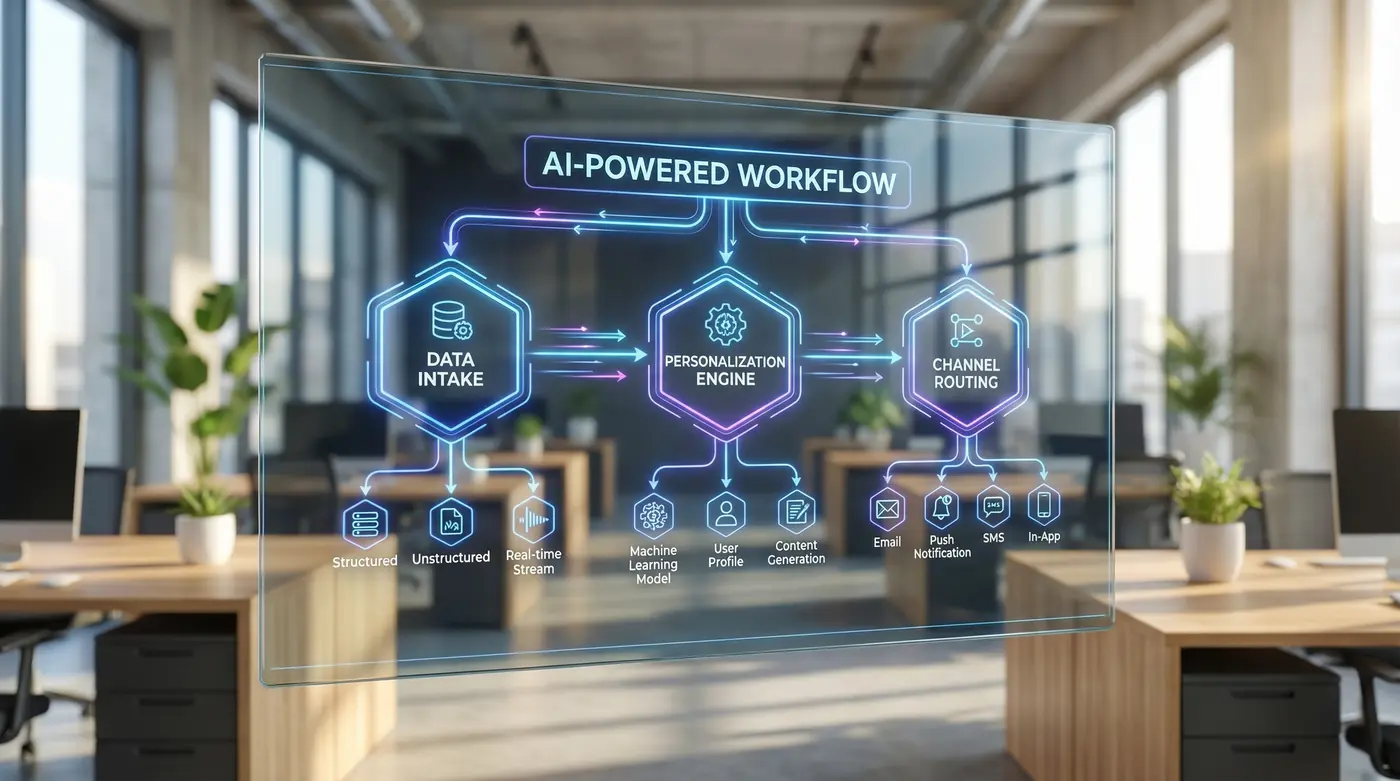
Modern AI assistants go far beyond simple chatbots. They serve as intelligent business partners capable of handling complex workflows, analyzing customer data, and making autonomous decisions that drive growth. These systems can manage everything from lead qualification and appointment scheduling to customer nurturing and sales funnel optimization, operating 24/7 without breaks or supervision.
The competitive advantages are clear: businesses implementing AI assistants report significant improvements in response times, lead conversion rates, and operational efficiency. More importantly, they free up human resources to focus on high-value activities like strategy development, relationship building, and business expansion.
Measurable Benefits and Real-World ROI
Implementing business automation through AI assistants delivers quantifiable results that directly impact your bottom line. Customer engagement increases dramatically when prospects receive instant, personalized responses regardless of the time of day. Studies show that businesses responding to leads within five minutes are nine times more likely to convert them compared to those waiting 30 minutes or longer.
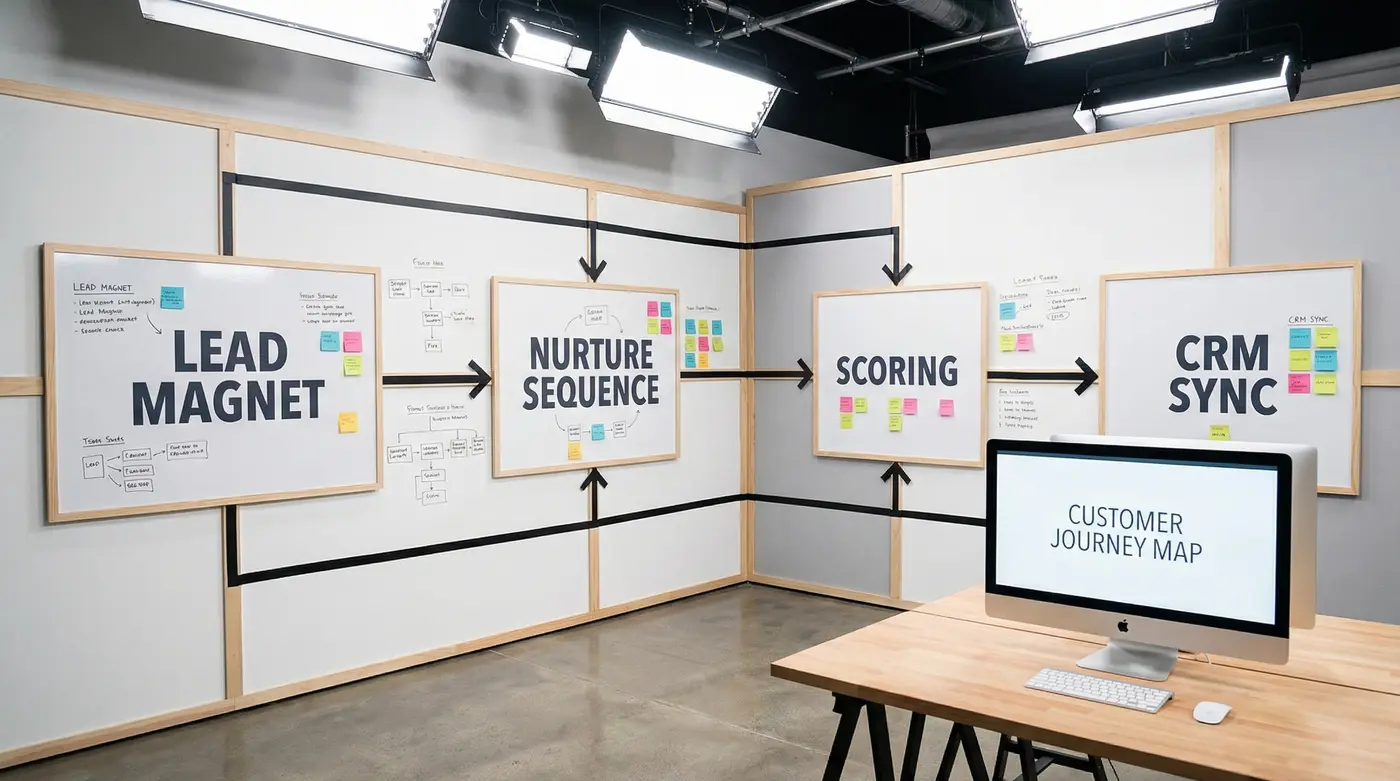
Sales funnel automation becomes incredibly sophisticated with AI assistants managing multi-step nurturing sequences. These systems can identify where prospects are in the buying journey, deliver targeted content, handle objections, and schedule follow-up communications automatically. The result is higher conversion rates and shorter sales cycles.
Operational streamlining occurs across multiple departments simultaneously. AI assistants can deflect up to 80% of routine customer service inquiries, reducing support costs while maintaining high satisfaction levels. They can qualify leads based on predetermined criteria, ensuring your sales team only spends time with high-potential prospects. Administrative tasks like appointment scheduling, data entry, and basic research become fully automated, saving hours of manual work daily.
Strategic Framework for Choosing the Right AI Assistant

Selecting the optimal AI assistant for small business requires a systematic approach that begins with mapping your specific use cases. Start by identifying the most time-consuming, repetitive tasks in your organization. These typically include customer inquiries, lead qualification, appointment booking, and follow-up communications.
Evaluate potential solutions based on their integration capabilities with your existing technology stack. The best AI assistants seamlessly connect with your CRM, email marketing platform, calendar system, and other essential tools. This integration is crucial for maintaining data consistency and creating smooth automated workflows.
Security and compliance considerations are paramount, especially if you handle sensitive customer information or operate in regulated industries. Look for solutions that offer end-to-end encryption, audit trails, and compliance certifications relevant to your sector. The system should provide clear data governance policies and the ability to control how customer information is used and stored.
Top AI Assistant Platforms for Small Business
Lindy stands out as an exceptional choice for custom workflow automation. Its no-code, prompt-based builder allows non-technical users to create sophisticated AI agents that handle multi-step processes. The platform integrates with popular business tools like Gmail, Google Calendar, Slack, and various CRM systems. Its unique multi-model approach lets you select the best AI engine for each specific task, optimizing performance across different use cases.
ChatGPT Enterprise offers remarkable versatility for content creation, research, and general business communications. With advanced multimodal capabilities, it can process text, images, audio, and documents while maintaining context across lengthy conversations. The memory feature allows it to learn your preferences and maintain consistency in tone and style.
Gemini excels for businesses already embedded in the Google ecosystem. Its deep integration with Google Workspace transforms familiar tools into AI-powered environments. The platform handles large, complex files and offers enterprise-level security, making it ideal for collaborative workflows and knowledge management.
ManyChat and Tidio specialize in multichannel customer engagement across social media, websites, and messaging platforms. These marketing automation tools excel at lead capture, social media management, and proactive customer outreach. Their visual flow builders make it easy to create sophisticated conversation sequences that guide prospects through your sales funnel.
Quick-Win Automation Strategies
Implement lead qualification automation as your first priority. Configure your AI assistant to ask key qualifying questions, score prospects based on their responses, and route high-potential leads directly to your sales team. This ensures no opportunities fall through the cracks while filtering out unqualified inquiries.
Cart recovery automation can dramatically improve e-commerce conversion rates. Set up sequences that trigger when customers abandon their shopping carts, sending personalized reminders and incentives to complete their purchases. These automated touchpoints often recover 10-15% of abandoned carts, providing immediate revenue impact.
Appointment booking automation eliminates the back-and-forth communication typically required to schedule meetings. AI assistants can check calendar availability, propose suitable times, send confirmations, and handle rescheduling requests automatically. This streamlines the customer experience while reducing administrative overhead.
Proactive customer nurturing keeps your business top-of-mind without constant manual effort. Configure your AI assistant to monitor customer behavior, trigger relevant communications based on specific actions, and deliver personalized content that moves prospects through your sales funnel.
Implementation Best Practices
Customizing your AI assistant to reflect your brand voice and values is crucial for maintaining authentic customer relationships. Spend time training the system on your company’s tone, terminology, and communication style. Provide examples of how you want it to handle common scenarios and edge cases.

Establish clear human handoff protocols for complex situations that require personal attention. Define triggers that escalate conversations to human agents, such as high-value prospects, complicated technical issues, or emotional situations requiring empathy. The transition should be seamless, with the AI assistant providing context to the human agent.
Continuous performance optimization requires regular monitoring and adjustment. Review conversation logs, analyze success metrics, and identify areas for improvement. Update your AI assistant’s knowledge base regularly, refine its responses based on customer feedback, and expand its capabilities as your business evolves.
Measuring Success with Actionable KPIs
Ticket deflection rates measure how effectively your AI assistant handles customer inquiries without human intervention. A well-configured system should resolve 60-80% of routine questions automatically, significantly reducing support costs and response times.
Lead capture and conversion metrics reveal the quality of your automated qualification processes. Track how many leads your AI assistant captures, their conversion rates compared to manually processed leads, and the time from initial contact to qualified opportunity.
Response time improvements become immediately apparent after implementation. Measure average response times before and after deployment, customer satisfaction scores related to response speed, and the impact on overall customer experience ratings.
Revenue attribution helps justify your investment by connecting AI assistant activities to actual sales. Track which automated touchpoints contribute to closed deals, calculate the lifetime value of leads processed by your system, and measure the overall impact on sales velocity.
Security, Privacy, and Compliance Requirements
Data encryption must be implemented at every level of your AI assistant deployment. Ensure all customer communications are encrypted in transit and at rest. Choose platforms that offer enterprise-grade security features including access controls, audit logs, and data isolation capabilities.
Regulatory compliance varies by industry but generally includes requirements for data privacy, retention policies, and customer consent management. Your AI assistant should provide clear documentation of how customer data is collected, used, and stored. Implement processes for handling data deletion requests and maintaining compliance with regulations like GDPR or CCPA.
Bias mitigation and ethical considerations become increasingly important as AI assistants handle more complex decisions. Regularly audit your system’s responses for potential biases, ensure fair treatment across different customer segments, and maintain transparency about when customers are interacting with AI versus human agents.
Future Trends and Strategic Planning
Agentic AI represents the next evolution in business automation, where AI assistants can collaborate with other AI systems to solve complex problems autonomously. These advanced systems will handle entire business processes from start to finish, making decisions and taking actions across multiple platforms simultaneously.
Multimodal capabilities are expanding rapidly, enabling AI assistants to process voice, video, images, and documents with equal proficiency. This advancement opens new possibilities for customer interaction, content creation, and data analysis that were previously impossible.
Interconnected automation chains will allow small businesses to create sophisticated workflows that rival those of large enterprises. Multiple AI assistants will work together, each specialized for specific functions but coordinated to deliver seamless customer experiences and operational efficiency.
Industry-Specific Success Stories
Luxury real estate agencies are leveraging AI assistants for business to handle initial property inquiries, schedule showings, and nurture high-value prospects through extended sales cycles. These systems can provide detailed property information, coordinate with multiple stakeholders, and maintain engagement with prospects who may take months to make purchasing decisions.
Financial services firms use AI assistants to pre-qualify loan applicants, schedule consultations, and provide basic account information while maintaining strict compliance standards. The automation handles routine inquiries while ensuring sensitive financial discussions are escalated to licensed professionals.
High-ticket service businesses across various industries report significant improvements in lead quality and conversion rates. Their AI assistants effectively communicate value propositions, address common objections, and identify serious prospects worthy of personal attention from senior team members.
Collaborative Implementation Strategy
Successful AI assistant deployment often benefits from external expertise, particularly for businesses focused on core operations rather than technology implementation. Marketing agencies specializing in automation can provide valuable guidance on platform selection, workflow design, and integration strategies.
Ongoing optimization requires continuous monitoring and adjustment that many small businesses lack the resources to handle internally. Partnering with automation specialists ensures your AI assistants evolve with your business needs and take advantage of new capabilities as they become available.
The collaborative approach combines the deep industry knowledge of business owners with the technical expertise of automation specialists, creating solutions that are both technically sophisticated and practically effective for driving business growth.
Take Action on AI Assistant Implementation
The opportunity to leverage AI assistants for explosive business growth has never been more accessible or impactful. Start by identifying your highest-impact use cases, whether that’s lead qualification, customer support, or sales funnel automation. Choose a platform that integrates well with your existing tools and offers the customization capabilities you need.
Begin with one or two simple automations to prove value and build confidence in the technology. As you see results, gradually expand the scope and sophistication of your AI assistant implementation. Remember that the goal is not just to automate tasks, but to create intelligent systems that enhance your customer experience and drive measurable business growth.
Ready to transform your business operations with AI assistants? The time to act is now, while the competitive advantages are still available to early adopters in your industry.