How to Transform Your Online Business with AI: The Complete Guide to Automation, Personalization, and Scalable Growth
The digital landscape has reached a pivotal moment. Over 60% of American adults have used artificial intelligence tools in recent months, yet only 3% pay for premium AI services. This massive gap between adoption and monetization represents one of the greatest business opportunities in recent tech history. For online business owners and digital marketing leaders, the question isn’t whether to embrace AI for online business operations, but how to implement it strategically for maximum impact.
The statistics are compelling: AI-powered chatbots are projected to handle up to 80% of customer interactions, while businesses using AI for personalization see conversion rate improvements of 10-15%. Companies leveraging advanced business automation report efficiency gains of up to 40% in routine marketing tasks. These aren’t future projections, they’re current realities transforming how successful online businesses operate.
The Explosive Growth of AI in Online Business
The adoption of AI for online business has accelerated beyond all predictions. Recent industry data reveals that 1.8 billion people globally now engage with AI tools regularly, creating a $12 billion consumer AI market that’s still in its infancy. For business owners with revenues between $500K and $10M, this represents an unprecedented opportunity to implement AI-driven solutions before they become industry standard.
What makes this moment particularly significant is the shift from generalist AI tools to specialized business applications. While platforms like ChatGPT capture 81% of current AI spending, specialized tools are beginning to outperform generalists in key business verticals. This fragmentation creates opportunities for businesses to implement targeted AI solutions that deliver measurable ROI.
The demographics driving this adoption extend far beyond tech-savvy millennials. Baby Boomers and Gen X business owners are embracing AI for efficiency gains, while millennial parents are becoming power users, adopting AI for complex life and business management tasks. This broad adoption means your customers and competitors are likely already experimenting with AI, making strategic implementation essential for maintaining competitive advantage.
AI-Powered Automation: Streamlining Operations for Maximum ROI
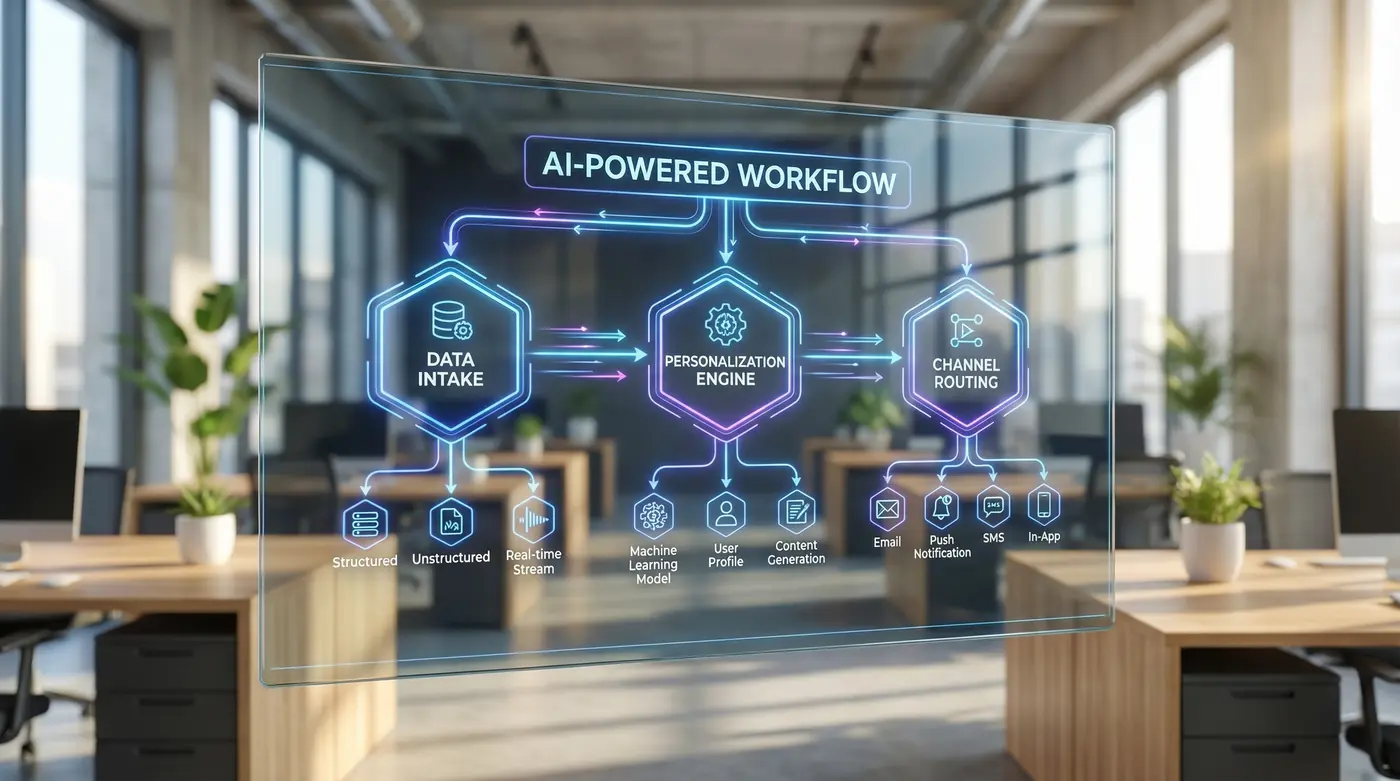
The foundation of successful AI implementation lies in intelligent automation. Business automation powered by AI goes beyond simple task scheduling to create adaptive systems that learn and optimize continuously. Modern AI tools can automate email sequences, social media posting, lead scoring, customer segmentation, and even content creation while maintaining personalization at scale.
Consider the impact on marketing workflows: AI can analyze customer behavior patterns, predict optimal send times for email campaigns, automatically adjust ad spending based on performance metrics, and generate personalized content variations for different audience segments. This level of automation allows marketing teams to focus on strategy while AI handles execution and optimization.
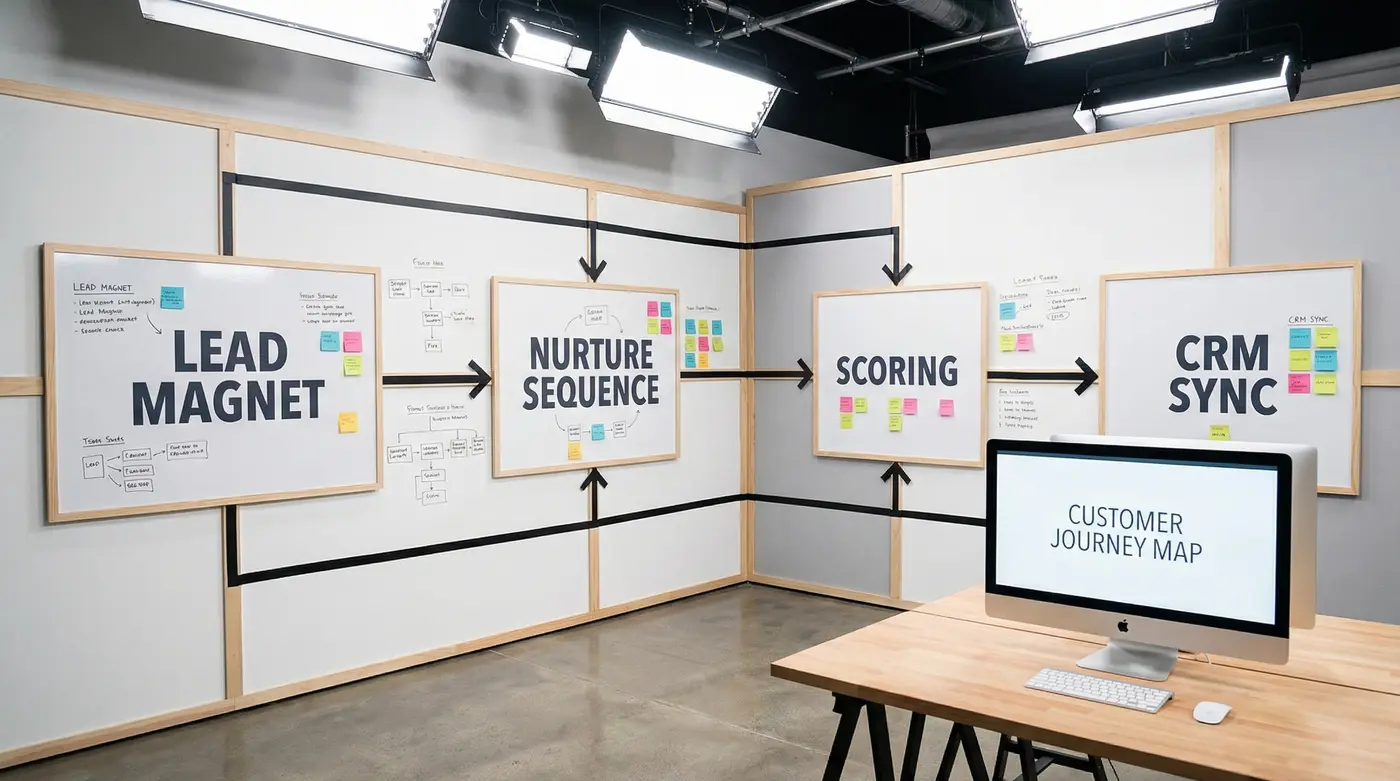
For sales processes, AI automation can qualify leads, schedule follow-ups, update CRM records, and even draft personalized outreach messages based on prospect behavior and preferences. The result is a sales funnel that operates efficiently around the clock, nurturing prospects and converting leads without constant manual intervention.
The key to successful automation lies in starting with high-impact, routine tasks that consume significant time but don’t require complex decision-making. Email marketing, social media scheduling, basic customer service inquiries, and data entry are ideal starting points for AI automation implementation.
Personalization at Scale: Creating Hyper-Targeted Customer Experiences
Modern consumers expect personalized experiences, but delivering true personalization manually becomes impossible as businesses scale. AI solves this challenge by analyzing vast amounts of customer data to create individualized experiences for thousands of customers simultaneously.
AI-driven personalization extends beyond inserting a customer’s name into an email. Advanced systems analyze browsing behavior, purchase history, engagement patterns, and demographic data to predict what products or services each customer is most likely to purchase. This predictive capability enables businesses to present the right offer to the right person at the optimal moment in their customer journey.

For e-commerce businesses, AI can dynamically adjust product recommendations, pricing displays, and promotional offers based on individual customer profiles. Service-based businesses can use AI to customize content delivery, suggest relevant resources, and tailor communication frequency to match customer preferences.
The impact on conversion rates is substantial. Businesses implementing AI-driven personalization typically see 10-15% improvements in conversion rates, with some reporting increases of up to 30% for highly optimized campaigns. More importantly, personalized experiences increase customer lifetime value by fostering stronger relationships and reducing churn.
Workflow Integration: Embedding AI Throughout Your Sales Funnel
Sales funnel optimization represents one of the most impactful applications of AI in online business. Rather than treating AI as a separate tool, successful businesses embed AI capabilities throughout their entire customer acquisition and retention process.
At the top of the funnel, AI can analyze traffic sources, visitor behavior, and content engagement to optimize landing pages in real-time. Machine learning algorithms can test different headlines, images, and call-to-action buttons, automatically implementing the highest-converting variations without manual intervention.
Mid-funnel, AI excels at lead nurturing through intelligent email sequences that adapt based on subscriber behavior. If a prospect opens multiple emails about a specific service but doesn’t convert, AI can automatically adjust the sequence to provide more detailed information about that service while reducing frequency for topics showing low engagement.

For the bottom of the funnel, AI can identify high-intent prospects through behavioral scoring, trigger timely sales interventions, and even suggest optimal pricing or package configurations based on prospect characteristics and competitive analysis.
CRM integration amplifies these benefits by ensuring all customer interactions inform AI decision-making. When your CRM, email platform, website analytics, and social media management tools share data through AI-powered integrations, you create a unified system that becomes more intelligent with every customer interaction.
Choosing Between Specialized and Generalist AI Tools
The AI tool landscape presents businesses with a crucial decision: invest in generalist platforms that handle multiple functions or specialized tools that excel in specific areas. The answer depends on your business size, technical capabilities, and specific use cases.
Generalist AI platforms offer convenience and lower learning curves. Tools like ChatGPT, Google Gemini, and comprehensive marketing automation tools like HubSpot provide broad functionality that can address multiple business needs through a single interface. These platforms work well for businesses just beginning their AI journey or those with limited technical resources.
Specialized AI tools, however, often deliver superior performance in specific applications. Dedicated email marketing AI, advanced analytics platforms, or industry-specific automation tools may provide 10x improvements in their core functions compared to generalist alternatives.
The optimal approach for most growing businesses involves a hybrid strategy: use generalist tools for basic functions while investing in specialized solutions for core business processes that drive the most revenue. This approach allows you to capture immediate efficiency gains while building toward more sophisticated AI implementations.
When evaluating AI tools, prioritize solutions that integrate well with your existing technology stack. The most powerful AI implementations occur when tools can share data and trigger actions across multiple platforms, creating automated workflows that span your entire business ecosystem.
Revolutionizing Customer Support with AI-Powered Interactions
Customer support represents one of the most mature and impactful applications of AI for online business. Modern AI-powered chatbots and virtual assistants can handle routine inquiries, process transactions, schedule appointments, and provide personalized recommendations 24/7.
The sophistication of these systems has evolved dramatically. Today’s AI assistants can understand context, maintain conversation continuity, access customer history, and escalate complex issues to human agents seamlessly. They can process natural language queries, interpret emotional tone, and respond appropriately to customer sentiment.
Voice commerce integration adds another dimension to AI-powered customer interactions. Nearly half of U.S. consumers now use voice search for product research, and businesses that optimize for voice queries gain significant competitive advantages. AI can power voice-activated ordering systems, appointment scheduling, and customer service interactions that feel natural and efficient.
The business impact extends beyond cost savings. AI-powered customer support can actually improve customer satisfaction by providing instant responses, consistent service quality, and 24/7 availability. When customers can get immediate answers to routine questions, human support agents can focus on complex issues that require empathy and creative problem-solving.
Implementation success depends on careful planning of conversation flows, comprehensive training data, and clear escalation paths to human agents. The goal isn’t to replace human interaction entirely but to handle routine tasks efficiently while ensuring complex or sensitive issues receive appropriate human attention.
Transforming AI Usage into Revenue Streams
The most successful online businesses don’t just use AI to reduce costs, they transform AI capabilities into new revenue streams. This monetization approach can involve direct AI-powered services, subscription offerings enhanced by AI, or value-added features that command premium pricing.
For service-based businesses, AI can enable new offering categories. Marketing agencies can provide AI-powered analytics services, business coaches can offer AI-enhanced assessments and recommendations, and consultants can deliver AI-generated insights and reports as premium services.
Subscription and membership models benefit significantly from AI enhancement. AI can personalize content delivery, predict member needs, optimize retention strategies, and create dynamic pricing models that maximize lifetime value. The key is positioning AI capabilities as value-adds that justify higher subscription tiers or premium pricing.
Product businesses can integrate AI features that create competitive differentiation. This might involve AI-powered customization tools, intelligent product recommendations, predictive maintenance services, or automated optimization features that provide ongoing value to customers.
The subscription economy for AI-enhanced services is projected to exceed $900 billion by 2026, indicating massive opportunity for businesses that can effectively monetize AI capabilities. Success requires focusing on outcomes rather than features, clearly communicating AI-driven value propositions, and continuously expanding AI capabilities based on customer feedback.
Building Trust Through Ethical AI Implementation
As AI becomes more prevalent in business operations, trust and transparency become critical differentiators. Customers increasingly want to understand how businesses use AI, what data is collected, and how their information is protected. Ethical AI implementation isn’t just about compliance, it’s about competitive advantage.
Transparency builds trust. Businesses that openly communicate their AI usage, explain how AI improves customer experiences, and provide clear opt-out mechanisms create stronger customer relationships. This transparency can become a marketing advantage as consumers become more AI-aware and selective about businesses they trust with their data.
Data privacy and security must be foundational considerations in any AI implementation. This includes secure data storage, limited data collection to essential functions, clear data retention policies, and robust security measures to protect customer information. Compliance with regulations like GDPR isn’t just legally required, it demonstrates commitment to customer protection.
Algorithmic bias represents another critical consideration. AI systems can perpetuate or amplify existing biases if not carefully monitored and adjusted. Regular auditing of AI outputs, diverse training data, and human oversight help ensure AI systems treat all customers fairly and appropriately.
Building ethical AI practices requires ongoing commitment, not just initial setup. Regular reviews of AI performance, customer feedback integration, and continuous improvement of AI systems demonstrate genuine commitment to ethical AI usage that customers will recognize and value.
Upskilling Your Team for AI Success
The most significant barrier to successful AI implementation isn’t technology, it’s human readiness. Teams need AI literacy, hands-on experience, and comfort with AI-augmented workflows to maximize the benefits of AI investment.
AI literacy doesn’t require everyone to become data scientists, but team members should understand AI capabilities, limitations, and best practices for their roles. Marketing team members need to understand how AI can enhance campaigns, sales teams should know how to leverage AI for prospect research and outreach, and customer service representatives need training on AI-human collaboration.
Hands-on experience with AI tools builds confidence and reveals practical applications. Encourage team members to experiment with AI tools in low-risk scenarios, share successful use cases, and collaborate on identifying new opportunities for AI implementation.
Creating a culture of AI experimentation and learning ensures your team stays current with rapidly evolving AI capabilities. Regular training sessions, tool evaluations, and success sharing help build organizational AI competency that becomes a competitive advantage.
The investment in team AI skills pays dividends through improved efficiency, creative problem-solving, and the ability to identify new opportunities for AI application. Teams comfortable with AI tools can implement solutions faster, optimize performance more effectively, and adapt to new AI capabilities as they emerge.
Actionable Steps for AI Integration
Successfully implementing AI for online business requires a strategic approach that balances ambition with practical execution. Start with a comprehensive audit of your current processes to identify high-impact opportunities for AI implementation.
Begin with email marketing automation using AI-powered platforms that can optimize send times, personalize content, and automate follow-up sequences. Email marketing represents one of the easiest and highest-ROI starting points for AI implementation, with tools that integrate seamlessly with most existing marketing stacks.
Next, implement AI-powered customer service through chatbots or virtual assistants that can handle routine inquiries while escalating complex issues to human agents. Start with frequently asked questions and gradually expand the AI’s capabilities based on interaction data and customer feedback.
Integrate AI analytics tools that can provide deeper insights into customer behavior, campaign performance, and business metrics. AI-powered analytics can identify patterns and opportunities that human analysis might miss, providing data-driven guidance for business decisions.
Develop a systematic approach to testing and optimizing AI implementations. Set clear metrics for success, establish regular review schedules, and continuously refine AI systems based on performance data and user feedback.
Create documentation and training materials that help your team understand and effectively use AI tools. The most sophisticated AI implementation fails if team members don’t know how to leverage its capabilities effectively.
Preparing for the AI-Powered Future
The businesses that thrive in the next decade will be those that view AI not as a cost-cutting tool, but as a strategic capability that enables new forms of value creation, customer engagement, and competitive differentiation. AI for online business is transitioning from experimental to essential, and the window for gaining first-mover advantages is closing rapidly.
The convergence of AI with other emerging technologies like 5G, blockchain, and augmented reality will create new possibilities for customer engagement and business model innovation. Businesses building AI capabilities now will be positioned to capitalize on these convergent opportunities as they mature.
Success requires balancing technological sophistication with human judgment, automation with personalization, and efficiency with ethics. The businesses that master this balance will create sustainable competitive advantages that compound over time.
The AI revolution in online business has begun, but we’re still in the early stages. The tools, techniques, and strategies you implement today will determine whether your business leads or follows in the AI-powered economy of tomorrow.
Ready to transform your online business with AI? The opportunity to gain competitive advantage through strategic AI implementation won’t last forever. Contact our team to discover how AI-powered automation, personalization, and optimization can accelerate your business growth while you maintain the competitive edge that early adoption provides.