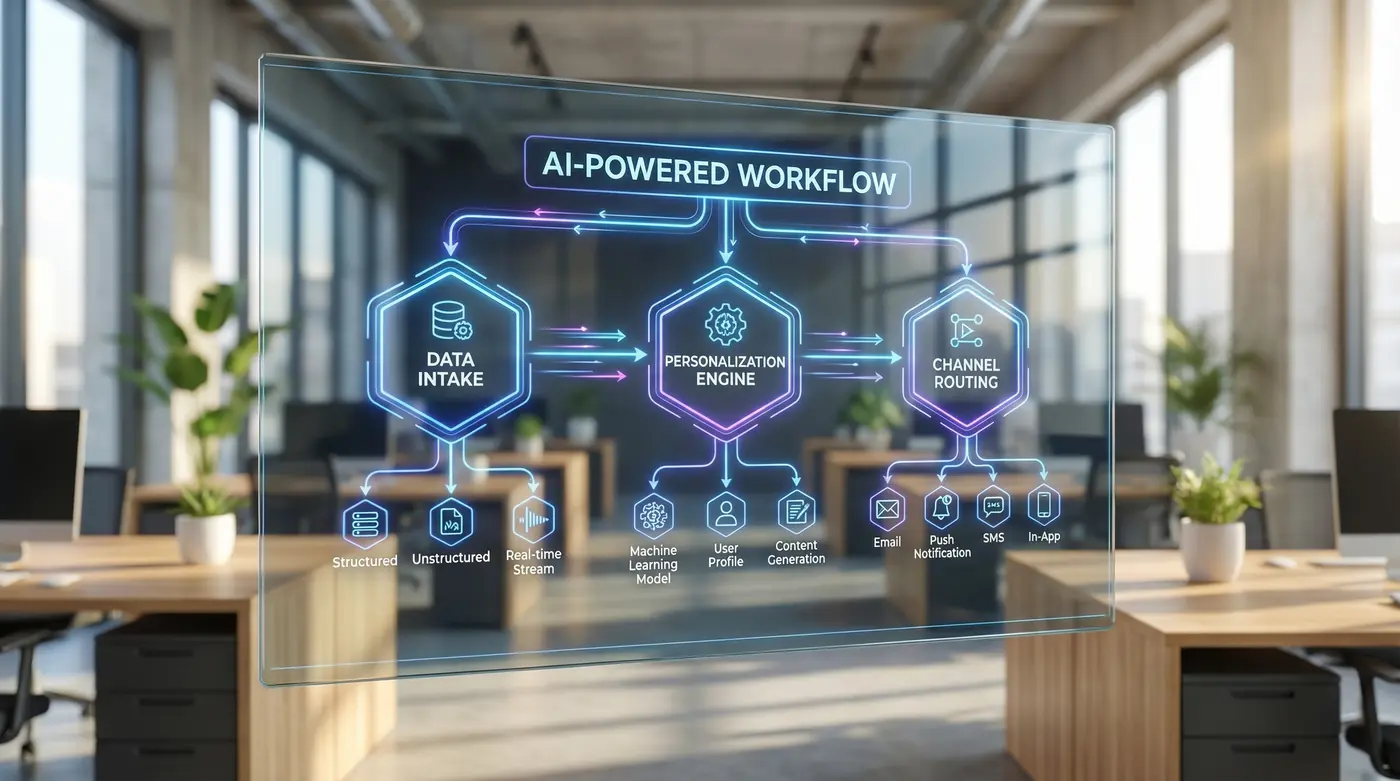
How to Build Profitable AI Workflows for Launching Passive Income Products
The landscape of passive income generation has undergone a revolutionary transformation with the advent of artificial intelligence. Business owners across industries are discovering that AI workflows for launching passive income products can dramatically reduce manual effort while maximizing revenue potential. This comprehensive guide will walk you through the strategic implementation of AI-powered systems that can help you build sustainable, scalable income streams.
Why AI is a Game-Changer for Passive Income
Artificial intelligence has fundamentally changed how entrepreneurs approach passive income generation. Unlike traditional methods that required extensive manual oversight, AI enables the creation of truly automated systems that can operate with minimal human intervention. The surge in AI-powered side hustles has increased by 28% this year alone, with businesses reporting significant improvements in efficiency and profitability.
AI workflows for launching passive income products offer several key advantages. They eliminate repetitive tasks, provide data-driven insights for optimization, scale operations without proportional increases in overhead, and maintain consistent quality across all automated processes. These benefits make AI an indispensable tool for business owners looking to diversify their revenue streams.
Modern AI tools require little to no technical expertise, democratizing access to sophisticated automation capabilities. This accessibility means that businesses of all sizes can implement AI-driven passive income strategies without significant upfront investments in technology or specialized personnel.
Defining Passive Income in the Age of AI
Passive income in the AI era encompasses digital products, automated eCommerce operations, affiliate marketing systems, and content automation workflows. These income streams leverage artificial intelligence to minimize ongoing manual work while maximizing revenue potential.
Digital products powered by AI include automatically generated eBooks, online courses with AI-created content, design templates, and stock assets. These products can be created once and sold repeatedly with minimal additional effort. AI tools handle everything from content creation to marketing optimization.
Automated eCommerce operations utilize AI for product sourcing, pricing optimization, inventory management, and customer support. Print-on-demand businesses particularly benefit from AI-generated designs and automated fulfillment processes that require virtually no manual intervention.
Affiliate marketing systems enhanced by AI can research products, generate content, identify target audiences, and optimize campaigns automatically. These systems continuously improve their performance through machine learning algorithms that analyze conversion data and adjust strategies accordingly.
Step 1: Identifying High-Potential Niches for AI-Powered Passive Income
Success with AI workflows for launching passive income products begins with selecting the right niche. High-potential areas include financial trading, digital content creation, online education, and print-on-demand products.
Financial trading represents one of the most lucrative opportunities for AI automation. Trading bots can analyze market data, execute trades, and manage portfolios with minimal human oversight. However, this niche requires careful risk management and ongoing monitoring to ensure optimal performance.
Digital content creation offers excellent scalability potential. AI tools can generate blog posts, social media content, video scripts, and marketing materials at unprecedented speeds. Content creators using AI report earning between $1,800 and $10,000 monthly from automated content systems.
Online courses and educational products benefit significantly from AI assistance. AI can create course outlines, generate lesson content, produce supplementary materials, and even handle student interactions through chatbots. The online education market continues to grow, making this an attractive niche for passive income generation.
Print-on-demand businesses leverage AI for design creation and market research. AI art generators can produce unique designs for apparel, accessories, and home decor items. These designs are then automatically applied to products and marketed through various platforms without manual intervention.
Step 2: Choosing the Right AI Tools for Your Business Model
Selecting appropriate AI tools is crucial for successful implementation of passive income workflows. Different business models require specific types of AI assistance, and choosing the wrong tools can significantly impact your results.
For content creation businesses, tools like ChatGPT, Jasper AI, and Copy.ai excel at generating written content. Video content benefits from Pictory, Lumen5, and Synthesia for automated video creation and editing. These tools can produce high-quality content that rivals human-created materials.
eCommerce operations require tools that handle multiple aspects of online retail. AutoDS and Oberlo automate product sourcing and inventory management, while AI chatbots handle customer service inquiries. Pricing optimization tools use machine learning to adjust prices based on market conditions and competitor analysis.
Trading and investment automation relies on specialized platforms like 3Commas, Pionex, and various robo-advisors. These tools execute trades, rebalance portfolios, and manage risk according to predetermined strategies. Some AI trading systems report win rates as high as 92%.
Design and creative businesses benefit from AI art generators like DALL-E, Midjourney, and Canva’s AI features. These tools can create professional-quality designs for various applications, from social media graphics to product designs for print-on-demand businesses.
Step 3: Designing and Implementing Automated AI Workflows
Creating effective AI workflows requires careful planning and systematic implementation. The goal is to design systems that can operate independently while maintaining quality and generating consistent results.
Content scheduling workflows begin with AI-generated content that is automatically formatted, optimized for SEO, and scheduled for publication across multiple platforms. These systems can maintain consistent posting schedules without manual intervention, ensuring continuous audience engagement.

Product listing automation involves AI tools that research trending products, create compelling product descriptions, optimize pricing, and manage inventory levels. These workflows can launch new products and update existing listings based on market trends and performance data.
Customer support automation utilizes AI chatbots that can handle common inquiries, process orders, and escalate complex issues to human representatives when necessary. These systems provide 24/7 customer service while reducing operational costs.
Campaign management workflows automatically create, launch, and optimize marketing campaigns across multiple channels. AI analyzes performance data and adjusts targeting, messaging, and budget allocation to maximize return on investment. This approach to ai to automate small business operations has proven highly effective for companies seeking scalable growth.
Step 4: Monitoring, Optimizing, and Scaling Your AI Systems
Successful AI workflows require ongoing monitoring and optimization to maintain peak performance. While these systems operate autonomously, periodic review ensures they continue to align with business objectives and market conditions.
Performance monitoring involves tracking key metrics such as conversion rates, revenue generation, and system efficiency. AI analytics tools can identify trends and anomalies that may require attention or present opportunities for improvement.
Optimization strategies include A/B testing different AI-generated content, adjusting automation parameters based on performance data, and updating AI models with new information. Regular optimization can improve system performance by 10-20% or more.
Scaling successful workflows involves replicating proven systems across additional niches or platforms. Once you’ve identified effective AI workflows for launching passive income products, you can expand their application to increase overall revenue potential.
Quality assurance remains important even in automated systems. Regular reviews of AI-generated content, automated decisions, and system outputs help maintain standards and identify areas for improvement.

Real-World Case Studies: Entrepreneurs Scaling with AI-Driven Products
Real-world examples demonstrate the potential of AI-powered passive income systems. One entrepreneur leveraged AI content creation tools to build a network of automated YouTube channels, generating $127,000 in the first year and scaling to $1.2 million annually across multiple channels.
Another case study involves a print-on-demand business owner who used AI art generators to create unique designs for apparel and home decor. By automating the design creation and marketing process, they achieved gross revenues of hundreds of thousands of dollars with minimal manual effort.
A digital product creator utilized AI to produce eBooks, online courses, and templates across multiple niches. Their automated system generates between $30,000 and $50,000 monthly through various digital platforms, with AI handling everything from content creation to marketing optimization.
An affiliate marketer implemented AI tools to research products, create content, and optimize campaigns automatically. This approach increased their affiliate income by 30-50% annually while reducing the time spent on manual tasks by 29% weekly.
Legal, Ethical, and Quality Considerations
Implementing AI workflows requires careful attention to legal and ethical considerations. The Generative AI Copyright Disclosure Act and similar legislation require transparency about AI-generated content in many jurisdictions.
Quality control measures should include human oversight of AI outputs, regular reviews of automated decisions, and clear guidelines for AI system behavior. Maintaining a human in the loop approach helps ensure quality while meeting legal requirements.
Copyright and intellectual property considerations are particularly important when using AI for content creation. Business owners must ensure their AI-generated content doesn’t infringe on existing copyrights and complies with platform-specific guidelines.
Ethical AI use involves transparent disclosure of AI assistance, respect for user privacy, and responsible data handling practices. These considerations help build trust with customers and avoid potential legal issues.
Actionable Tips for Success
Diversifying income streams across multiple AI-powered systems reduces risk and increases overall revenue potential. Rather than relying on a single automated system, successful entrepreneurs typically operate several complementary workflows.
Incremental scaling involves starting with one proven system before expanding to additional niches or platforms. This approach allows for learning and optimization before making larger investments in automation infrastructure.
Reinvesting profits into expanding AI capabilities and automation tools accelerates growth and improves system performance. Many successful entrepreneurs allocate 20-30% of their passive income to system improvements and expansion.
Staying updated on AI trends and new tools ensures continued competitiveness in rapidly evolving markets. Regular training and tool evaluation help identify opportunities for improvement and expansion.
Learning how to launch products with ai requires understanding both the technical capabilities and strategic applications of various tools. Success comes from matching the right AI solutions to specific business objectives and market opportunities.
How DoneWithYou Helps Build AI Workflows for Lasting Passive Income
At DoneWithYou, we specialize in helping businesses implement sophisticated AI workflows that generate sustainable passive income. Our collaborative approach combines expert execution with client involvement to ensure systems align with your specific business objectives and growth targets.
Our team develops custom AI workflows tailored to your industry and business model, whether you’re focused on digital products, eCommerce automation, or content marketing. We handle the technical implementation while keeping you involved in strategic decisions and optimization processes.
We integrate AI workflows with existing marketing automation systems, CRM platforms, and sales funnels to create comprehensive passive income generation systems. This holistic approach ensures all components work together seamlessly to maximize revenue potential.
Our ongoing optimization services monitor system performance, identify improvement opportunities, and implement updates to maintain peak efficiency. We also provide training and support to help your team understand and manage AI-powered systems effectively.
For businesses ready to leverage ai tools for personal branding and passive income generation, DoneWithYou offers the expertise and support needed to implement successful AI workflows. Our proven methodologies have helped numerous clients achieve significant growth through strategic automation and AI implementation.
Ready to transform your business with AI-powered passive income systems? Contact DoneWithYou today to discuss how we can help you build and optimize AI workflows that generate lasting revenue while you focus on strategic growth initiatives.