Business Automation Revolution: How Smart Companies Are Transforming Operations for Explosive Growth
The landscape of business automation is experiencing an unprecedented transformation. Companies that once viewed automation as a luxury are now treating it as an essential competitive advantage. With the global business process automation market projected to reach $16.46 billion and 90% of major enterprises prioritizing hyperautomation, we’re witnessing a fundamental shift in how businesses operate, scale, and compete.
This revolution extends far beyond simple task automation. Today’s leading companies are orchestrating comprehensive workflows that integrate artificial intelligence, machine learning, and sophisticated data analytics to create seamless, intelligent operations that drive measurable growth.
The Rise of End-to-End Business Automation
Traditional automation focused on digitizing individual tasks. Today’s approach centers on Digital Process Automation (DPA) and hyperautomation, which orchestrate entire cross-functional workflows. This evolution represents a fundamental shift from isolated efficiency gains to comprehensive operational transformation.
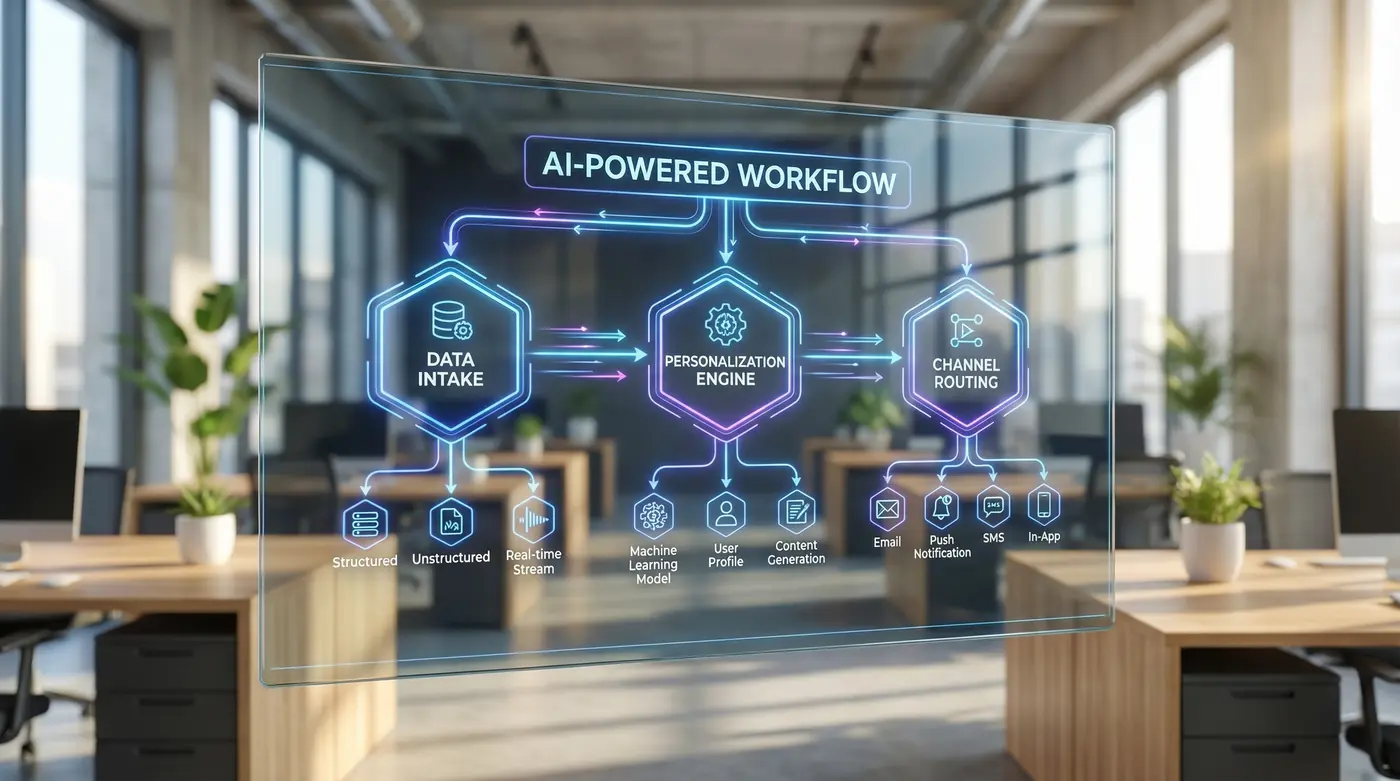
DPA combines artificial intelligence, robotic process automation (RPA), and business process management (BPM) to create intelligent workflows that adapt and learn. Unlike traditional automation that follows rigid rules, these systems can handle exceptions, make decisions, and continuously optimize performance.
Consider how leading companies are implementing hyperautomation across their operations. Instead of automating marketing emails separately from sales follow-up, they’re creating unified workflows where customer behavior triggers personalized sequences across multiple touchpoints, automatically adjusting based on engagement patterns and conversion data.

The impact is substantial. Organizations implementing comprehensive business automation report 30-50% improvements in operational efficiency and significant reductions in manual errors. More importantly, they’re able to scale operations without proportionally increasing overhead, creating sustainable competitive advantages.
AI and Machine Learning as the Backbone of Modern Automation
Artificial intelligence has evolved from a futuristic concept to the driving force behind today’s most effective business automation strategies. With 63% of organizations planning AI adoption within three years, we’re seeing unprecedented integration of machine learning capabilities into everyday business processes.
Real-time personalization represents one of the most powerful applications of AI in business automation. Modern systems analyze customer behavior, purchase history, and engagement patterns to deliver personalized experiences at scale. This goes far beyond simple email segmentation, encompassing dynamic website content, personalized product recommendations, and adaptive sales sequences.
Predictive analytics powered by machine learning enables businesses to anticipate customer needs, identify potential churn risks, and optimize inventory management. These capabilities transform reactive businesses into proactive organizations that can address challenges before they impact revenue.
Dynamic segmentation represents another breakthrough application. Instead of static customer categories, AI-powered systems continuously analyze behavior patterns and automatically adjust segmentation strategies. This ensures that marketing messages, sales approaches, and customer service interactions remain relevant and effective as customer preferences evolve.
The conversion impact is measurable. Companies implementing AI-driven business automation report 15-25% improvements in conversion rates and 20-30% increases in customer retention. These improvements compound over time, creating substantial long-term value.
No-Code and Low-Code Platforms Democratizing Automation
The emergence of no-code and low-code platforms is fundamentally changing who can implement business automation. Previously, automation projects required significant technical expertise and development resources. Today’s platforms enable marketing teams, operations managers, and business analysts to build sophisticated automations without coding knowledge.
This democratization addresses one of the biggest barriers to automation adoption: IT bottlenecks. Instead of waiting weeks or months for development resources, teams can prototype, test, and deploy automations within days. This agility is crucial in today’s fast-paced business environment where market conditions and customer expectations change rapidly.
Leading no-code platforms offer drag-and-drop interfaces for creating complex workflows that integrate multiple systems and data sources. Users can build automations that connect CRM systems, email marketing platforms, social media channels, and analytics tools without writing a single line of code.
The cost implications are significant. Organizations report 60-80% reductions in automation implementation costs when using no-code platforms compared to traditional development approaches. Additionally, maintenance and updates can be handled by business users rather than technical teams, reducing ongoing operational expenses.
However, successful implementation requires strategic thinking. While the technology is accessible, designing effective automation workflows requires understanding business processes, customer journeys, and performance metrics. The most successful companies combine no-code tools with automation expertise to maximize results.
Unified Platforms and Data Integration Breaking Down Silos
Modern businesses generate data across multiple systems: CRM platforms, email marketing tools, social media channels, e-commerce platforms, and customer service systems. Traditional approaches created data silos that prevented comprehensive analysis and coordinated automation.
Unified platforms are addressing this challenge by integrating diverse data sources into cohesive systems that enable cross-functional automation. Instead of managing separate tools for different functions, businesses can orchestrate comprehensive workflows that span marketing, sales, and customer service.
This integration enables sophisticated automation scenarios. For example, when a customer abandons a shopping cart, the system can automatically trigger a personalized email sequence, update the CRM record, notify the sales team if the cart value exceeds a threshold, and adjust inventory forecasting. All of this happens seamlessly without manual intervention.
The agility benefits are substantial. Unified platforms enable rapid testing and optimization of automation workflows. Businesses can quickly identify what’s working, adjust underperforming processes, and scale successful strategies across different channels and customer segments.
Data quality improvements represent another significant advantage. Unified systems reduce data duplication, ensure consistency across platforms, and provide comprehensive customer views that enable more effective personalization and targeting.
Omnichannel Marketing Automation for Seamless Customer Experiences
Customer expectations for seamless, personalized experiences across all touchpoints are driving the evolution of email marketing automation into comprehensive omnichannel strategies. Modern customers interact with brands through websites, social media, email, mobile apps, and physical locations, expecting consistent and relevant experiences throughout their journey.
Advanced marketing automation tools now integrate email, social media, SMS, push notifications, and website personalization into unified campaigns. This integration enables sophisticated nurture sequences that adapt based on customer behavior across all channels.
For instance, a customer who opens an email but doesn’t click might receive a follow-up SMS with a special offer. If they visit the website but don’t purchase, they might see retargeting ads on social media with personalized product recommendations. If they engage on social media, the email marketing automation system can adjust future messages based on their expressed interests.
The personalization capabilities extend beyond simple demographic targeting. Modern systems analyze behavior patterns, purchase history, engagement preferences, and lifecycle stage to deliver highly relevant messages at optimal times across preferred channels.
Attribution and analytics across channels provide comprehensive insights into customer journeys and campaign effectiveness. Businesses can identify which touchpoints drive conversions, optimize budget allocation across channels, and improve overall campaign performance.
First-Party Data and Privacy Compliance Strategies
Privacy regulations like GDPR and CCPA are reshaping how businesses collect and use customer data. Rather than viewing these regulations as constraints, forward-thinking companies are leveraging privacy compliance as a competitive advantage by building robust first-party data strategies.
First-party data collection through business automation enables more accurate customer insights while maintaining compliance. Interactive touchpoints like quizzes, preference centers, and feedback forms can be automated to continuously gather valuable information while providing value to customers.
Consent management automation ensures that all data collection and usage aligns with regulatory requirements. Modern systems can automatically track consent preferences, update communication settings, and ensure that all automated workflows respect customer privacy choices.
This is particularly important for luxury and financial services sectors where trust and compliance are paramount. Automated compliance workflows can track all customer interactions, maintain audit trails, and ensure that sensitive information is handled according to industry regulations.
The competitive advantage comes from building direct relationships with customers rather than relying on third-party data sources. Companies with robust first-party data strategies report higher customer lifetime values and more effective marketing campaigns.
Subscription Models and Automated Retention Strategies
The subscription economy continues to grow, with businesses across industries adopting recurring revenue models. Business automation plays a crucial role in making these models successful by optimizing customer acquisition, onboarding, engagement, and retention processes.
Automated onboarding sequences ensure new subscribers receive value immediately and understand how to maximize their investment. These workflows can include welcome series, product education, and early engagement triggers that increase the likelihood of long-term retention.
Churn prediction automation uses machine learning to identify customers at risk of cancellation. By analyzing usage patterns, engagement metrics, and behavior changes, these systems can trigger retention campaigns before customers decide to leave.
Loyalty program automation enhances customer retention by automatically rewarding engagement, purchases, and referrals. These programs can include tiered benefits, personalized rewards, and gamification elements that encourage continued participation.
The financial impact of automated retention strategies is significant. Businesses report 20-30% improvements in customer lifetime value and 15-25% reductions in churn rates when implementing comprehensive retention automation.
Real-Time Analytics and Executive Dashboards
Traditional business reporting created delays between activity and insights, limiting the ability to make timely decisions. Modern business automation includes real-time analytics and executive dashboards that provide immediate visibility into performance metrics and campaign effectiveness.
Automated reporting eliminates manual data compilation and ensures that stakeholders have access to current information. These systems can generate daily, weekly, or monthly reports automatically, highlighting key performance indicators and identifying trends that require attention.
Executive dashboards provide high-level overviews of business performance while enabling drill-down capabilities for detailed analysis. Leaders can quickly identify opportunities and challenges, making data-driven decisions without waiting for manual analysis.
Predictive analytics within these dashboards help businesses anticipate future trends and adjust strategies proactively. Instead of reacting to past performance, companies can optimize for predicted outcomes and market conditions.
Business that can quickly identify and respond to changes in customer behavior, market conditions, or campaign performance consistently outperform competitors who rely on delayed reporting.
Sustainability and Workforce Reskilling in Automated Environments
As business automation becomes more sophisticated, companies are addressing two critical considerations: environmental sustainability and workforce development. Green automation initiatives focus on optimizing resource usage, reducing waste, and improving energy efficiency through intelligent systems.
Automated systems can optimize supply chains, reduce paper usage, and minimize energy consumption through intelligent scheduling and resource allocation. These improvements align with corporate sustainability goals while reducing operational costs.
Workforce reskilling represents an equally important consideration. As automation handles routine tasks, employees need new skills to manage, optimize, and innovate with automated systems. Successful companies are investing in training programs that help teams transition from manual processes to automation management.
The most effective approach involves gradual implementation with comprehensive training and support. Teams learn to work alongside automated systems, focusing on strategy, creativity, and relationship-building while automation handles routine execution.
This human-automation collaboration often produces better results than either approach alone. Automated systems provide consistency and scalability, while human oversight ensures strategic alignment and creative problem-solving.
Action Steps for Implementing Business Automation
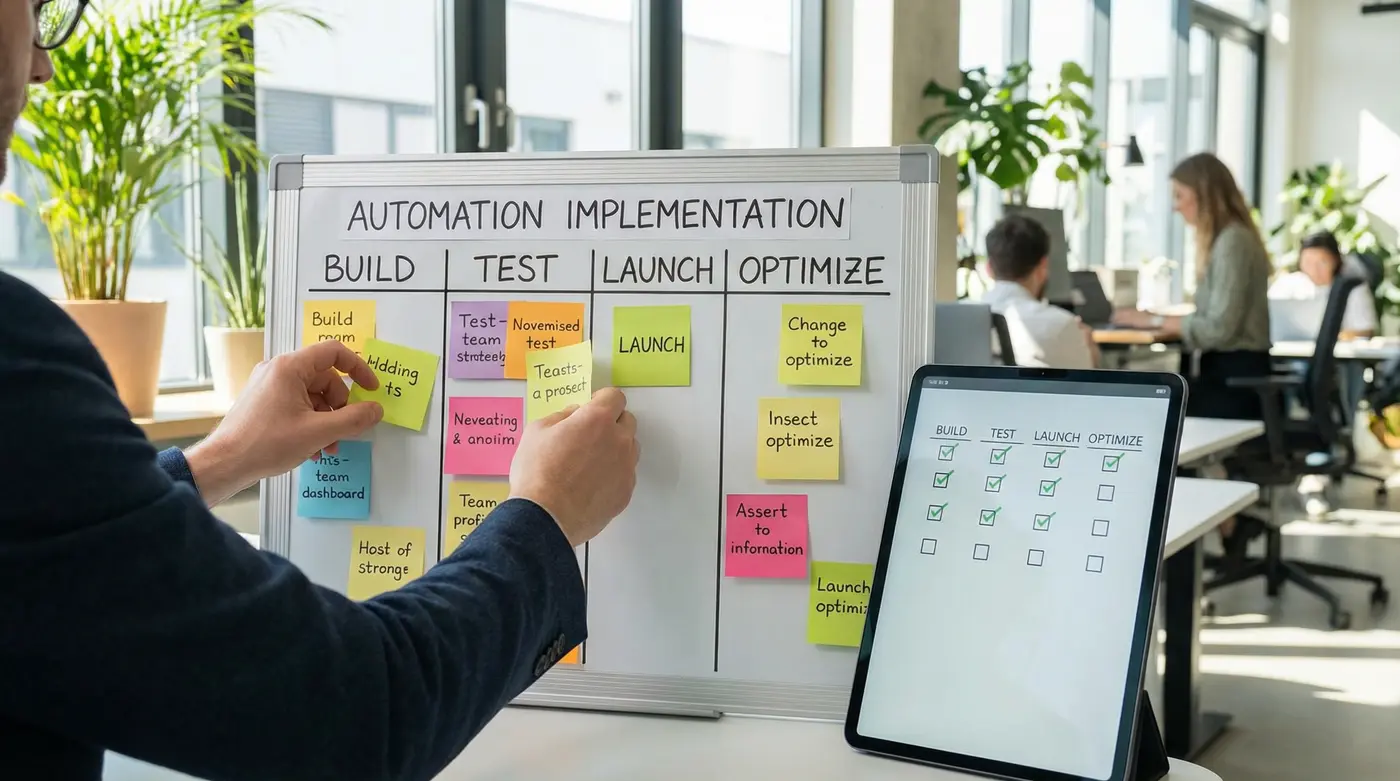
Successfully implementing business automation requires a strategic approach that balances ambition with practicality. The most effective strategy involves starting with high-impact opportunities and gradually expanding automation across the organization.
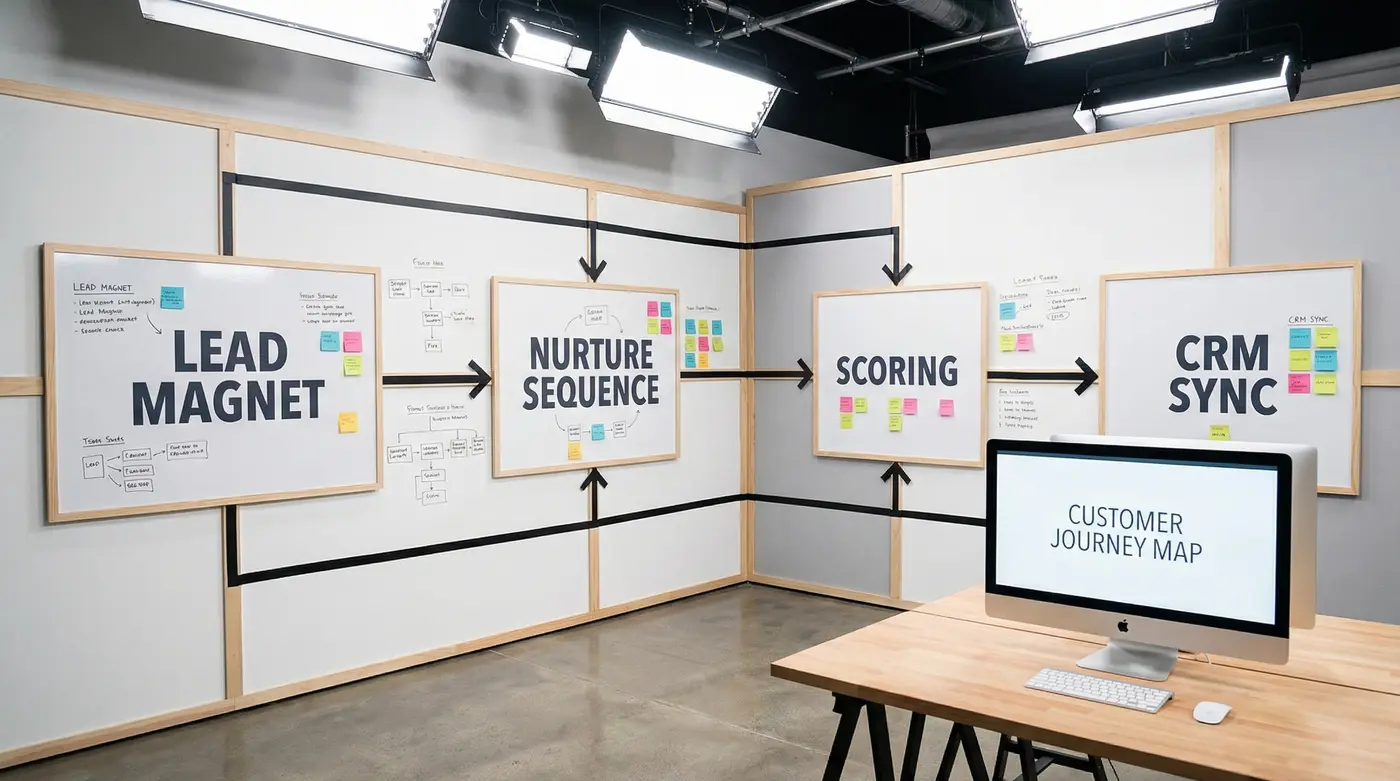
Begin by identifying repetitive, high-volume processes that consume significant time and resources. These might include lead qualification, email follow-up sequences, data entry, or customer onboarding. Document current processes and measure baseline performance to establish improvement benchmarks.
Pilot automation projects using no-code platforms to minimize initial investment and technical complexity. Start with simple workflows and gradually add sophistication as teams become comfortable with the technology. This approach reduces risk while building organizational confidence in automation capabilities.
Measure results rigorously and optimize continuously. Successful business automation requires ongoing attention to performance metrics, user feedback, and changing business requirements. Regular optimization ensures that automated workflows remain effective and aligned with business goals.
Scale successful automations across similar processes and departments. Once a workflow proves effective, adapt it for other use cases and teams. This scaling approach maximizes return on investment and accelerates organizational transformation.
Consider partnering with automation experts who can provide guidance, best practices, and technical expertise. While no-code tools make automation more accessible, strategic implementation benefits from experience and specialized knowledge.
The Future of Business Automation
The evolution of business automation shows no signs of slowing. Emerging technologies like agentic AI, digital twins, and edge computing promise even more sophisticated automation capabilities. Companies that embrace these trends and build automation competencies now will be best positioned for future success.
The competitive landscape increasingly favors businesses that can operate efficiently, respond quickly to market changes, and deliver personalized customer experiences at scale. Business automation provides the foundation for achieving these capabilities while maintaining sustainable growth.
Success in this automated future requires more than just implementing technology. It demands strategic thinking, continuous learning, and a commitment to optimization. Companies that approach business automation as a strategic capability rather than a tactical tool will realize the greatest benefits and achieve the most sustainable competitive advantages.
Ready to transform your business operations with intelligent automation? Start by identifying your highest-impact automation opportunities and exploring how modern tools can streamline your workflows, improve customer experiences, and drive measurable growth. The future belongs to businesses that can operate with the efficiency of machines and the insight of human expertise.
For further insights, explore process improvement strategies for automation-driven growth.