The Complete Guide to Creating Effective Monetization Strategies That Actually Scale Your Digital Business
Digital businesses today face an unprecedented challenge: with more content being created than ever before, simply producing more material is no longer the path to sustainable revenue growth. The businesses that thrive are those mastering the art of creating effective monetization strategies that transform audience engagement into predictable, scalable income streams.
This comprehensive guide reveals how successful digital businesses are building resilient revenue engines through strategic multi-channel approaches, data-driven experimentation, and intelligent automation. Whether you’re a service provider, content creator, or established digital brand, these proven frameworks will help you maximize the value of every customer interaction.
Why Intentional Multi-Channel Monetization Is Essential for Digital Business Success
The digital landscape has fundamentally shifted. Where businesses once competed on content volume, today’s winners focus on monetization strategy and execution. This shift represents a maturation of the digital economy, where attention alone no longer guarantees revenue.
Modern consumers interact with brands across multiple touchpoints before making purchasing decisions. A potential customer might discover your brand through social media, research your offerings via search, subscribe to your email list, and ultimately convert through a targeted sales funnel. This complex journey requires sophisticated monetization approaches that capture value at every stage.
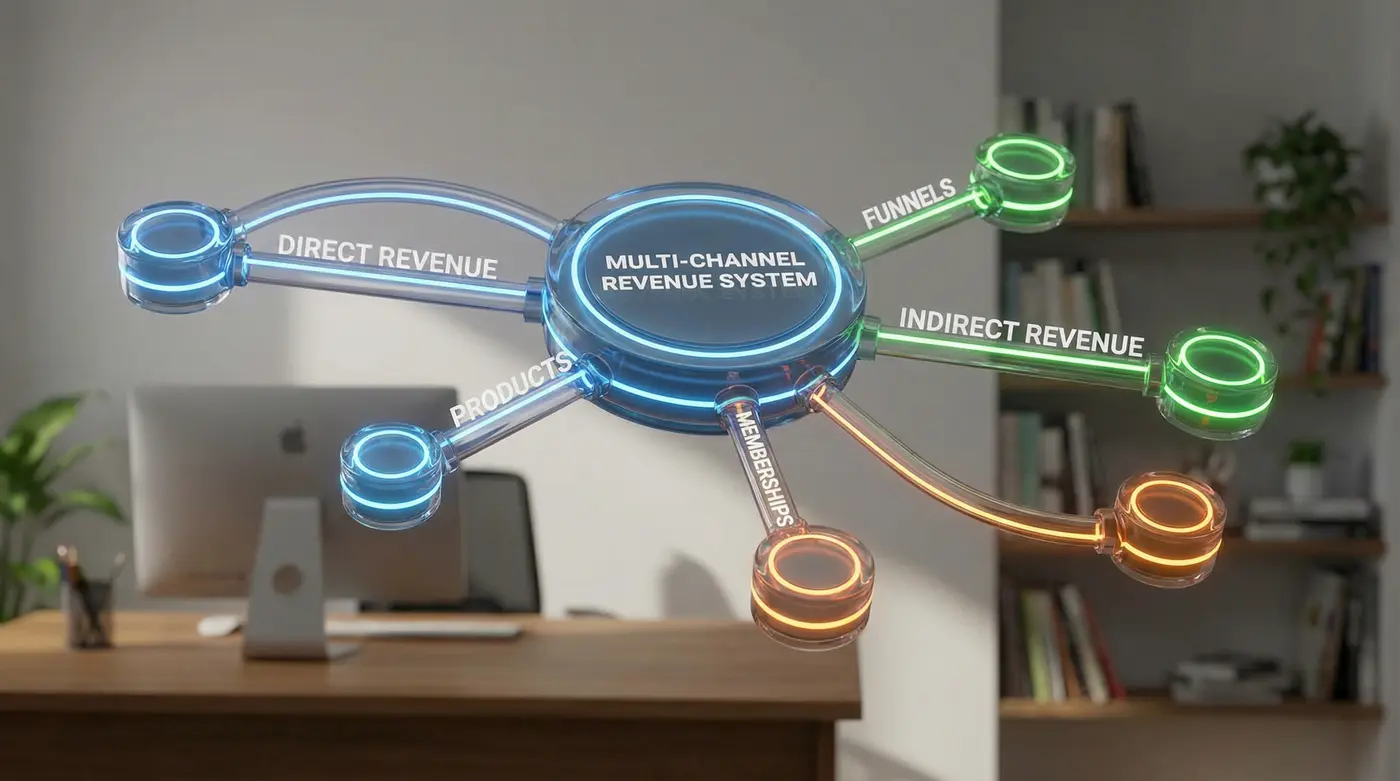
The most successful digital businesses now treat each platform and content format as a separate revenue product. They stack multiple income streams including subscriptions, sponsorships, affiliate partnerships, and direct sales, all tied to specific audience outcomes and measurable KPIs.
From Content Volume to Strategic Revenue: The Modern Monetization Mindset
Traditional content strategies focused on reach and engagement metrics. While these remain important, they’re now secondary to conversion-focused metrics that directly impact your bottom line. The new approach prioritizes bundling complementary offerings, creating subscription-based recurring revenue, and developing membership communities that generate predictable monthly income.
This strategic shift requires viewing your expertise and content through a monetization lens. Instead of creating content for its own sake, every piece should serve a specific revenue purpose, whether that’s nurturing leads, demonstrating value, or directly driving conversions.
Successful businesses are also embracing the subscription economy, recognizing that recurring revenue provides stability and predictability that one-time sales cannot match. By offering tiered access to premium content, exclusive communities, and advanced resources, you create ongoing value relationships with your audience.
How to Productize Your Expertise Into Multiple Revenue Channels
The key to creating effective monetization strategies lies in systematically transforming your knowledge and content into multiple revenue-generating products. This process, called productization, involves identifying the various ways your expertise can solve problems and create value for different audience segments.
Start by auditing your existing content and identifying patterns in what resonates most with your audience. High-performing tutorials can become premium courses, popular reviews can drive affiliate revenue, and frequently asked questions can inform paid consultation services.
Consider these productization opportunities:
- Educational Content: Transform tutorials and how-to content into structured courses, workshops, or certification programs
- Tools and Templates: Package your processes into downloadable resources, software tools, or done-for-you templates
- Consultation and Services: Leverage your expertise through one-on-one coaching, group programs, or done-with-you offerings
- Community Access: Create exclusive membership areas where subscribers receive ongoing support, networking opportunities, and premium content
Each revenue channel should align with your audience’s specific needs and willingness to pay. Price your offerings based on the outcomes they deliver rather than the time invested in creating them.

Building Hybrid Monetization Models for Maximum Resilience
Relying on a single revenue source creates dangerous vulnerability in your business. The most resilient digital businesses combine multiple monetization approaches, including advertising revenue, subscription income, sponsored content, and affiliate partnerships.
This hybrid approach provides several advantages. First, it reduces risk by diversifying income sources. If one revenue stream experiences disruption, others can compensate. Second, it maximizes the lifetime value of each customer by offering multiple ways to generate revenue from the same audience.
Effective sales funnel strategies play a crucial role in hybrid monetization. Your funnels should be designed to identify the most valuable prospects and guide them toward your highest-value offerings, while still capturing revenue from those who aren’t ready for premium purchases.
Consider implementing a value ladder approach where customers can enter your ecosystem at different price points and gradually move toward higher-value offerings as they experience success with your solutions.
Leveraging AI and Automation for Conversion Optimization
Modern multi-channel marketing automation powered by artificial intelligence enables unprecedented personalization and optimization of your monetization efforts. By collecting and analyzing first-party data, you can segment your audience based on behavior, preferences, and purchase history, then deliver targeted offers that significantly improve conversion rates.
AI-driven tools can help you identify the optimal timing, messaging, and channels for different offers. They can also automate the testing of different pricing strategies, content formats, and promotional approaches to continuously improve your results.
Key automation opportunities include:
- Email Sequences: Automated nurture campaigns that guide prospects through your sales process
- Dynamic Pricing: AI-powered pricing optimization based on demand, seasonality, and customer segments
- Content Personalization: Customized content recommendations based on individual user behavior and preferences
- Retargeting Campaigns: Automated advertising that re-engages visitors who didn’t convert on their first visit
The goal is to create systems that work continuously to optimize your revenue generation without requiring constant manual intervention.
Building Community and Trust for Stable Recurring Income
Trust is the foundation of sustainable monetization. Audiences are increasingly skeptical of traditional advertising and prefer recommendations from creators and brands they trust. Building genuine community around your expertise creates a competitive moat that’s difficult for competitors to replicate.
Exclusive communities serve multiple monetization purposes. They provide recurring subscription revenue, create opportunities for higher-value upsells, and generate valuable feedback that helps you develop new products and services. Members of close-knit communities also become powerful advocates who drive organic growth through referrals and social proof.
Focus on creating genuine value within your community. This might include exclusive content, direct access to you or your team, networking opportunities with other members, or early access to new products and services.
Next-Generation Advertising: Contextual, Direct, and Connected TV
Traditional advertising models are evolving rapidly. Contextual advertising, which matches ads to content without relying on personal data, offers higher engagement rates while respecting user privacy. This approach aligns advertising with user intent and content consumption patterns, resulting in more relevant and effective campaigns.
Direct advertising partnerships provide another powerful avenue. By working directly with brands that align with your audience’s interests, you can command higher rates while maintaining editorial control. These partnerships often result in more authentic integrations that your audience perceives as valuable recommendations rather than disruptive advertisements.
Connected TV (CTV) advertising represents a growing opportunity for businesses creating video content. CTV allows for more sophisticated targeting and measurement while reaching audiences in a premium environment that commands higher advertising rates.
Social Commerce and Shoppable Content Strategies
The line between content discovery and purchasing continues to blur. Social commerce enables frictionless buying journeys where users can discover, evaluate, and purchase products without leaving their preferred platforms.
Successful social commerce strategies focus on creating content that naturally incorporates product recommendations and purchasing opportunities. This might include product demonstrations, comparison reviews, or behind-the-scenes content that showcases how products integrate into real-life scenarios.
The key is maintaining authenticity while facilitating commerce. Your audience should feel that your product recommendations are genuine and helpful rather than purely promotional.
Analytics and KPIs That Drive Revenue Optimization
Effective revenue optimization for digital businesses requires tracking the right metrics and using data to make informed decisions. Focus on metrics that directly correlate with revenue generation rather than vanity metrics that look impressive but don’t impact your bottom line.
Critical KPIs for monetization strategies include:
- Customer Lifetime Value (LTV): The total revenue you can expect from a customer relationship
- Average Revenue Per User (ARPU): The average revenue generated per customer or subscriber
- Churn Rate: The percentage of customers who stop purchasing or subscribing over a given period
- Conversion Rate: The percentage of prospects who become paying customers
- Cost of Customer Acquisition (CAC): The total cost to acquire a new customer
Use these metrics to identify optimization opportunities and track the effectiveness of different monetization strategies. Regular analysis should inform decisions about pricing, product development, and marketing investment.

Integrating Automation, CRM, and Sales Funnels for Long-Term Growth
Sustainable monetization requires systems that can scale without proportional increases in manual effort. The integration of marketing automation, customer relationship management (CRM) systems, and optimized sales funnels creates a revenue engine that becomes more effective over time.
Your CRM should track the complete customer journey, from initial contact through repeat purchases. This data enables sophisticated segmentation and personalization that improves conversion rates and customer satisfaction.
Automated sales funnels should be designed to handle different customer segments and purchase scenarios. This might include different paths for first-time buyers versus repeat customers, or separate funnels for different product lines or service tiers.
The goal is creating systems that nurture relationships and drive revenue even when you’re not actively involved in the process.
Future-Proofing Your Monetization Strategy
The digital landscape continues to evolve rapidly. Future-proof monetization strategies emphasize diversification, platform independence, and compliance with evolving privacy regulations.
Diversification means avoiding over-dependence on any single platform, traffic source, or revenue stream. Build direct relationships with your audience through email lists, owned media properties, and community platforms that you control.
Platform independence involves creating content and systems that can adapt to changes in social media algorithms, advertising policies, or platform availability. Focus on building assets that you own and control rather than relying entirely on rented attention from social media platforms.
Privacy compliance is increasingly important as regulations become stricter and consumers become more conscious of data usage. Build your monetization strategies on first-party data collection and transparent value exchanges that respect user privacy while still enabling personalization and optimization.
Case Studies: Doubling Revenue Through Strategic Monetization
The most successful implementations of these strategies share common characteristics. They start with a clear understanding of their audience’s needs and willingness to pay, implement systematic testing and optimization processes, and maintain focus on metrics that directly impact revenue.
One service-based business doubled their revenue in 8 months by implementing a hybrid monetization model that combined their existing consulting services with a subscription-based community, an online course, and affiliate partnerships. The key was creating clear pathways between different offerings and using marketing automation to guide prospects toward the most appropriate solutions.
Another content-driven brand achieved similar results by productizing their expertise into multiple formats and price points, then using sophisticated email marketing and automation campaigns to maximize the lifetime value of each subscriber.
Your Next Steps: Implementing Effective Monetization Strategies
Ready to transform your digital business with proven monetization strategies? Start by auditing your current revenue streams and identifying opportunities for diversification and optimization.
Focus on implementing one new monetization channel at a time, ensuring each is properly integrated with your existing systems and optimized for your specific audience. Use data to guide your decisions and be prepared to iterate based on results.
Remember that creating effective monetization strategies is an ongoing process, not a one-time project. The most successful businesses continuously test, optimize, and evolve their approaches based on changing market conditions and customer needs.
If you’re ready to accelerate your monetization efforts with expert guidance and proven systems, consider partnering with specialists who can help you implement these strategies effectively. The right partnership can compress your timeline from months to weeks while avoiding common pitfalls that derail many monetization efforts.
Take action today: Schedule a strategic consultation to discover how these monetization strategies can be customized for your specific business and market. Your future revenue growth depends on the decisions you make now.