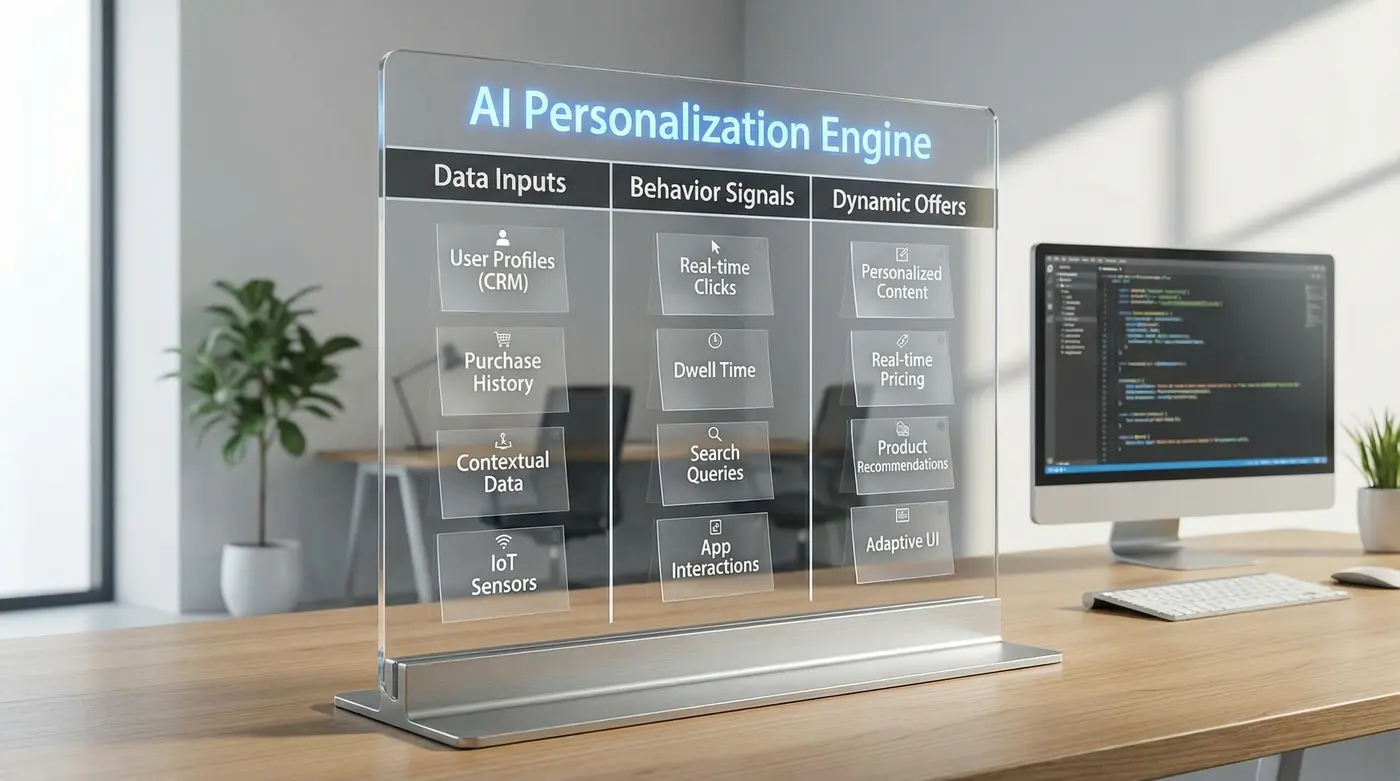
The Complete Guide to Monetization Strategies for Online Businesses: Building Predictable Revenue Streams That Scale
Online businesses today face unprecedented opportunities to generate revenue through multiple channels. The digital landscape has evolved beyond simple advertising models, opening doors to sophisticated monetization strategies for online businesses that create predictable, scalable income streams. For mid-market companies generating $500K to $10M annually, understanding and implementing these strategies can be the difference between stagnant growth and doubling revenue within twelve months.
The modern marketplace demands diversification. Businesses that rely solely on a single revenue stream often find themselves vulnerable to market fluctuations, algorithm changes, and economic uncertainties. Smart entrepreneurs are building multi-tiered monetization systems that combine direct customer relationships with automated revenue generation, creating business models that thrive regardless of external pressures.
The Current State of Online Business Monetization
The digital economy has reached a tipping point. Traditional advertising models are becoming less reliable as privacy regulations tighten and consumer behavior shifts toward ad-blocking and subscription preferences. Businesses that once thrived on banner ads and sponsored content are discovering that direct monetization through products, services, and memberships provides more stable and profitable outcomes.
Market data reveals that companies with diversified revenue streams see 35% higher profit margins compared to those relying on single-channel monetization. This shift represents more than just a trend; it reflects a fundamental change in how online businesses create and capture value.
The most successful online businesses now operate hybrid models that blend multiple monetization approaches. They combine subscription services with digital products, membership communities with affiliate partnerships, and automated systems with high-touch service offerings. This diversification creates resilience and opens multiple pathways for growth.
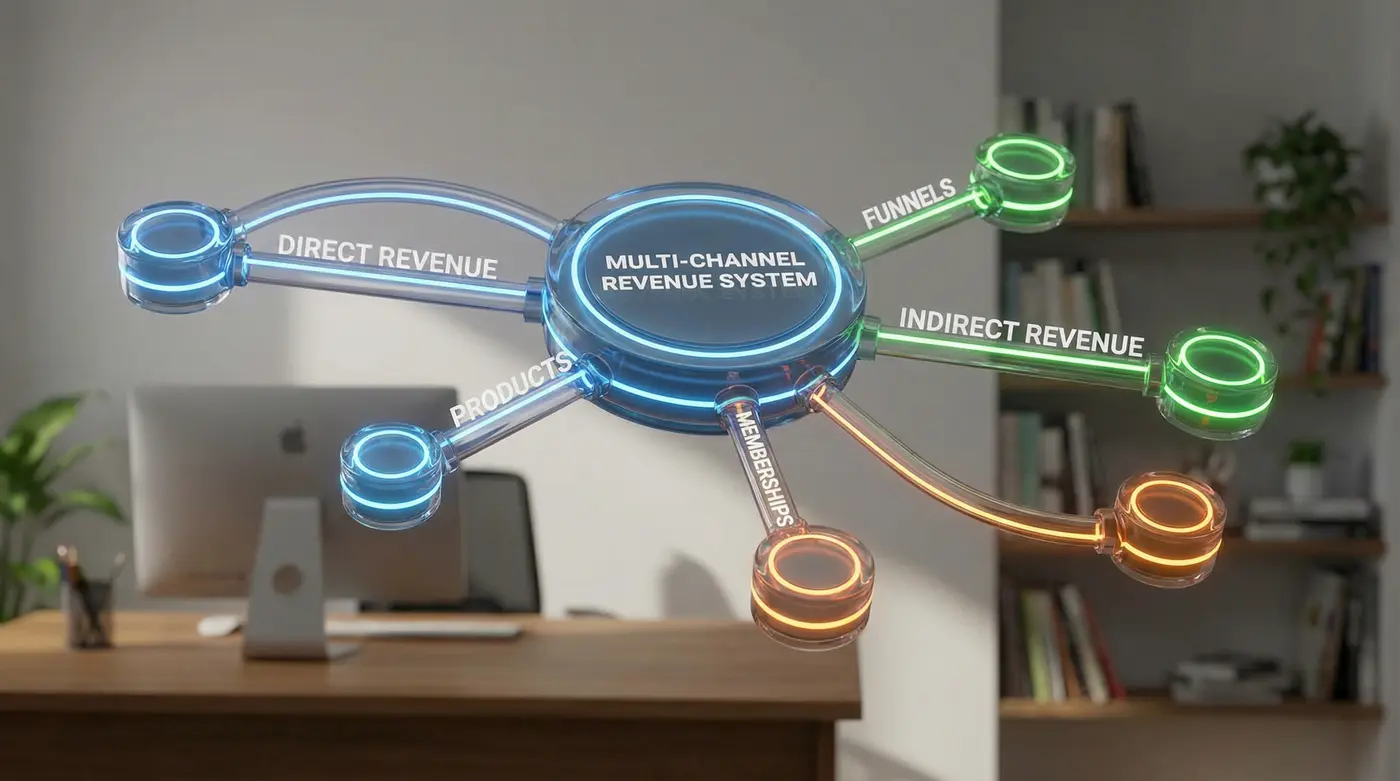
Direct vs. Indirect Monetization: Understanding Your Options
Direct monetization puts your audience at the center of your revenue model. Instead of relying on third parties to pay for access to your audience, you create value that customers pay for directly. This approach includes subscriptions, memberships, digital products, courses, coaching, and consulting services.
The advantages of direct monetization are compelling. You maintain complete control over pricing, customer relationships, and value delivery. Customer lifetime value typically increases because you’re solving specific problems rather than simply capturing attention. Most importantly, direct monetization creates predictable revenue streams that can be forecasted and scaled systematically.
Indirect monetization, while still valuable, should complement rather than dominate your revenue strategy. Advertising, affiliate marketing, and sponsorships can provide excellent supplementary income, but they shouldn’t form the foundation of your business model. The most successful businesses use indirect monetization to fund customer acquisition for their direct monetization channels.
Consider implementing a 70/30 rule: aim for 70% of your revenue to come from direct monetization and 30% from indirect sources. This ratio provides stability while maintaining the upside potential that comes from advertising and partnership revenue.
Productizing Your Expertise: Turning Knowledge Into Revenue
The monetization of online expertise represents one of the most scalable business models available today. Every online business possesses unique knowledge, processes, and insights that can be packaged into sellable products. The key lies in identifying what your audience values most and creating products that deliver those outcomes consistently.
Start by auditing your existing content and processes. What questions do customers ask repeatedly? What problems do you solve that others struggle with? What systems have you developed that produce predictable results? These elements form the foundation of your productized expertise.
Digital products offer exceptional scalability because they require creation once but can be sold indefinitely. E-books, templates, software tools, video courses, and online workshops all represent ways to package your expertise into products that generate revenue without ongoing time investment.
The most successful productized expertise follows a clear framework: identify a specific problem, create a step-by-step solution, package it in an easily consumable format, and price it according to the value delivered. Businesses that master this approach often see product sales become their highest-margin revenue stream.
Premium positioning works particularly well for expertise-based products. Instead of competing on price, focus on outcomes and results. A $2,000 course that helps business owners increase revenue by $50,000 is an easy purchase decision for the right audience.
Building Multi-Tiered Memberships and Communities
Membership models create the holy grail of business revenue: recurring, predictable income that grows over time. The most effective membership structures offer multiple tiers that cater to different customer segments and price points.
Start with a basic tier that provides core value at an accessible price point. This might include access to exclusive content, a private community, or basic tools and resources. The goal is to make the entry barrier low enough that customers can justify the monthly expense without extensive deliberation.
Mid-tier memberships should add significant value through enhanced features, personalized attention, or premium content. This might include monthly group coaching calls, advanced training modules, or priority customer support. The key is creating clear value differentiation that justifies the higher price point.
Premium tiers work best when they offer high-touch experiences or exclusive access. One-on-one coaching, mastermind groups, or VIP events create premium experiences that command premium pricing. These tiers often have the highest profit margins because the perceived value far exceeds the incremental delivery costs.
Community features amplify the value of every membership tier. Private forums, member directories, and peer-to-peer networking opportunities create sticky engagement that reduces churn and increases lifetime value. Members who actively participate in community features typically have 60% higher retention rates than passive consumers.
Advanced Sales Funnel Strategies for Monetization
Effective sales funnel strategies transform casual visitors into paying customers through systematic value delivery and trust building. Modern funnels go beyond simple lead magnets and email sequences, incorporating sophisticated automation that personalizes the customer journey based on behavior and preferences.
The foundation of any monetization funnel is a valuable lead magnet that attracts your ideal customer. This might be a free tool, resource guide, mini-course, or assessment that provides immediate value while demonstrating your expertise. The key is ensuring your lead magnet directly relates to your paid offerings.
Email sequences should focus on education and value delivery rather than constant selling. Share case studies, provide actionable tips, and address common objections. Each email should strengthen the relationship while moving prospects closer to a purchase decision.
Segmentation dramatically improves funnel performance. Tag subscribers based on their interests, behavior, and engagement levels. This allows you to send targeted offers that match their specific needs and buying stage. Segmented campaigns typically see 50-100% higher conversion rates than broadcast messages.
Automated webinars and video sales letters work particularly well for higher-ticket offerings. These formats allow you to deliver comprehensive value while addressing objections and building trust at scale. The key is creating content that feels personal and relevant even when delivered automatically.

Bundling and Upselling for Maximum Order Value
Strategic bundling increases average order value while providing customers with comprehensive solutions to their problems. Instead of selling individual products separately, create bundles that offer complete systems or enhanced outcomes.
The most effective bundles combine complementary products that work together to achieve a specific result. For example, a business course might be bundled with templates, worksheets, and bonus training modules that support implementation. This approach increases perceived value while commanding higher prices.
Upselling works best when positioned as logical next steps rather than additional purchases. After someone buys a basic product, offer advanced training, implementation support, or done-for-you services. The key is timing these offers when customers are most engaged and seeing initial results.
Cross-selling introduces customers to other product lines or services that complement their original purchase. Email automation can deliver these offers based on purchase history and engagement patterns. Customers who purchase multiple products typically have 300% higher lifetime values than single-product buyers.
Physical and digital product combinations create unique value propositions that are difficult to replicate. A digital course might include printed workbooks, branded tools, or exclusive merchandise. These tangible elements increase perceived value and create memorable brand experiences.
Privacy-First Advertising and Contextual Monetization
The evolution of privacy regulations and consumer preferences has fundamentally changed how online businesses approach advertising monetization. Cookie-based tracking is disappearing, forcing businesses to develop smarter, more contextual advertising approaches.
Contextual advertising aligns promotional content with the surrounding material rather than relying on personal data tracking. This approach often produces better results because the advertising feels relevant and helpful rather than intrusive. Content creators can integrate product recommendations naturally within their material.
First-party data collection becomes crucial in this environment. Build systems that encourage customers to voluntarily share information in exchange for personalized experiences. Surveys, preference centers, and interactive content can gather valuable insights while respecting privacy concerns.
Direct sponsorships and partnerships often outperform programmatic advertising in both revenue and audience satisfaction. These relationships allow for creative integration that adds value rather than interrupting the user experience. Long-term partnerships typically yield higher rates and better creative control.
Leveraging AI for Monetization Optimization
Business automation for entrepreneurs has evolved to include sophisticated AI tools that optimize monetization strategies in real-time. These systems analyze customer behavior, predict purchasing patterns, and personalize experiences to maximize revenue. This aligns directly with insights from performance-driven automation tools that support scalable growth.
Dynamic pricing algorithms can adjust product prices based on demand, customer segments, and market conditions. This approach maximizes revenue by capturing the highest price each customer is willing to pay while maintaining fairness and value perception.
Churn prediction models identify customers at risk of canceling subscriptions or memberships. Early intervention campaigns can address concerns, offer incentives, or provide additional value to retain these customers. Reducing churn by just 5% can increase profits by 25-95%.
Content personalization systems deliver targeted recommendations based on individual customer preferences and behavior patterns. These systems can suggest products, courses, or content that align with specific customer interests, dramatically improving conversion rates and customer satisfaction.
Automated A/B testing continuously optimizes landing pages, email campaigns, and product presentations. These systems test multiple variables simultaneously and implement winning variations automatically, ensuring your monetization systems continuously improve without manual intervention.
Platform Selection and Integration Strategy
Choosing the right platforms and tools for your monetization strategy can make the difference between seamless growth and operational chaos. The best approach combines specialized tools for specific functions with integration platforms that connect everything together.
All-in-one platforms offer convenience and simplicity but may lack advanced features for specific monetization models. Specialized tools typically provide more sophisticated functionality but require more complex integration and management. The right choice depends on your technical capabilities and growth stage.
Payment processing should prioritize customer experience and global accessibility. Multiple payment options, subscription management, and international currency support expand your potential market. Consider platforms that handle tax compliance and regulatory requirements automatically.
Customer relationship management systems become crucial as your monetization strategy scales. These platforms should integrate with your email marketing, payment processing, and content delivery systems to provide a complete view of each customer relationship.
Analytics and reporting capabilities should provide insights into customer lifetime value, churn rates, and revenue attribution across all channels. This data drives optimization decisions and helps identify the most profitable monetization strategies.
Real-World Case Studies: Doubling Revenue Through Hybrid Monetization
Successful online businesses consistently demonstrate that hybrid monetization approaches outperform single-channel strategies. These case studies illustrate how mid-market companies have implemented comprehensive monetization systems to achieve dramatic growth.
A fitness coaching business transformed from offering only one-on-one coaching to a multi-tiered system including group programs, digital courses, meal plans, and a membership community. This diversification increased monthly recurring revenue by 340% while reducing the owner’s direct time commitment.
An online education company combined course sales with affiliate partnerships, premium memberships, and corporate training contracts. By segmenting their audience and creating tailored offerings for each segment, they doubled their annual revenue while improving customer satisfaction scores. These tactics mirror those found in high-converting education funnel strategies.
A consulting firm productized their methodology into online courses, templates, and certification programs. This allowed them to serve more customers without increasing staff while creating passive revenue streams that generated income between client projects.
The Agency Advantage: Accelerating Monetization Success
Digital marketing agencies specializing in monetization strategies provide expertise and resources that most businesses cannot develop internally. These partnerships accelerate implementation while avoiding costly mistakes and missed opportunities.
Agencies bring specialized knowledge of platform integrations, automation systems, and optimization strategies that have been proven across multiple clients and industries. This experience allows for faster implementation and better results than trial-and-error approaches.
The technical complexity of modern monetization systems often requires dedicated expertise in areas like marketing automation, payment processing, and customer data management. Agencies provide access to these skills without the overhead of full-time staff.
Ongoing optimization and testing require consistent attention and expertise. Agencies can manage these processes continuously, ensuring your monetization systems improve over time while you focus on core business activities.
Implementation Roadmap: Getting Started
Beginning your monetization transformation requires a systematic approach that builds momentum while minimizing risk. Start by auditing your current revenue streams and identifying opportunities for immediate improvement.
Choose one direct monetization strategy to implement first, ensuring it aligns with your existing strengths and customer needs. Master this approach before adding additional complexity. Success in monetization comes from execution excellence rather than strategy proliferation.
Invest in the foundational systems that support multiple monetization strategies. Email marketing platforms, customer relationship management systems, and analytics tools provide the infrastructure for sustainable growth. These foundational tools align closely with the principles in AI-powered funnel automation.
Test and optimize continuously. What works for other businesses may not work for your specific audience and market. Use data to guide decisions and be prepared to adjust strategies based on customer feedback and performance metrics.
Building predictable, scalable revenue streams requires commitment, expertise, and the right systems. The businesses that invest in comprehensive monetization strategies today will dominate their markets tomorrow. Whether you implement these strategies internally or partner with specialists, the time to begin is now.
Ready to transform your monetization strategy and double your revenue? Our team of experts can help you design and implement a comprehensive system tailored to your business. Contact us today to schedule a consultation and discover how the right monetization approach can accelerate your growth.