Future-Proof Your Business: Essential Online Business Automation Strategies That Drive Growth
The digital landscape has transformed dramatically, and businesses that fail to embrace online business automation are finding themselves left behind. With global ecommerce sales projected to exceed $4.9 trillion by 2030, the question isn’t whether to automate, but how to do it strategically to accelerate growth and efficiency.
For mid-market and luxury service businesses generating $500K to $10M in revenue, automation has evolved from a competitive advantage to an absolute necessity. The businesses thriving today are those that have moved beyond basic email campaigns to sophisticated, AI-driven systems that orchestrate every aspect of the customer journey.
Why Automation Is No Longer Optional for Scaling Businesses
The growth of ecommerce and direct-to-consumer markets has fundamentally changed customer expectations. Today’s buyers demand personalized, seamless experiences across all touchpoints. Companies that rely on manual processes simply cannot compete with the speed, precision, and scale that automated systems provide.
Recent industry data reveals a striking correlation between automation adoption and business success. Companies with revenues between $10M and $50M use automation at an 85% rate, while 86% of firms experiencing 30-50% sales growth rely heavily on marketing automation. Conversely, businesses without robust automation strategies often stagnate, particularly those earning under $100K annually.
The most successful businesses maintain an average of 20 active automation workflows, compared to the industry standard of fewer than 10. These advanced users attribute 80% or more of their sales directly to automated processes, demonstrating the transformative power of comprehensive automation strategies.
AI-Powered Personalization and Agentic Automation
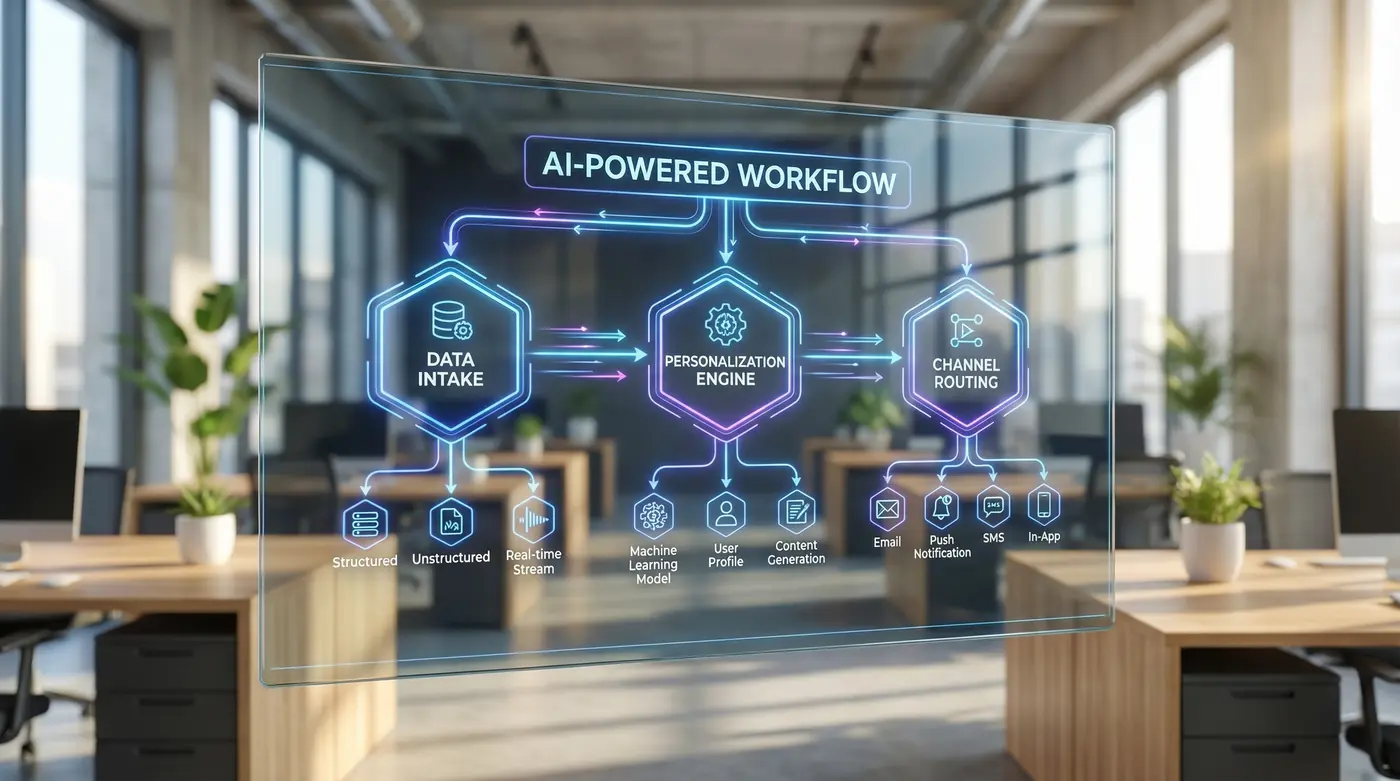
Artificial intelligence has revolutionized online business automation by enabling unprecedented levels of personalization and autonomous decision-making. Modern AI systems go far beyond simple chatbots, incorporating predictive analytics, autonomous shopping agents, and adaptive workflow optimization.
Agentic commerce represents the next evolution in automation, featuring AI systems that proactively serve customers without human intervention. These autonomous agents can make purchases on behalf of customers, flag potential support issues before they escalate, and continuously optimize marketing campaigns based on real-time performance data.
Leading businesses are leveraging AI to create hyper-personalized customer experiences through:
- Dynamic content generation that adapts in real-time based on user behavior
- Predictive analytics that forecast customer needs and preferences
- Intelligent product recommendations that go beyond basic collaborative filtering
- Automated A/B testing that continuously optimizes conversion rates
- Behavioral trigger campaigns that respond instantly to customer actions

The key to successful AI implementation lies in moving from rigid, trigger-based automation to goal-oriented systems that adapt and learn continuously. This shift enables businesses to maintain relevance and effectiveness even as market conditions and customer preferences evolve.
The Rise of Composable and Headless Commerce
Traditional monolithic ecommerce platforms are giving way to composable architectures that offer unprecedented flexibility and scalability. Headless commerce, which separates the frontend presentation layer from the backend functionality, allows businesses to create custom experiences while maintaining powerful automation capabilities.
This modular approach enables rapid iteration and testing of new features without disrupting core business operations. Companies can integrate best-in-class technologies through APIs, creating tailored automation stacks that align perfectly with their specific needs and customer journey requirements.
For luxury and high-ticket service businesses, composable commerce offers particular advantages:
- Custom frontend experiences that reflect brand positioning
- Seamless integration with existing CRM and automation tools
- Rapid deployment of new features and optimizations
- Enhanced mobile and omnichannel capabilities
- Improved site performance and conversion rates

Integrating CRM, Marketing Automation, and Predictive Analytics
The most powerful automation strategies integrate customer relationship management, marketing automation, and predictive analytics into unified systems that provide comprehensive customer insights and seamless experience delivery.
This integration enables businesses to create data-driven customer journeys that adapt based on individual behavior, preferences, and predicted future actions. By connecting these systems, companies can ensure consistent messaging across all touchpoints while maximizing the relevance and effectiveness of every interaction.
Successful integration typically involves:
- Centralized customer data platforms that unify information from all sources
- Real-time data synchronization between systems
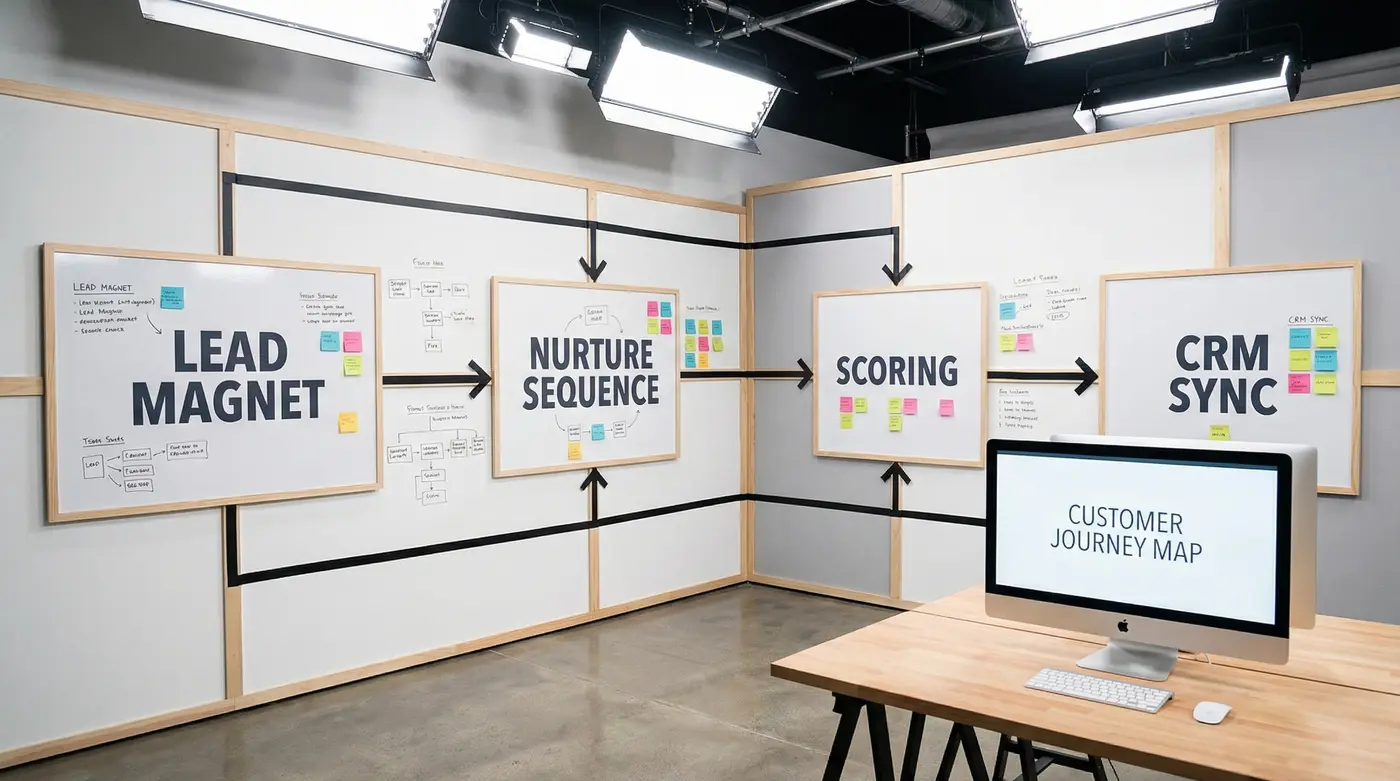
- Automated lead scoring and qualification processes
- Dynamic content personalization based on customer lifecycle stage
- Predictive churn modeling and proactive retention campaigns
Advanced Email Marketing Strategies and Omnichannel Orchestration
While email remains a cornerstone of digital marketing, successful businesses have moved far beyond basic newsletters and promotional campaigns. Advanced email marketing strategies now incorporate dynamic workflows, behavioral segmentation, and sophisticated personalization engines.
Modern email automation includes:
- Behavioral trigger sequences that respond to specific customer actions
- Dynamic content blocks that change based on recipient characteristics
- Predictive send-time optimization for maximum engagement
- Cross-channel orchestration that coordinates email with other touchpoints
- Advanced segmentation using RFM analysis and customer lifetime value modeling
The most effective strategies extend beyond email to orchestrate experiences across multiple channels, including SMS, push notifications, social media, and even offline touchpoints. This omnichannel approach ensures consistent messaging while meeting customers wherever they prefer to engage.
Leveraging First-Party Data for Privacy-Compliant Personalization
With increasing privacy regulations and the deprecation of third-party cookies, first-party data has become the foundation of effective automation strategies. Businesses that excel at collecting and utilizing first-party data gain significant competitive advantages in personalization and customer retention.
Effective first-party data strategies include:
- Interactive preference centers that allow customers to customize their experience
- Progressive profiling that gradually builds comprehensive customer profiles
- Value-exchange programs that incentivize data sharing
- Behavioral tracking that respects privacy while capturing valuable insights
- Zero-party data collection through surveys, quizzes, and polls
This data becomes the fuel for sophisticated automation engines that deliver increasingly relevant experiences while maintaining customer trust and regulatory compliance.
Subscription Models and Recurring Revenue Streams
Subscription and recurring revenue models have proven highly effective for creating predictable cash flow while maximizing customer lifetime value. Automation plays a crucial role in managing these relationships, from onboarding new subscribers to preventing churn and encouraging upgrades.
Successful subscription automation strategies focus on:
- Seamless onboarding sequences that demonstrate value quickly
- Usage-based triggers that encourage deeper engagement
- Predictive churn modeling with proactive retention campaigns
- Automated billing and payment processing
- Dynamic pricing optimization based on customer behavior
Even businesses not traditionally associated with subscriptions can benefit from recurring revenue elements, such as maintenance contracts, ongoing consulting relationships, or membership programs.
Converting Anonymous Website Traffic
One of the biggest opportunities in online business automation lies in identifying and converting anonymous website visitors. Research shows that 80% of website traffic typically remains unidentified, representing massive untapped potential for lead generation and customer acquisition.
Advanced tracking and conversion strategies include:
- Progressive identification techniques that gradually reveal visitor identity
- Behavioral tracking that creates anonymous profiles for future matching
- Exit-intent popups with compelling value propositions
- Retargeting campaigns that nurture anonymous visitors across multiple touchpoints
- Social proof and urgency elements that encourage immediate action
By implementing sophisticated visitor identification and nurturing systems, businesses can significantly increase their conversion rates from existing traffic without increasing advertising spend.
The Future of Agentic AI in Business Automation
The next frontier in business automation involves AI systems that operate with increasing autonomy and sophistication. Rather than simply executing predetermined workflows, these agentic AI systems can set goals, develop strategies, and adapt tactics based on real-time feedback and changing conditions.
Emerging applications include:
- Autonomous campaign optimization that continuously improves performance
- Predictive inventory management that anticipates demand fluctuations
- Dynamic pricing strategies that respond to market conditions
- Intelligent content creation that maintains brand voice while personalizing messages
- Automated customer service that resolves complex issues without human intervention
As these technologies mature, businesses that embrace them early will gain significant advantages in efficiency, effectiveness, and customer satisfaction.
Practical Implementation Steps for Mid-Market and Luxury Brands
Successfully implementing comprehensive automation requires a strategic approach that aligns with business objectives while considering resource constraints and technical capabilities. The most effective implementations follow a phased approach that builds capabilities progressively.
Phase 1: Foundation Building
Begin by establishing robust data collection and integration systems. Implement comprehensive tracking across all customer touchpoints, integrate existing systems, and establish clear data governance policies.
Phase 2: Core Automation Implementation
Deploy essential automation workflows, including lead nurturing sequences, customer onboarding processes, and basic behavioral triggers. Focus on high-impact, low-complexity implementations that deliver immediate value.
Phase 3: Advanced Personalization
Implement AI-driven personalization engines, predictive analytics, and sophisticated segmentation strategies. This phase requires more technical expertise but delivers significantly higher returns on investment.
Phase 4: Omnichannel Orchestration
Expand automation across all customer touchpoints, creating seamless experiences that span digital and physical interactions. This represents the most sophisticated level of implementation but offers the greatest competitive advantages.
Ready to transform your business with cutting-edge automation strategies? Our team specializes in helping mid-market and luxury brands implement comprehensive automation systems that double growth within 12 months. Contact us today to schedule your strategic automation assessment and discover how to future-proof your business for sustained success.
Measuring Success and Optimizing Performance
Effective automation implementation requires continuous monitoring and optimization. Key performance indicators should align with business objectives while providing actionable insights for improvement.
Essential metrics include:
- Customer acquisition cost and lifetime value ratios
- Conversion rates across all funnel stages
- Email engagement and deliverability metrics
- Customer satisfaction and Net Promoter Scores
- Revenue attribution to automated campaigns
- System performance and reliability indicators
Regular analysis of these metrics enables continuous refinement of automation strategies, ensuring they remain effective as market conditions and customer preferences evolve.
The businesses that will thrive in the coming years are those that embrace comprehensive automation strategies today. By implementing these advanced techniques, mid-market and luxury service businesses can achieve unprecedented levels of growth, efficiency, and customer satisfaction while building sustainable competitive advantages for the future.